

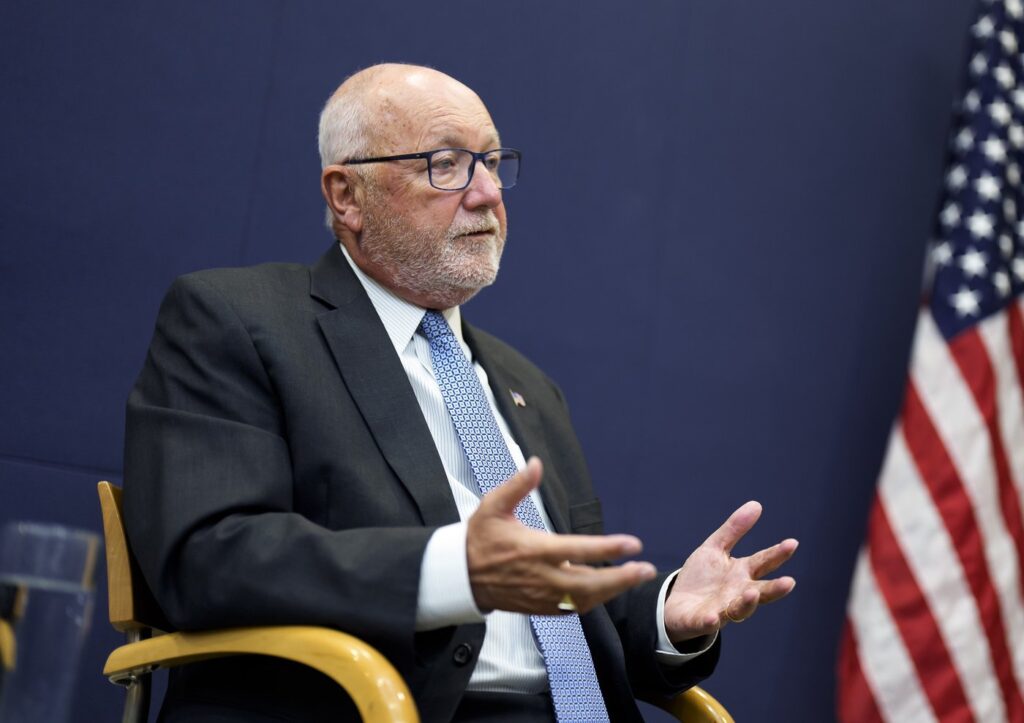
In a recent statement at the U.S.-Canada Summit in Toronto, U.S. Ambassador to Canada Pete Hoekstra emphasized that U.S. President Donald Trump's declaration that the U.S. does not need anything from Canada actually masks a desire for collaboration between the two nations. Hoekstra suggested that despite Trump's rhetoric, there are numerous areas of mutual benefit and necessity in U.S.-Canada relations.
Hoekstra urged Canada to adopt a "sales hat" mentality in negotiations, asserting that it is crucial for Canada to advocate for its indispensable role in meeting U.S. needs. This call for proactive engagement comes in the wake of Trump's remarks indicating a reluctance to renew the Canada-U.S.-Mexico Agreement (CUSMA) ahead of a July 1 deadline. Trump remarked that the U.S. does not depend on Canadian or Mexican resources but implied that these countries require American goods, stating, "They should have to treat us better."
The negotiations surrounding CUSMA are heightened as both Canada and Mexico have proposed a 16-year extension of the trade framework. If the Trump administration does not act by the July deadline, the agreement will continue under a structure allowing for annual reviews for a maximum of ten years. Although Trump could announce a withdrawal, indications from his administration suggest this is not a likely course of action in the immediate future.
Hoekstra acknowledged that while many may be put off by Trump's blunt communication style, Canada has a strategic opportunity to assert itself in negotiations. He asserted, "We know America has needs across the board and we're here to partner with America to fill those needs because we are the best place for America to fill these needs." This statement underscores the importance of Canada presenting itself as a critical partner to the U.S. economy.
Pointing to specific industries, Hoekstra highlighted Canadian potash as a vital resource, noting that over 80% of U.S. potash imports originate from Canada. He contrasted Canada’s position as a reliable supplier with potential alternatives from countries like Russia and Belarus, emphasizing the geopolitical implications of resource dependence.
Moreover, Hoekstra stressed the advantages of sourcing oil from Alberta and automobiles from Ontario. He articulated that while the U.S. could procure automobiles from various countries, the benefits of Canadian production are compelling due to aligned labor forces, regulations, and environmental standards, thus making Canada a preferred supplier. He encouraged Canadian officials to "make us an offer," reinforcing the idea that a collaborative approach could yield mutually beneficial agreements.
The backdrop of these discussions is the current context of CUSMA, established to replace the North American Free Trade Agreement (NAFTA) during Trump's first term. Despite its intentions, Trump has since labeled CUSMA as "irrelevant." The trade agreement has provided Canada and Mexico with some insulation against Trump's tariffs, particularly the 10% global tariff that does not apply to compliant goods under CUSMA. Nonetheless, both countries remain vulnerable to separate tariffs imposed by Trump, especially concerning steel, aluminum, and automobiles.
Overall, Hoekstra's comments reflect a deep-seated belief in the importance of the U.S.-Canada relationship. As negotiations continue, the emphasis on collaboration over competition may shape the future dynamics of trade between the neighboring countries.








