

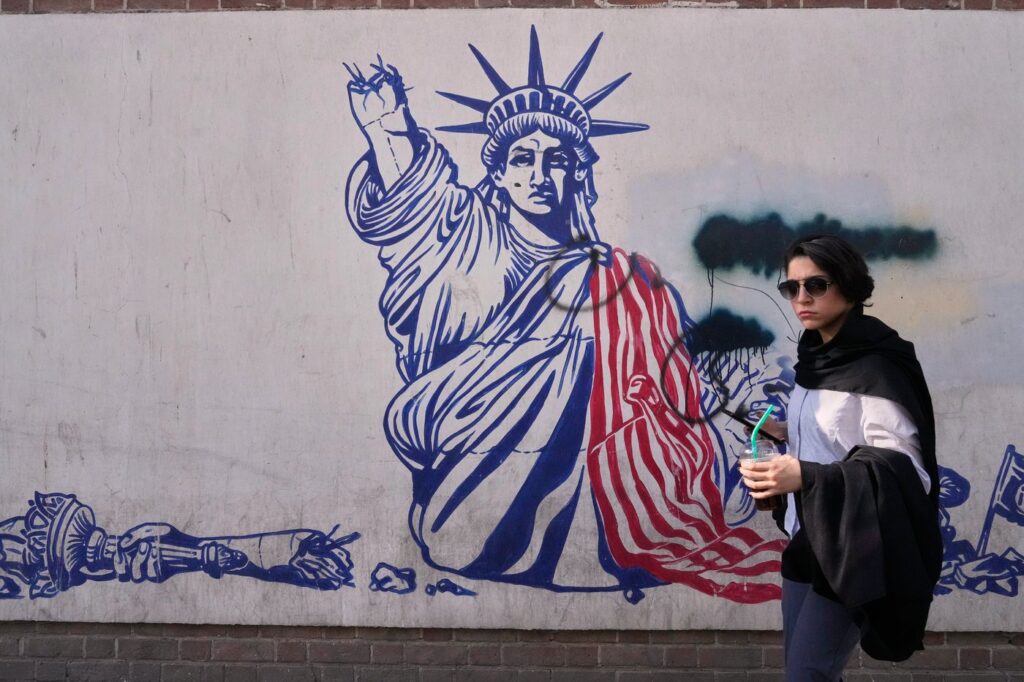
The United States and Iran have reportedly reached an interim agreement aimed at ceasing hostilities and reopening the crucial Strait of Hormuz. A formal signing of the deal is expected to take place on Friday in Switzerland. However, doubts linger as previous announcements have collapsed, leaving the specifics of this new arrangement under dispute.
This latest development occurs against the backdrop of decades of rising tension between Iran and the U.S., particularly concerning Tehran's nuclear program. The timeline of these tensions can be traced back to key historical events that began in the 20th century.
In 1967, Iran acquired the Tehran Research Reactor from the United States under the "Atoms for Peace" initiative. However, the relationship soured dramatically after 1979 when the U.S. ally, Shah Mohammad Reza Pahlavi, was overthrown during the Islamic Revolution led by Ayatollah Ruhollah Khomeini. This triggered a 444-day hostage crisis, during which Iranian students seized the U.S. Embassy in Tehran, ultimately suspending Iran's nuclear program due to international pressure.
Fast forward to August 2002, when Western intelligence revealed the existence of Iran’s secret Natanz nuclear enrichment facility. Subsequent negotiations began in June 2003 among Britain, France, and Germany, which led to a temporary suspension of uranium enrichment by Iran in October 2003. However, in February 2006, Iran announced its intention to resume uranium enrichment processes, leading to increasing international scrutiny.
The relationship saw further strain in May 2018 when U.S. President Donald Trump withdrew the United States from the nuclear deal that had aimed to limit Iran's nuclear ambitions in exchange for economic sanctions relief. Iran responded in 2019 by scaling back its compliance with the agreement.
In a significant escalation of military tensions, a U.S. drone strike in January 2020 killed Iranian General Qassem Soleimani. This retaliation led to Iranian missile strikes on U.S. bases in Iraq, further igniting conflicts in the region. A Ukrainian passenger plane was accidentally shot down by Iran during this period, resulting in the loss of all 176 aboard.
As regional conflicts intensified, including Iran's support for groups like Hamas, the situation became even more precarious. On October 7, 2023, hostilities erupted between Hamas and Israel, escalating tensions further due to Iran's involvement.
In the following years, a series of military exchanges occurred, highlighted by Iranian missile launchings against Israeli targets. This culminated in a flare-up of the Iran war by June 2025, marked by Israeli airstrikes on Iranian territory and U.S. military involvement, targeting Iranian nuclear facilities. By April 2026, a fragile ceasefire was put into place, leading to initial negotiations to open the strategically vital Strait of Hormuz once more.
As of June 15, 2026, reports indicate that the United States and Iran have reached an initial agreement, extending a fragile ceasefire and addressing critical issues surrounding Iran's nuclear program as tensions continue to simmer regionally. The ongoing complexities and historical grievances underscore the challenges both nations face in achieving a sustainable resolution.
The details surrounding these developments remain fluid, reflecting the intricate and often adversarial relationship between the U.S. and Iran. While the interim deal presents a hopeful avenue for de-escalation, the path forward is fraught with uncertainties, as both nations navigate their diplomatic and strategic interests in a historically contentious landscape.








