

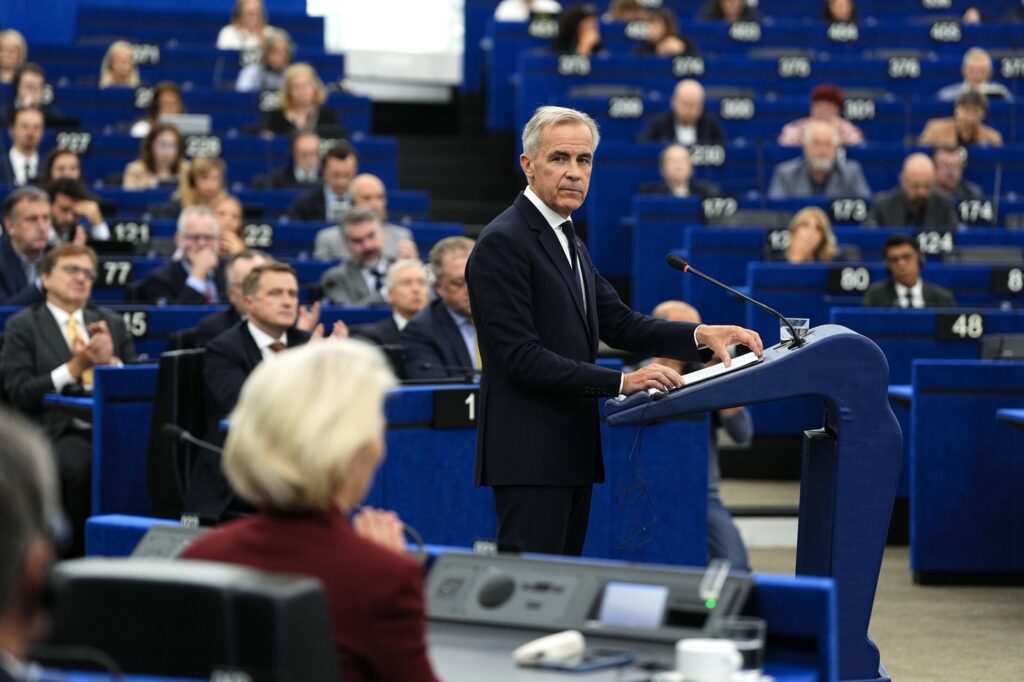
On September 16, 2023, Prime Minister Mark Carney made history by becoming the first foreign world leader to attend the State of the European Union (EU) address, which was delivered by President of the European Commission Ursula von der Leyen. This significant event marked a notable moment in diplomatic relations between Canada and the EU, signaling a desire for strengthened ties. During her address, von der Leyen extended an unprecedented invitation to Canada to become the first-ever "associate member" of the EU, highlighting the potential for closer collaboration and mutual benefits.
The following day, September 17, Carney took the opportunity to address the European Parliament. In his speech, he acknowledged von der Leyen's invitation and voiced Canada's aspiration to deepen its relationship with Europe. This engagement underscores Canada's strategic interest in aligning more closely with European nations, especially in the context of evolving global politics and shifting alliances.
To further explore this groundbreaking development, host Caryn Ceolin engaged with Dr. Kurt Hübner, a professor in the European studies department at the University of British Columbia. Their discussion delved into what it might mean for Canada to be classified as an associate member of the EU. Dr. Hübner provided insights into the potential implications of this status, which may allow Canada to participate in certain EU activities, access benefits without full membership, and bolster trade relations.
The dialogue also examined the motivations behind Canada and the EU reaching for one another at this juncture. The changing geopolitical landscape, particularly under the administration of U.S. President Donald Trump, has prompted both Canada and Europe to rethink their international alliances. The increasing unpredictability of U.S. foreign policy may have incentivized Canada to seek stronger ties with European partners as a way to secure strategic interests and diversify its international relationships.
Ultimately, the evolving relationship between Canada and the EU symbolizes a broader trend of nations reassessing their partnerships in light of global uncertainties. As discussions continue about the feasibility and benefits of Canada's prospective associate membership, the outcomes of this diplomatic endeavor could reshape the landscape of North American and European relations in the years to come. The implications of this relationship could extend across various sectors, including trade, security, and cultural exchange, ultimately leading to a more interconnected future.








