

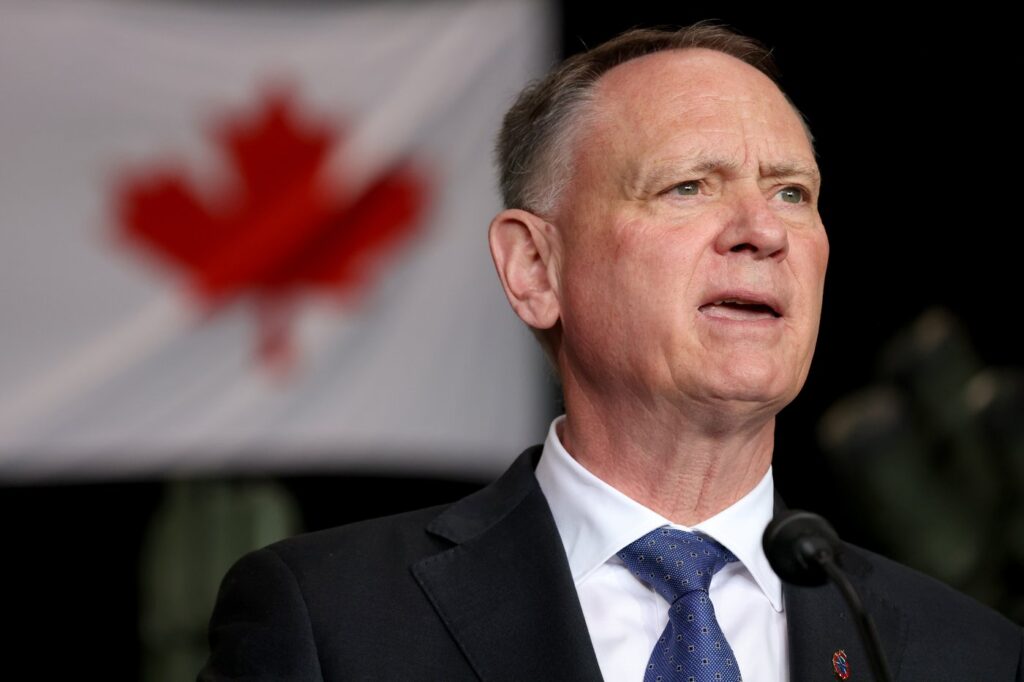
OTTAWA – National Defence Minister David McGuinty has expressed optimism regarding the recent military agreement between the United States and Denmark concerning Greenland. The deal aims to increase the U.S. military presence on the island, which remains under the control of Denmark. McGuinty described the development as “encouraging,” especially considering the ongoing geopolitical dynamics in the Arctic region.
U.S. President Donald Trump announced on September 18, 2026, that an agreement had been reached with Denmark after months of speculation during which he had suggested the possibility of acquiring Greenland by force. This proposition raised significant concerns given Denmark's status as a NATO ally of the United States. In what has been a tumultuous diplomatic exchange, Trump’s earlier remarks had included calls for Denmark to sell Greenland, causing friction in U.S.-Denmark relations.
According to the office of Denmark’s Prime Minister Mette Frederiksen, the formal agreement is set to be signed by representatives from the United States, Denmark, and Greenland during the upcoming United Nations General Assembly next week. However, it is important to note that for the agreement to take effect, parliamentary approval from both the Danish and Greenland governments will be required. This highlights the complex governance structure of Greenland, which possesses a degree of autonomy as an autonomous territory within the Kingdom of Denmark.
In a statement made to reporters on Parliament Hill, McGuinty emphasized the importance of Arctic nations collaborating on security matters, suggesting that this agreement marks a positive step forward in Northern military strategies. He remarked that it is “encouraging” to see Arctic countries, including NATO allies, recognizing their responsibilities in the region. Collaboration among these nations is critical, given the increasing significance of the Arctic due to climate change, resource availability, and strategic military interests.
The geopolitical landscape of the Arctic has been evolving, with nations taking a more active interest in asserting their claims and reinforcing their military capacities in response to global warming and opening navigation routes. The U.S. military's increased presence in Greenland under this agreement could have broad implications for security and strategic balance in the Arctic, potentially affecting not just Denmark and the U.S. but also Canada and other Arctic nations.
The September 18 announcement and the subsequent developments indicate a shift in approaches toward Arctic governance and defense. The agreement symbolizes a commitment to bilateral and multilateral cooperation in the face of emerging challenges. Furthermore, it reflects a strategic pivot by NATO allies to focus on the Arctic as an area of shared interest and responsibility, which may lead to enhanced collaboration on defense strategies in the region.
In summary, the agreement reached between the United States and Denmark over Greenland represents a significant development in Arctic security policy, garnering support from Canadian officials. As Arctic nations adapt to new realities in the region, this partnership could set the tone for future military and diplomatic engagements in the Arctic sphere.








