

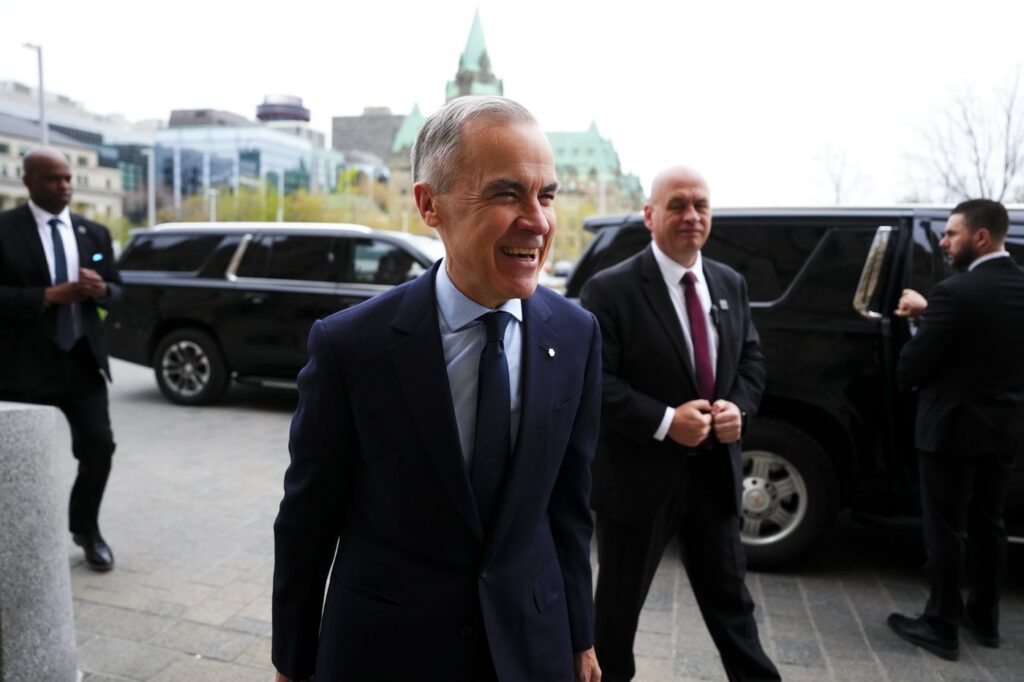
OTTAWA – Prime Minister Mark Carney is scheduled to address his Liberal caucus today in Ottawa, as the party prepares for the upcoming fall session of the House of Commons. This address is part of a caucus retreat taking place just before the session kicks off on Monday.
Among the first pieces of legislation that the Liberals plan to introduce during this session is a bill aimed at extending the fuel excise tax. This move follows an announcement made by Carney on September 2, which has been a topic of discussion among party members and a crucial element of the government's economic strategy.
Recently, Carney returned to Canada after attending meetings in Strasbourg, France, where he engaged with European leaders in an effort to strengthen ties focused on trade, defense, and cultural exchange. This visit aligns with Carney's broader campaign to shift Canada's economic reliance away from the United States and foster stronger connections with Europe.
During his time in Europe, European Commission President Ursula von der Leyen expressed her desire for Canada to become the first "associate member" of the European Union. This initiative is seen as a significant step towards deeper integration between Canada and Europe, and underscores the growing interest among Canadian policymakers in diversifying international relationships.
In a remarkable speech delivered before the European Parliament, Carney welcomed von der Leyen's ambition. He highlighted the potential benefits a closer partnership with the EU could bring to Canada, including enhanced economic opportunities and collaborative efforts on global issues such as climate change and security.
Carney's engagement with European leaders reflects an ongoing strategy to position Canada as a key player on the international stage. By reinforcing trade relationships and seeking new avenues for cooperation, he aims to bolster Canada's economic resilience in an increasingly complex geopolitical landscape.
This report indicates an important moment for the Liberal government as it seeks to implement its policy agenda while navigating international relations in a post-COVID world. The upcoming legislative sitting will test the government's ability to advance its priorities and respond to the challenges and opportunities that arise on both domestic and foreign fronts.








