

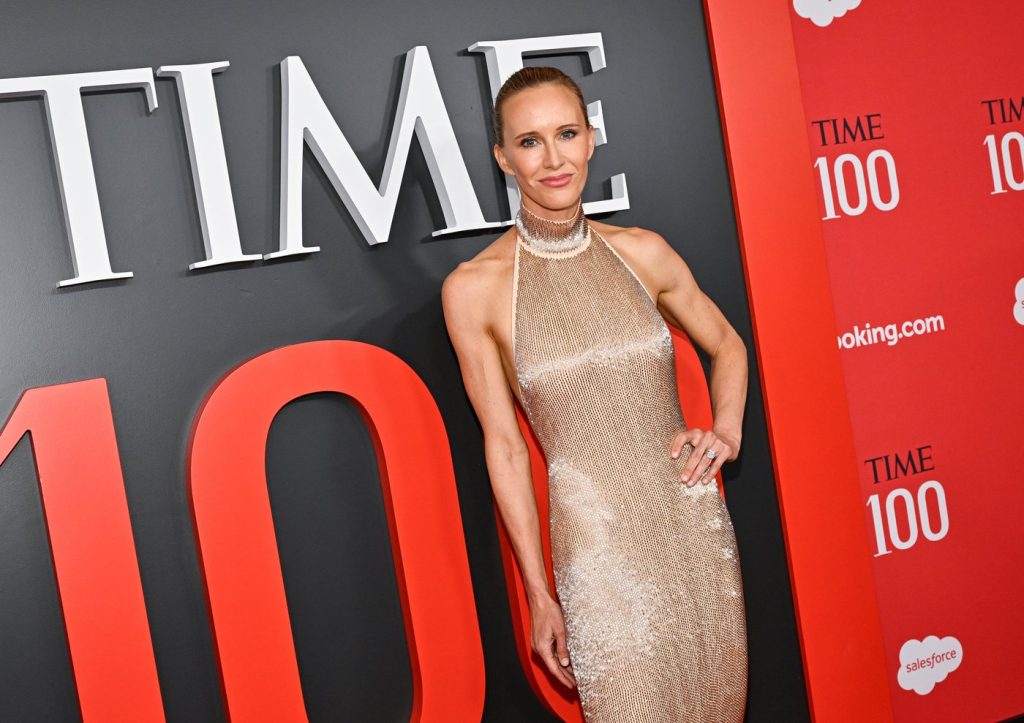
LOS ANGELES (AP) – In a significant legal development, author Amy Griffin has initiated a defamation lawsuit against a former classmate, claiming that statements made in a New York Times article and a subsequent lawsuit are false in all regards. The woman, who alleges that Griffin appropriated her stories of sexual abuse for her acclaimed 2025 memoir "The Tell," is at the center of this controversy, which Griffin describes in her lawsuit, filed in federal court in Nevada.
Griffin contends that her former middle school classmate has branded her as a "fraud and a thief" through these public statements. The lawsuit points out that the woman claimed Griffin "stole the rape of another woman" to create a bestseller. A spokesperson for The New York Times has stated that the lawsuit misrepresents the publication's reporting. The accuser maintains that her allegations will hold up in court.
"The Tell," which gained popularity and became an Oprah’s Book Club selection, explores Griffin’s painful past of being sexually abused by a teacher in Amarillo, Texas. In the memoir, she discusses her recovery journey that included therapy sessions utilizing the psychedelic drug MDMA. Six months post-publication, The New York Times featured a story that included the claims of the former classmate, suggesting that some of Griffin's experiences closely mirrored her own. This led to the woman's lawsuit filed in March in California state court, which Griffin is contesting and attempting to dismiss.
The Associated Press typically does not disclose the identities of individuals who report sexual abuse unless they have publicly identified themselves. In this case, the woman, who filed her lawsuit under the pseudonym Jane Doe, remained unnamed in the Times article.
Griffin’s lawsuit asserts that she documented her abuse experience in writing as early as 2020. Furthermore, in 2021, she provided a detailed account during an interview with the Amarillo Police Department, which aligns with her memoir. Griffin argues that these accounts predate the alleged incident where the classmate claims Griffin extracted her story through a third party posing as a talent agent in 2022. Unfortunately, due to the statute of limitations, criminal prosecution was not viable.
The lawsuit goes on to assert that the accuser has falsely claimed to be another individual from Griffin's middle school, referred to in "The Tell" by the pseudonym "Claudia." Griffin asserts she has not communicated with the woman in over 35 years and denies ever being involved with the same church youth group or being present in Palm Springs during the time stated by the accuser. Instead, Griffin claims the coffee shop conversation with "Claudia" took place in the presence of a collaborator, pointing out that the accuser has failed to provide evidence of their alleged meeting.
The woman’s representatives have released a statement via email, describing the profound shame and humiliation they feel due to the sexual assault and asserting that Griffin's actions have made them feel violated again. She expressed her disappointment that Griffin would choose to utilize her wealth and influence to stifle her voice, despite knowing the truth of the matter.
Griffin is seeking not only a legal declaration that the allegations of her stealing the woman's stories are untrue but also financial damages that will be determined at trial. Although her lawsuit does not name The New York Times as a defendant, it contains strong critiques of the paper, accusing it of failing to adequately scrutinize the claims made by the former classmate.
In response, Times spokesperson Danielle Rhoades Ha has asserted that the lawsuit misrepresents the original story and its findings. She noted that many of the claims contested by Griffin did not appear in the Times article and emphasized that the paper conducted thorough fact-checking and engaged with Griffin’s legal representatives prior to publication. Rhoades affirmed that the Times aims to pursue factual accuracy, including corroboration of accounts from all sources involved.








