

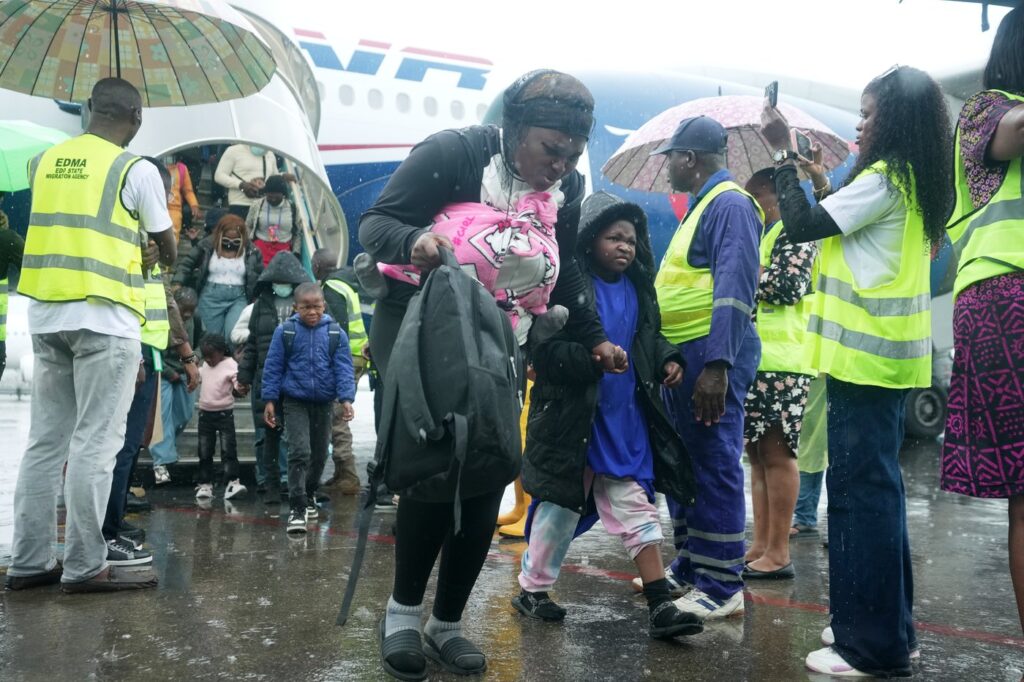
LAGOS, Nigeria (AP) – The Nigerian government revealed that two of its citizens were killed last month in South Africa amid a surge of violent anti-immigrant protests aimed at African workers. This troubling incident occurred on June 28, two days prior to an unofficial deadline set by protesters demanding that foreigners leave the country, according to the Nigerian Ministry of Foreign Affairs. One of the Nigerians was reportedly shot by police officers, while the other was killed by unidentified assailants.
The South African police did not provide an immediate response to requests for comments regarding these incidents from the Associated Press. The ongoing anti-immigrant protests, which escalated during April and May, were triggered by blame aimed at foreigners for increasing unemployment rates, rising crime, and strains on public services. The violence associated with these protests has prompted Nigeria, as well as Ghana and Malawi, to take action by repatriating their citizens and summoning South African diplomats for discussions.
Nigerian Foreign Ministry spokesperson Kimiebi Imomotimi Ebienfa condemned the killings, stating that they highlight a broader trend of scapegoating against foreigners in South Africa. He suggested that certain elements within the country may be intentionally trying to label hardworking and respectable Nigerians as criminals, thereby perpetuating a harmful narrative. This perspective underscores the serious implications of the conflicts that have arisen between South African nationals and immigrants.
South Africa has a documented history of xenophobic violence, which includes significant outbreaks in 2008 when more than 60 individuals lost their lives during a wave of attacks against foreigners, characterized by widespread outrage at the presence of migrants. Such historical context adds gravity to the current situation, as it raises concerns about the underlying tensions that continue to exist between South Africans and immigrants from other African nations.
As the violence and protests unfold, the implications of these actions on diplomatic relations and the lives of expatriate communities in South Africa are increasingly worrisome. Both Nigeria and South Africa face challenges in managing the perceptions and realities surrounding immigration, unemployment, and social cohesion within their societies.








