

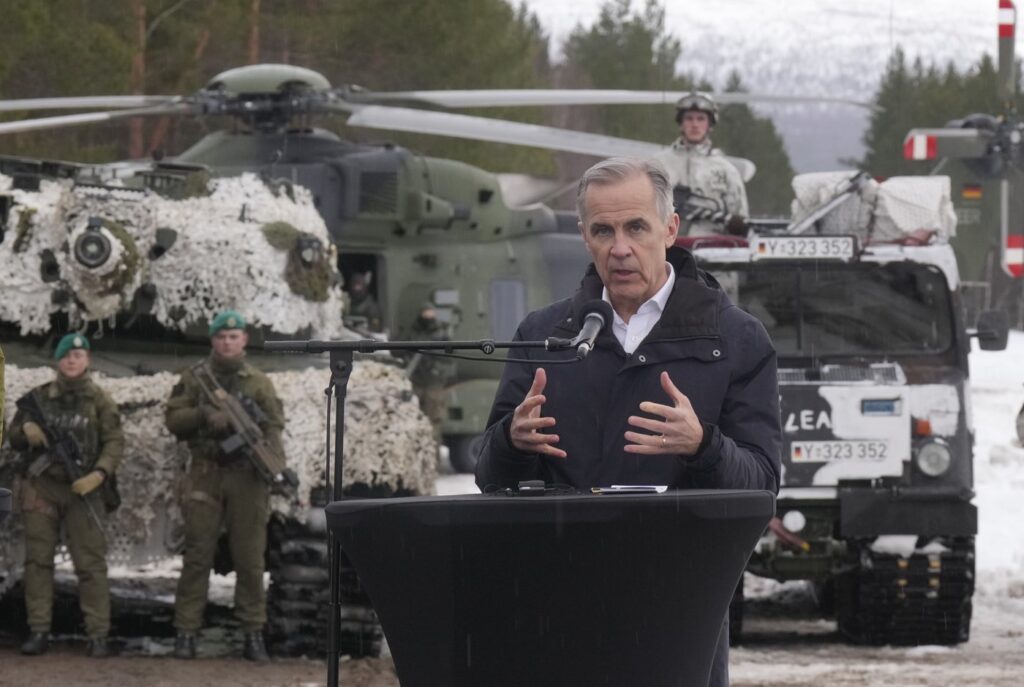
OTTAWA Prime Minister Mark Carney is set to depart for Ankara on Monday to participate in the annual NATO summit, marking the first visit by a Canadian prime minister to Turkey since 2015. The summit will take place on July 7 and 8, and is abbreviated this year, featuring a single session and a dinner instead of the traditional two days of extensive meetings.
Turkey will serve as the first leg of Carney's week-long trip to the Middle East, concluding with a brief visit to Saudi Arabia aimed at enhancing trade and investment relationships. Kerry Buck, Canada’s former ambassador to NATO, suggested that the summit has been characterized as “short and sweet,” intending to minimize potential drama often associated with U.S. President Donald Trump’s unpredictable behavior and his tendency to insult allies. Buck noted that this year’s gathering would primarily focus on managing U.S. commitments to the NATO alliance, with Turkey's hosting potentially providing a stable environment.
This NATO summit follows the recent G7 summit in France, which was reportedly successful. Member states are expected to discuss military spending commitments, as indicated by NATO Secretary-General Mark Rutte, who stated that countries must present “credible” plans to align with the new alliance goal of spending five percent of national GDP on defense by 2035. Canadian officials indicated that Carney will address financing the defense sector during the summit and showcase Canada's advancements in defense spending.
Carney's trip also emphasizes strengthening ties with Turkey, a strategic NATO ally. Turkish Foreign Minister Hakan Fidan supported Canada's perspective that European military efforts should complement NATO rather than duplicate its functions. Chris Kilford, a former senior Canadian military attaché in Turkey, highlighted that while Ottawa has the opportunity to secure trade benefits from Turkey, geopolitical issues might hinder progress. He noted that both Canada and Turkey are striving to diversify trading partnerships to mitigate supply chain disruptions.
One area of interest lies in Turkey’s recent exploration of Canadian nuclear technology to lessen its dependency on Russian nuclear projects. The Canadian government has identified four key pillars in its relationship with Turkey, including energy exports, trade and economic opportunities, defense and security, and fostering people-to-people connections. Global Affairs Canada sees Turkey as a promising emerging market, representing potential avenues for Canadian companies across various sectors, including agriculture, life sciences, mining, and infrastructure.
Despite the burgeoning relationship, Canada and Turkey’s past complicates their interactions. Ottawa has taken a firm stance on historical issues concerning the large Armenian diaspora in Canada, with continued recognition of what Canada refers to as the Armenian genocide—an assertion that Turkey has consistently disputed. Additionally, Canada paused arms sales to Turkey due to concerns that Turkish forces were repurposing Canadian military components in conflicts involving Azerbaijan, particularly against Armenia. Although these restrictions have evolved, tensions remain regarding arms and military cooperation.
Turkey has criticized Canada’s asylum policies, viewing the acceptance of numerous Turkish dissidents as a controversial action among military allies. Kilford described Turkey as a “flawed democracy,” noting its recent history of canceling LGBTQ+ events and imprisoning journalists, with a large proportion of the media landscape under governmental control. Ahead of the summit, Ankara has fortified security measures across the city, erecting extensive barricades to streamline motorcade movements while complicating public protests.
Due to high inflation and political tensions within the country, including President Recep Tayyip Erdogan’s intervention in central bank policies and the jailing of opposition figures, Turkey's geopolitical position continues to be challenged. Despite the hurdles, Kilford remarks on Turkey’s significant importance in maintaining stability within a region turbulent from various conflicts, including Russia's invasion of Ukraine, the chaos in Syria, and U.S. actions in Iran. Turkish Airlines, recently granted permission by Canada to increase flight operations, connects to several key global hotspots often avoided by other carriers, further illustrating Turkey’s strategic role amidst ongoing geopolitical complexities.








