

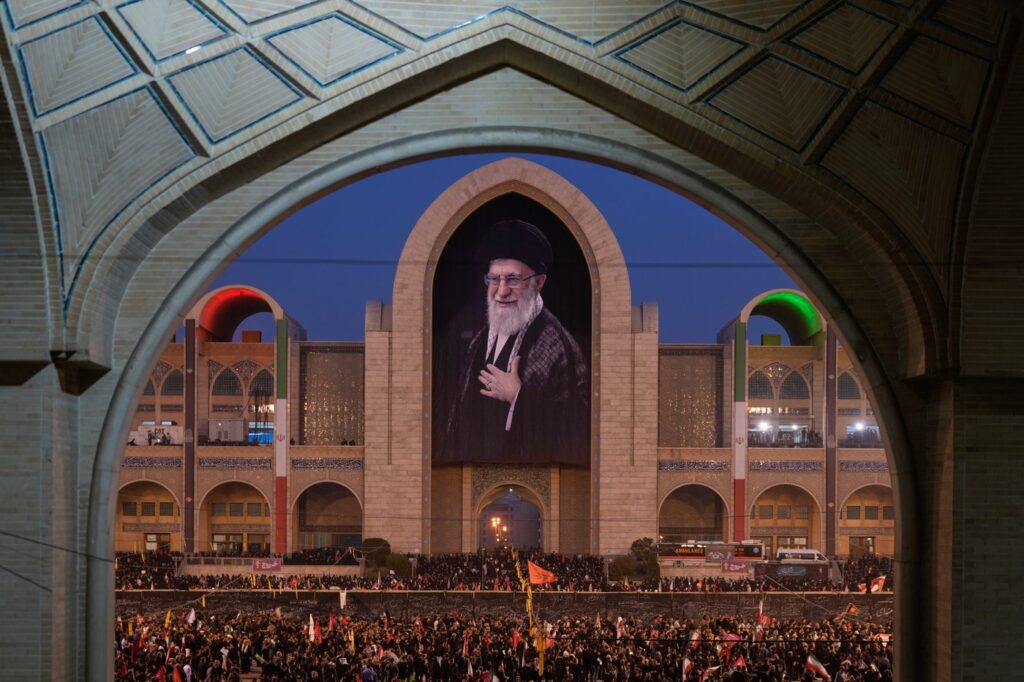
TEHRAN, Iran — A dramatic and intense atmosphere enveloped the funeral of Iran's late Supreme Leader Ayatollah Ali Khamenei, marked by inflammatory rhetoric and large crowds on Sunday in Tehran. The ceremony attracted hundreds of thousands of mourners, demonstrating the deep emotional impact of Khamenei's death, which occurred at the age of 86 following an airstrike on February 28 during the ongoing Iran war.
At the heart of the event was Mohammad Rasouli, a poet who invoked fervent calls for the death of U.S. President Donald Trump. His remarks, which included questioning why "the most bastard man in the world" was still alive, prompted loud cheers and shouts of "Death to America!" and "Death to Israel!" throughout the crowd. This response illustrates the heightened anti-American sentiment that has permeated Iranian society, particularly during periods of heightened tensions with the United States.
Mourners, dressed in black, filled the streets carrying banners and flags that not only honored Khamenei's legacy but also expressed wishes for Trump's assassination. The funeral proceedings took place as President Trump delivered a speech in Washington, D.C., commemorating the 250th anniversary of the founding of the United States, further accentuating the stark contrasts between the two nations. The scale of the mourning was significantly larger than the previous day's ceremony, underscoring the occasion's profound importance to many Iranians.
Khamenei's death is perceived as a pivotal moment for Iran’s theocratic regime, especially with his son, Ayatollah Mojtaba Khamenei, expected to succeed him. The transition in leadership comes at a critical juncture for Iran, which is currently navigating the complexities of the ongoing military conflict and grappling with the implications of its strategic position in the Strait of Hormuz. This area is crucial for global oil transport and has historically been a center of geopolitical tensions.
The funeral's timing is particularly noteworthy as negotiations between Iran and the United States regarding a potential resolution to the war remain stalled, leaving the future uncertain. Moreover, concerns are mounting over possible actions from Israel, which complicates the situation further. The gathering of mourners at the Imam Khomeini Mosalla Grand Mosque was a manifestation of national sentiment that could consolidate support for the regime and its newcomers.
The public's visceral responses at the funeral, including explicit calls for violence against foreign leaders, illustrate the ongoing global ramifications of Iran’s domestic politics. As emotions run high and tensions continue to escalate, both domestically and internationally, the situation in Iran remains precarious and full of potential volatility that could reverberate well beyond its borders.
As Iran consolidates its leadership and positions itself within the broader geopolitical landscape, its citizens’ sentiments will likely continue to influence both internal and external dynamics, maintaining a complicated status quo fraught with potential for conflict and change.








