

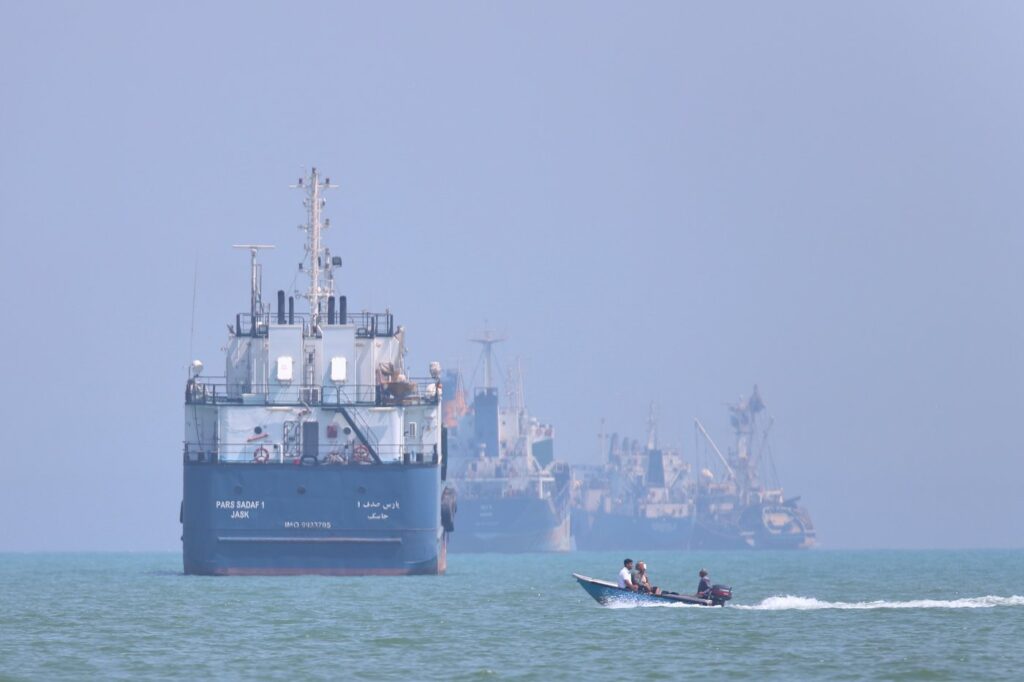
In Evian-les-Bains, France, U.S. allies are proposing a naval mission focused on the Strait of Hormuz as a subsequent measure following a recent deal aimed at ending the Iran war. This initiative seeks to restore confidence among crews and shipping insurers by ensuring safe navigation through the vital waterway, which may involve removing explosive mines and providing military escorts for vessels.
France and Britain have been collaborating on these plans for several months. French President Emmanuel Macron initially suggested the concept back in March when hostilities were ongoing. He proposed that warships could escort commercial tankers and container ships through the strait once the conflict subsided.
U.S. President Donald Trump conveyed to Macron at the G7 summit on Monday that he does not perceive a significant need for assistance, asserting, "the strait is going to be open" due to the tentative agreement with Iran. However, he acknowledged that having a few ships from various countries could be beneficial, expressing support for France's potential participation.
The mission being outlined by U.S. allies is framed as a necessary action to support the reopening of the Strait of Hormuz, emphasizing “unconditional and unrestricted freedom of navigation.” This statement reflects the commitment shared by countries such as France, the United Kingdom, Germany, Japan, and Italy, all of whom are keen on ensuring commercial shipping is secure.
The proposed operation is characterized as a "strictly defensive and independent mission," focusing on reassuring commercial maritime traffic and executing mine-clearing operations. France’s nuclear-powered aircraft carrier, the Charles de Gaulle, is already stationed in the region. Macron indicated to Trump that French aircraft could engage in aerial observation missions soon, with warships expected to follow within days to reinforce security in the strait.
These mine-clearing efforts aim to eliminate various types of underwater explosives, which can be triggered by sound, movement, or light, thus ensuring safer passage for commercial vessels in the region. Although Trump acknowledged reports of mines already being found, he mentioned that the strait is "already partially opened."
The U.K.'s Royal Navy has also showcased its capability, demonstrating the expertise it could contribute to the mission during exercises. Past experiences of French, American, and British naval crews escorting civilian vessels through hostile environments have equipped these forces with vital skills. They have previously defended commercial ships against attacks from Iran-backed forces in the region.
In light of the current situation, operational naval crews would hope for a reduced threat level if the ceasefire holds, yet they remain aware of Iran's continuous military capabilities, including missiles and drones. Analyst Max Bergmann noted that while a U.K.-French naval presence could enhance security and reassure maritime stakeholders, its effectiveness should not be overstated.
The collaborative planning for the naval mission has extended beyond Europe, involving countries such as Australia, South Korea, and Japan, as well as Gulf nations like Bahrain and Qatar. A recent meeting organized by France and Britain included representatives from 38 nations, underscoring the international dimension of the proposed maritime initiative.








