

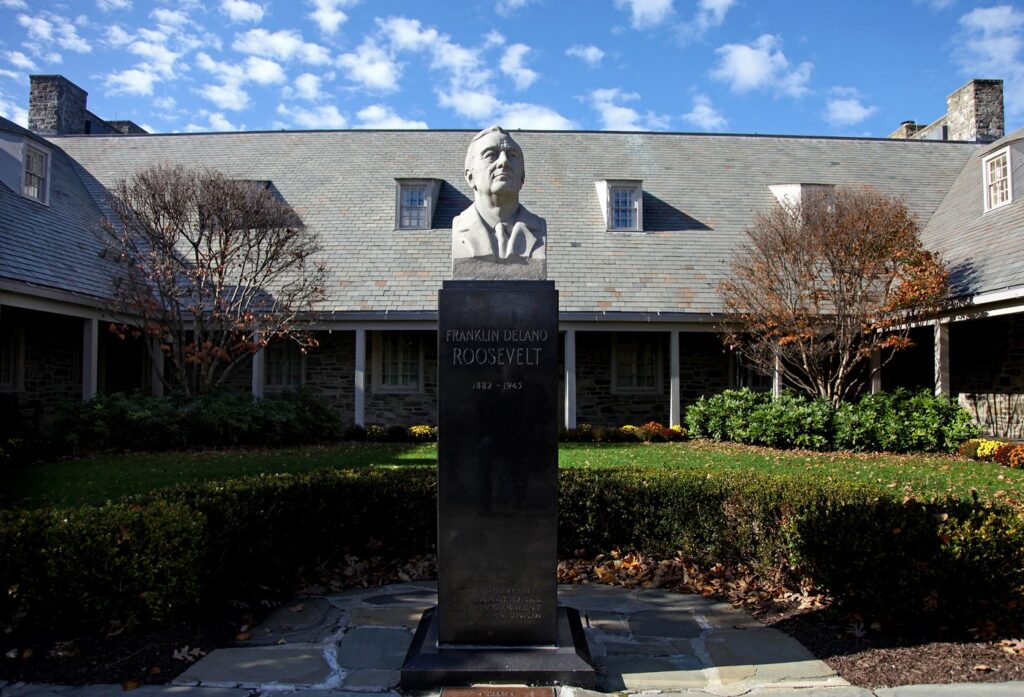
Throughout his research visits to the Franklin D. Roosevelt Presidential Library and Museum in Hyde Park, New York, historian Geoffrey Ward is consistently immersed in the essence of FDR, capturing the cheerfulness and contentment that defined his public persona. Ward notes, “It feels like you’re stepping back into his world,” as he explores the sprawling grounds once belonging to the Roosevelt family, which house a diverse array of collections reflecting FDR’s hobbies and interests, including stamps, coins, stuffed birds, and model ships.
Since the late 1930s when FDR established the modern system of presidential libraries, a network of museums and research facilities has proliferated across the United States. These institutions, overseen partially by the National Archives and Records Administration (NARA), vary significantly in character and location. Prominent examples range from the scenic Ronald Reagan Presidential Library & Museum in Simi Valley, California, to the Herbert Hoover Library and Museum in West Branch, Iowa, and the forthcoming Obama Presidential Center in Chicago, which is set to welcome visitors on June 19.
Historian Douglas Brinkley, who has visited all the presidential libraries established post-FDR, describes them as vital hubs for academic lectures, research, school tours, and tourism. Brinkley commends Roosevelt for his innovative approach in donating his home in Hyde Park to the nation, thus laying the groundwork for future libraries to be situated where the respective presidents lived.
The distinct personality and legacy of each president are encapsulated within their respective libraries. While NARA manages the archives, the funding primarily comes from private donors who may wish to emphasize certain aspects of a president's tenure while downplaying others. For instance, the Hoover Library's website highlights that many policies instituted by Roosevelt during the Great Depression were initially suggested by Hoover himself, providing a more nuanced look at their presidencies. Conversely, the Richard Nixon Library has faced tensions between its administrators and the Nixon family over the portrayal of the Watergate scandal.
Max Boot, author of an upcoming biography of Ronald Reagan, observes a marked difference between the archives and the museum. He points out that while Reagan’s records are administered by impartial federal employees, the museum tends to focus on Reagan's achievements and overlook his missteps, reinforcing a positive image of the former president.
Historian Ted Widmer stresses the importance of transparency and presenting a balanced narrative of history. He acknowledges advancements in this area, citing the Lyndon Johnson Library's willingness to confront the controversial aspects of Johnson’s presidency, including his management of the Vietnam War. In 2023, the library drew renewed attention to Johnson's alleged electoral misconduct via newly released recordings from a 1948 Senate campaign.
The Obama Presidential Center has drawn mixed reviews regarding its design and the absence of a NARA facility on-site, reflecting a modern shift towards digital archival records. Brinkley forecasts that this trend will continue as future libraries evolve. Anticipating up to 1 million visitors annually, the Chicago center will feature unique amenities, including a public library branch, a basketball court, and a garden, alongside charcoal grills for public use, an idea proposed by Obama himself during a community meeting in 2017.
With its ambitious design and community-friendly features, the Obama Presidential Center hopes to attract a diverse range of visitors while continuing to contribute to the legacy of presidential libraries in America.








