

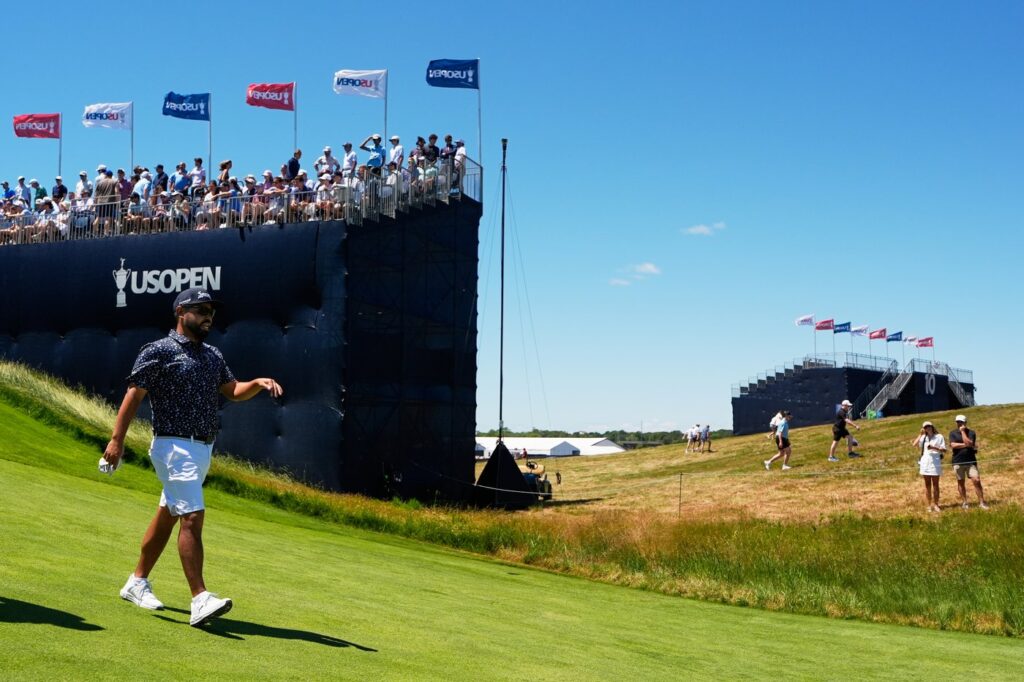
SOUTHAMPTON, N.Y. (AP) — The U.S. Open returns to Shinnecock Hills, a golf course steeped in both golf and American history. Established in the 1890s, Shinnecock Hills is a links-style masterpiece and one of the five founding clubs of the United States Golf Association (USGA). The course is built on ancient burial grounds that belonged to the Shinnecock Nation, whose members played a significant role in its creation.
On Thursday, a field of 156 players from around the globe will compete in the sixth U.S. Open held at this historic site. The first tournament took place in 1896, where John Shippen, an African-American golf teacher and club maker, made history as the first Black player to enter the U.S. Open. Alongside him was Oscar Bunn, a fellow member of the Shinnecock tribe, making them the first two American-born players to participate in America's national championship.
A notable controversy surrounded the 1896 event, as British professionals expressed their reluctance to compete against Black and Native American players. USGA President Theodore Havemeyer took a firm stance, stating that the tournament would proceed with or without their participation. At a time when the sport of golf in America was still developing, this precedent set by Havemeyer has gained significance in light of the sport’s ongoing struggle with inclusion.
USGA historian Mike Trostel noted Shippen's pioneering role, describing him as an unheralded figure in golf history. While Shippen's achievements on the course remain relevant, the relationship between the Shinnecock people and their land encompasses a much deeper narrative beyond golf. A documentary entitled "The Land We Share" highlights this history, detailing how the New York state legislature coerced the Shinnecock Nation into ceding much of their territory to Southampton in 1859. Currently, the Shinnecock Nation's land spans approximately 800 acres, situated south of Montauk Highway, adjacent to the prestigious golf club.
Members of the Shinnecock tribe were integral to the construction and maintenance of Shinnecock Hills. Peter Smith, a tribal member, led the grounds crew for several decades, gaining respect for his meticulous maintenance of the course during the 1986 and 1995 U.S. Opens. However, his dismissal in 1999, amid unclear reasons, strained the relationship between the club and the Shinnecock Nation. Smith’s nephew, Matthew, currently assists the grounds crew and was featured in the documentary, emphasizing the deep familial ties to the course: "My ancestors built that course, my ancestors died on that course," he stated.
Brian Pickett, president of Shinnecock Hills, acknowledged the shared history between the course and the Shinnecock Nation, emphasizing that it reflects a facet of American history that cannot be ignored. Tribal council chair Lisa Goree highlighted the contrasts faced by the tribe as they exist amidst wealth and opulence, stating, "There are so many people who pass right through the golf club; they have no idea where that name came from."
Shippen’s journey at the 1896 U.S. Open was remarkable, though he remained unaware of the historical significance of his participation. After being recognized as Shinnecock's best player, he was sponsored by club members to enter the tournament, where he finished fifth after a disastrous 11 on the 13th hole. Reflecting on the moment, he wistfully noted his desire to play that hole again, as it may have altered the course of history.
It wasn't until 1986 that the USGA returned to Shinnecock, a delay attributed to its remote location and the sport’s ongoing diversity challenges. Pioneers like Charlie Sifford, Lee Elder, and Calvin Peete helped break down racial barriers in golf, but it was Tiger Woods's victory at the Masters in 1997 that marked a pivotal cultural shift in the sport. Despite the passage of time, Shippen’s contributions and the Native American heritage linked to Shinnecock Hills remain an important aspect often overshadowed in the annals of golf history.
Pickett emphasized the importance of open dialogues regarding the complexities of these relationships, stating, "To us, having had those relationships and talking about the complications is far better than not having the conversation at all."








