

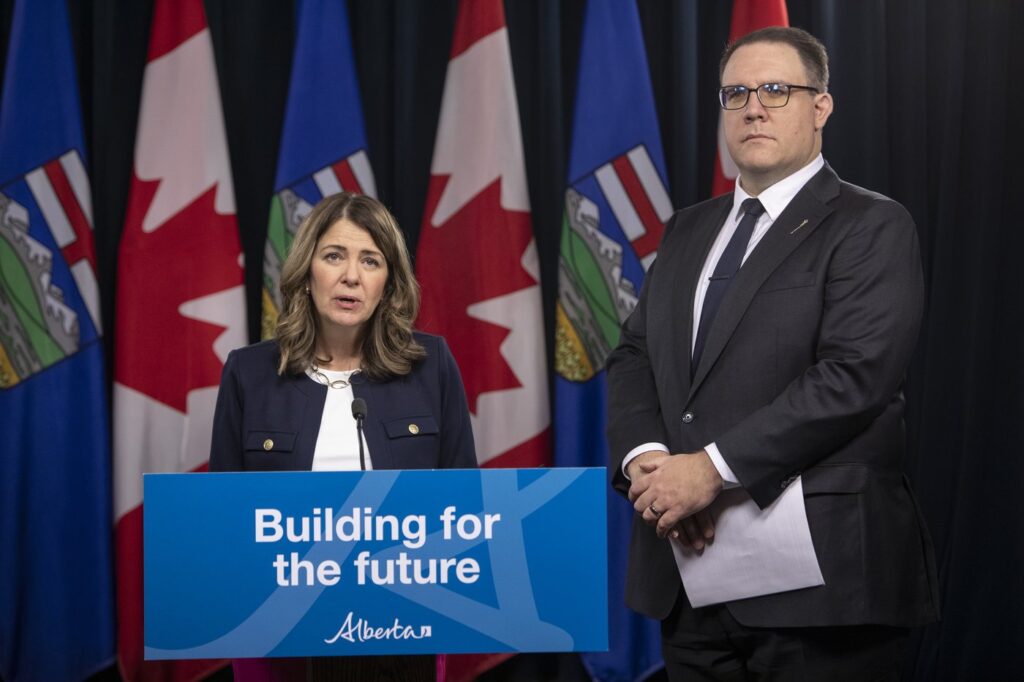
EDMONTON – Premier Danielle Smith is set to make an announcement today regarding new measures aimed at assisting Albertans in coping with the rising cost of living. This decision comes in the wake of heightened tensions in the U.S.-Iran military conflict, which has severely disrupted global energy supply chains, resulting in soaring gas prices. Consequently, this situation has positively impacted Alberta's economy, which is heavily reliant on the petroleum sector.
In light of the ongoing economic challenges, Alberta's budget could benefit from some favorable developments. The conflict in the Middle East erupted in late February, just two days following the Smith government’s announcement of a $9.4 billion deficit in this year’s budget. This significant deficit is largely attributed to the prevailing low oil prices at the time.
The Opposition New Democratic Party (NDP) has taken a stance against the government’s taxation policies, urging Premier Smith to eliminate the provincial fuel tax. They argue that such a move would relieve the financial burden on Albertans, allowing them to allocate more of their income toward essentials like food and housing. This call for action highlights the pressure many residents are facing due to the climbing costs associated with living in the province.
In response, Smith’s United Conservatives have maintained their position on taxation, stating that they will adhere to a formula that adjusts gas tax cuts based on fluctuating oil prices. This formula indicates that a reduction in gas tax may be implemented as soon as July 1, contingent upon conditions in the oil market.
This report underscores the complexities of managing an economy that is so closely linked to global energy prices. The dynamics between supply disruptions, fuel costs, and governmental tax strategies reflect the broader challenges faced by not just Albertans, but also economically dependent regions around the world.
The situation remains fluid, as Smith's forthcoming announcement is highly anticipated to provide clarity and potential relief for residents grappling with a cost of living crisis exacerbated by international conflicts affecting energy supplies.








