

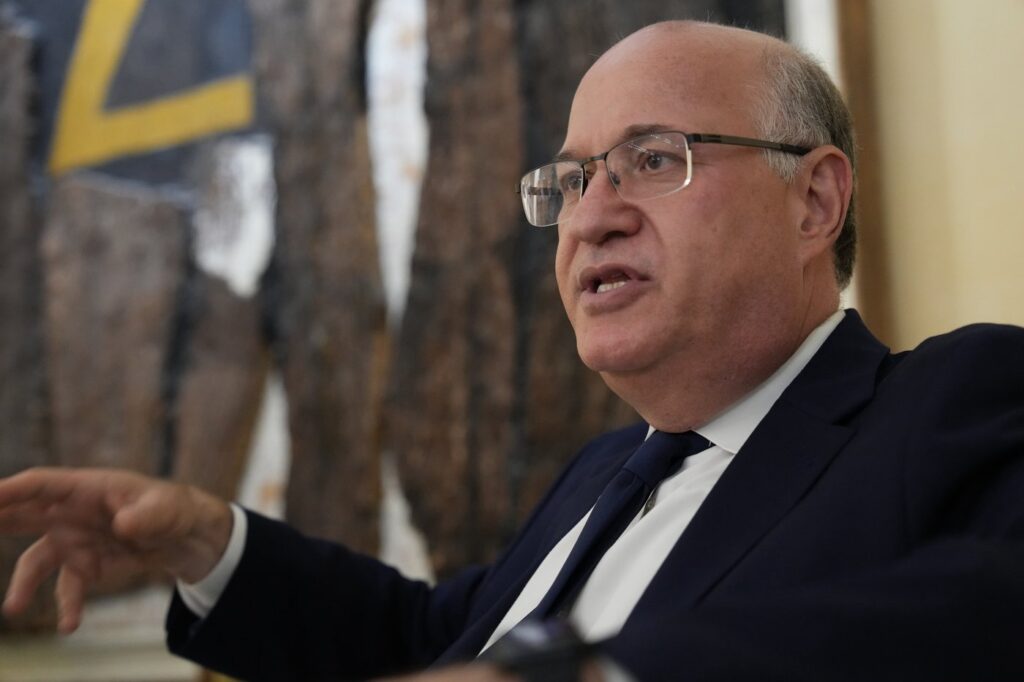
ROME (AP) Ilan Goldfajn, the head of the Inter-American Development Bank (IADB), recently met with Pope Leo XIV to discuss the potential benefits of rare earth mineral extraction in Latin America. This discussion is particularly significant given the Vatican's longstanding opposition to multinational mining corporations, especially in Latin America, and its advocacy for Indigenous peoples whose lands are often affected by such industries.
Goldfajn presented the idea that advancements in mining practices could avoid past mistakes. He emphasized that rare earth mining could bring substantial economic benefits to Latin America if conducted with the right environmental safeguards, local value addition, and adherence to labor standards. The IADB currently has a $4 billion pipeline of critical mineral projects, predominantly in Chile, Argentina, and Brazil, with a significant portion involving private sector partnerships.
The challenge for Goldfajn is considerable, as the Vatican has consistently criticized the environmental and social impacts of mining operations. Pope Leo XIV, with his prior experience as a missionary in Peru, is acutely aware of the implications of mining on Indigenous communities and the environment. His background gives him a unique perspective on the benefits and the detriments of mining practices encountered in the region.
Goldfajn noted that Pope Leo XIV has likely seen both the promise of economic development through mining and the accompanying challenges it presents to vulnerable communities. Yet, despite Goldfajn's attempts to engage the pope in a conversation about responsible mining, the Vatican's recent calls to promote divestment from mining companies illustrate a firm stance against the industry. This initiative aims to encourage local churches throughout Latin America to reassess their investment strategies concerning mining operations, ensuring they align with the values of social and environmental justice.
The historical context of mining in Latin America is fraught with exploitation, including forced labor, displacement of Indigenous populations, and significant environmental damage. Past foreign mining activities often benefited outside corporations while leaving local communities impoverished. Pope Leo XIV's familiarity with the regions affected by mining provides a foundation for his critique of exploitative practices that continue today.
The pope is expected to visit Peru in November, where he plans to engage with communities that have been directly impacted by mining activities. His earlier comments during a trip to Africa, where he criticized the colonial dynamics of mineral extraction, indicate a continuing commitment to advocating for marginalized populations. Goldfajn acknowledges that while the pope may not influence investment decisions directly, his position shapes how mining companies may engage with local communities, potentially influencing public perception and opposition movements.
Goldfajn’s discussion is particularly timely as countries in the region identify minerals such as copper, cobalt, lithium, and nickel as critical components for advancing new technologies. Rare earth elements, essential for manufacturing smartphones, semiconductors, electric vehicles, and jet engines, make this an urgent issue. Nevertheless, Goldfajn rightly pointed out that the processing of these minerals can lead to severe environmental degradation without strict regulation and oversight, an area where the pope’s voice could enforce accountability.
Pope Francis, Leo's predecessor, has previously condemned destructive mining practices in his encyclical, calling for Indigenous communities to be primary partners in discussions affecting their lands. Leo XIV's current emphasis on ethical considerations surrounding mining demonstrates continuity between papal leaderships concerning environmental stewardship and social justice.
As the region continues to navigate the complexities of mineral extraction in the context of a burgeoning global tech industry, the conversation between Goldfajn and Pope Leo XIV underscores the pressing need for responsible practices that safeguard both the environment and Indigenous rights. The impact of this dialogue may resonate well beyond the Vatican's walls, influencing how mining initiatives are approached throughout Latin America.








