

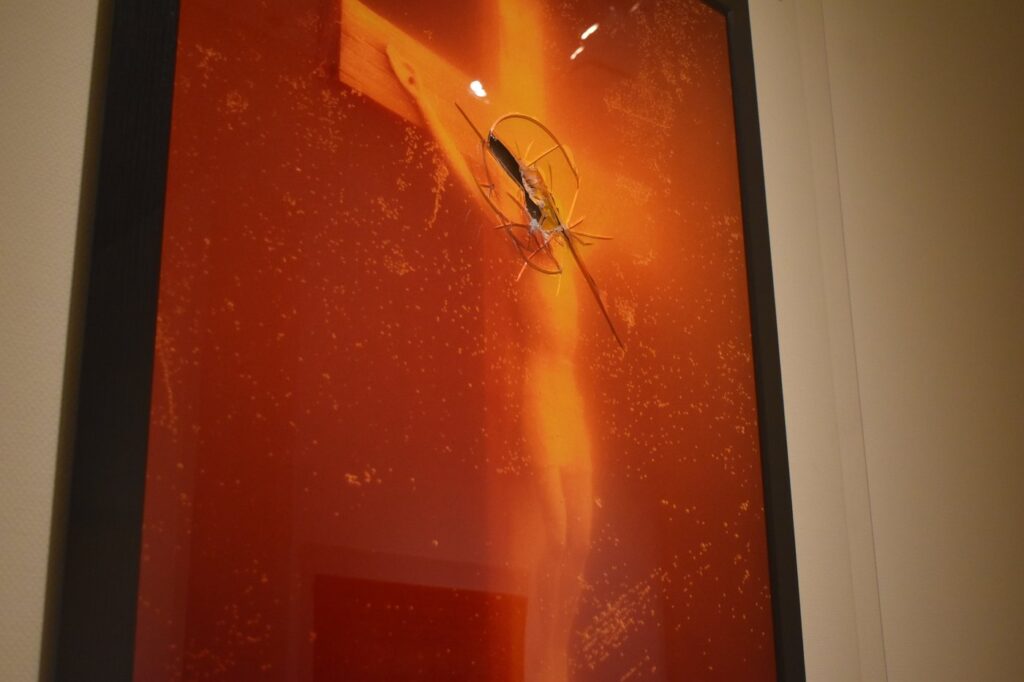
FREDERICTON The Beaverbrook Art Gallery in Fredericton, New Brunswick, is currently exhibiting the controversial artwork "Piss Christ" by American artist Andres Serrano, a photograph of a crucifix submerged in urine. This marks the first time the piece has been displayed in Atlantic Canada, running until the end of November. The artwork, first created in 1987, has long been a subject of public debate and criticism, particularly from religious groups.
According to the gallery’s executive director, Bernard Doucet, the aim of exhibiting "Piss Christ" is to stimulate public dialogue and engage the community in conversations about art, controversy, and emotional responses. Doucet emphasized that museums serve as vital community infrastructure, fostering dialogues that encompass a wide range of emotions and opinions.
The unveiling of the Serrano exhibit has already sparked criticism, notably from Conservative MP John Williamson, who described "Piss Christ" as "not great art in any serious sense" and characterized the gallery's decision as recycling an outdated controversy. Williamson claimed the exhibition simply represents "nostalgia for transgression," ridiculing the relevance of a work that, in his view, has long since lost its novelty.
The Roman Catholic Diocese of Saint John, N.B., was approached for comments but did not immediately respond to inquiries regarding their stance on the exhibit. Meanwhile, Serrano himself has stated that he identifies as a Christian and views "Piss Christ" not as an affront to faith but rather as a personal expression rooted in his belief system. He defends the work as a celebration of both God and religious art, asserting its artistic merit and relevance.
"Piss Christ" is among the most controversial artworks in contemporary history, igniting fierce debate over public arts funding in the United States after its creation. The controversy continued to escalate over the years, with the artwork famously attacked with a hammer in both Australia (1997) and France (2011) by protestors who described it as sacrilegious. In both instances, the damaged artwork went on to remain on display, provoking further discussions regarding artistic expression and the boundaries of art.
In recent years, the artwork was also the center of protests in Santa Barbara, California, in 2023, where it was removed from educational material following backlash from local Christian groups.
Sarah Moore Fillmore, CEO of the Art Gallery of Nova Scotia, points out that "Piss Christ" has a polarizing effect that transcends the conventional boundaries of the art world, suggesting that its notoriety ensures ongoing public interest. She anticipates that visitors to the Beaverbrook Art Gallery will seek to view the piece, potentially leaving with a heightened sense of curiosity or shock about its implications.
The "Andres Serrano: Incarnate" exhibit will also showcase additional works such as "Blood Cross (Bodily Fluids)" from 1985 and "Piss Pope, Part I and II (Immersions)" from 1988, all of which combine Christian symbolism with human fluids. These modern pieces will be displayed alongside older religious art in the gallery's Dali Chapel, which features works such as Salvador Dali's 1957 painting "Santiago El Grande." Doucet believes this juxtaposition will enhance public understanding of the continuity and evolving nature of religious art from historical to contemporary contexts.
Through this exhibition, the Beaverbrook Art Gallery aims to demonstrate that religious art exists in various forms and continues to hold beauty, meaning, and relevance in today’s society.








