

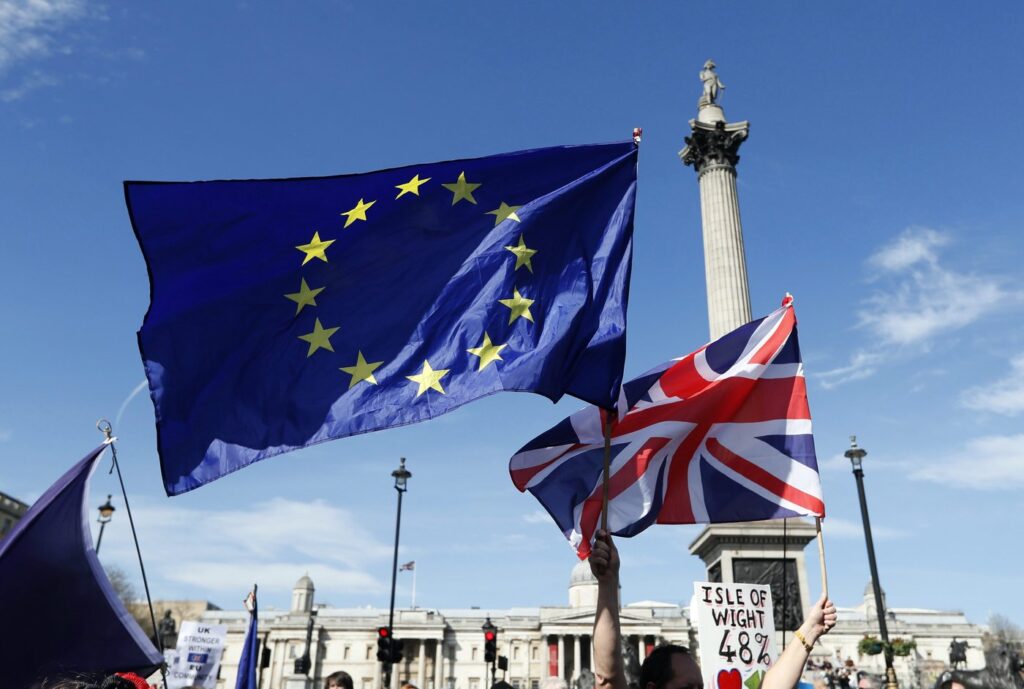
CALGARY A decade after the United Kingdom’s historic referendum to leave the European Union, the aftermath continues to resonate, particularly as Albertans prepare for a potential separation referendum. Richard Barfield, a former consultant at PricewaterhouseCoopers, reflected on the political climate surrounding the Brexit vote, noting how even those well-versed in economics struggled to grasp accurate information amid a flurry of competing narratives. He acknowledged that he, like many, assumed the economic consequences of leaving the EU would be manageable.
Barfield emphasized the importance of a thorough understanding of the implications of Brexit, which later prompted him to educate peers through presentations that laid out factual analyses. His Brexit FactBase website has documented the significant economic impacts of the split, estimating that by 2025, the UK's gross domestic product (GDP) could be reduced by six to eight percent, with investment declining by 12 to 18 percent. This information cast a long shadow over the economic landscape, highlighting elevated uncertainty and misallocated resources due to Brexit's protracted negotiations.
William Bain, a former Labour Party MP who now heads trade policy at the British Chambers of Commerce, also cautioned about the polarization that referendums often incite. Drawing from his own experiences during the 2014 Scottish independence referendum and the Brexit vote, Bain noted the lack of a shared factual foundation hindered constructive dialogue. Following the Brexit vote, businesses faced a chaotic environment as policymakers debated the terms of the UK’s withdrawal, which led to an early decline in investment and trade activity.
In the wake of Brexit, the British Chambers of Commerce reported that the new trade deals struck post-Brexit have only recouped a fraction — one-tenth — of the GDP loss predicted by the U.K.’s Office of Budget Responsibility. As Alberta considers its own future within Canada, Premier Danielle Smith has indicated that transitioning to independence could involve staggering costs, estimated to be around $400 billion for transitional expenses, with annual costs ranging from $25 billion to $50 billion.
These concerns are met with skepticism from separatist leaders, who propose much lower initial costs—around $5.7 billion with the potential for surpluses once tax revenues cease flowing to the federal government. Lennie Kaplan, a former senior manager in Alberta's finance department, has sought transparency regarding the costs and risks associated with separation. His own calculations suggest a potential $39.1 billion hit to Alberta's GDP, equating to a 7.2 percent decrease, which could significantly impact disposable household incomes should independence be realized.
Kaplan has highlighted the uncertainties that come with renegotiating trade agreements, predicting that costs could rise by 12 percent, potentially leading to reduced consumer spending and depressed business investment. The looming specter of these economic challenges serves as a backdrop for Alberta's discussions surrounding its future, echoing the economic consequences seen in the U.K. post-Brexit.








