

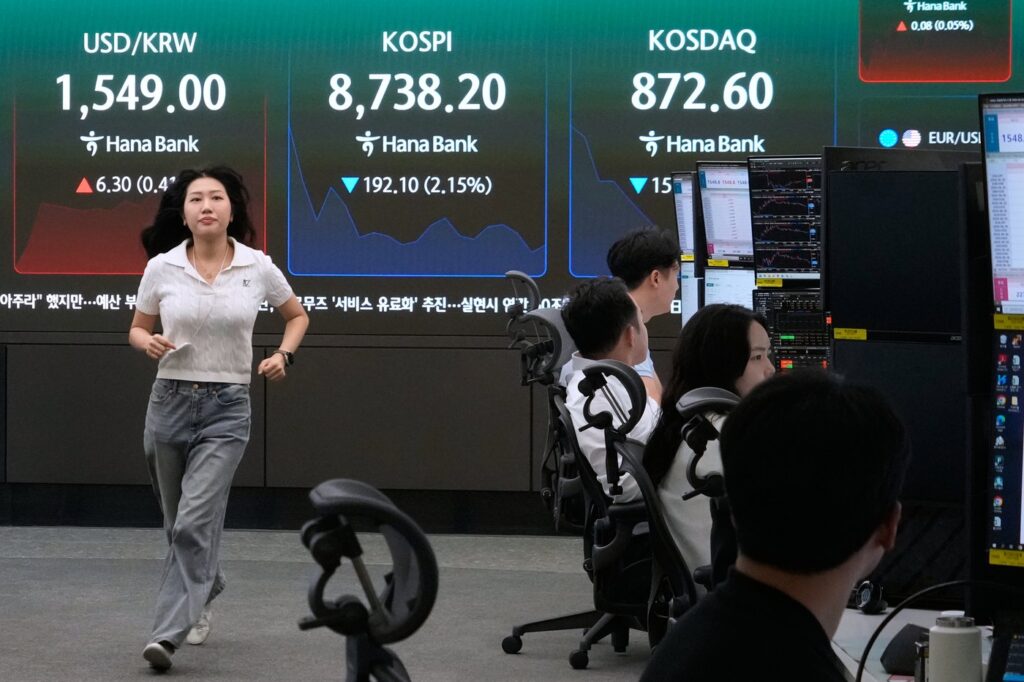
BANGKOK (AP) – On Friday, Asian stock markets experienced significant declines, predominantly influenced by steep losses in Japan and South Korea. Investors reacted to the recent volatility by selling off shares to secure profits from prior gains in the artificial intelligence sector. This pattern of trading reflects a broader trend of fluctuations in the market as traders respond to developments in technology stocks, particularly those affiliated with AI.
The Nikkei 225 index in Tokyo plummeted by 4.4%, while South Korea's Kospi suffered an even steeper decline, plunging 7.7%. Meanwhile, Hong Kong's Hang Seng index decreased by 1.9%, and the Shanghai Composite index fell by 2.1%. These movements come after both the Nikkei and Kospi had reached record highs earlier in the week, prompting investors to cash in on recent gains.
In the United States, the stock market exhibited mixed results on Thursday, as various AI-related stocks showed fluctuations, reminiscent of a roller coaster. This volatility was further compounded by Apple Inc.'s decision to increase prices on many of its products, leading to a decline in its stock value. The mixed finish reflects the uncertainty that continues to persist in the market as companies navigate price adjustments and evolving technology landscapes.
The events in Asia demonstrate how interconnected global markets have become, particularly in sectors driven by technology. As investors react to rapid changes in the AI market, the response has been swift, resulting in notable sell-offs. Notably, this wave of selling could also be interpreted as a strategic move to mitigate risks associated with market corrections following periods of heightened stock performance.
In Seoul, currency traders monitored the Korea Composite Stock Price Index (KOSPI) amidst the trading volatility. The foreign exchange rates, particularly between the U.S. dollar and the South Korean won, were also in focus as market participants assessed the implications of stock movements on currency valuations.
Overall, the Asian markets’ downturn underscores the sensitivity of stock values to external factors and investor sentiment, especially concerning the technology sector and artificial intelligence. As market conditions continue to evolve, traders and investors will likely remain vigilant and responsive to shifts in both domestic and international developments.








