

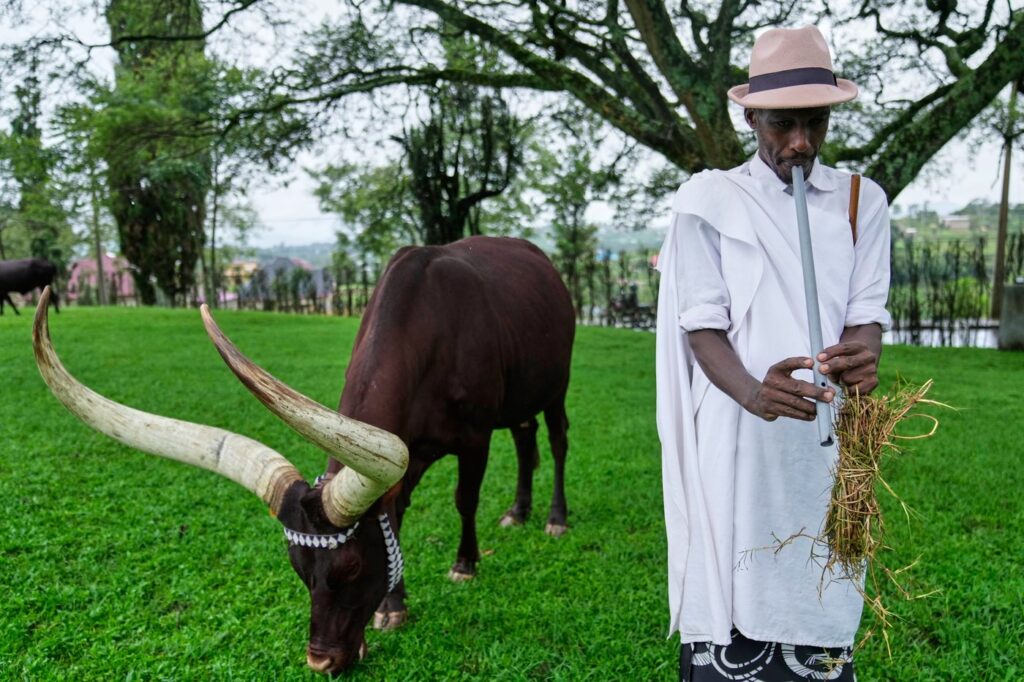
In Nyanza, Rwanda, the Inyambo cows have emerged as living symbols of the nation’s cultural heritage, receiving daily attention in the form of music and poetry. Known for their long, crescent-shaped horns, these royal cows can be seen grazing at the King’s Palace Museum as well as in the estates of Rwanda’s wealthiest individuals, including President Paul Kagame.
Derived from the Ankole cattle of East Africa, the Inyambo breed is also present in neighboring Uganda and Burundi. Historically, these cows were associated with nobility and prestige, raised in royal courts primarily as decorative symbols rather than for milk or meat. Museum curator Bigira Junior commented, “They’re not for milk, they’re not for meat. They were just used as decorations around the palaces.”
Despite the monarchy's dissolution, the Inyambo remain highly revered in Rwandan society. President Kagame has embraced a tradition of gifting these cows among kingdoms, a practice that has been dubbed “Inyambo diplomacy” by local media outlets. As Rwanda aims to attract more tourists, significant investments have been made in cultural sites like the King’s Palace Museum, where the Inyambo are a major attraction.
The cows receive premium care, including melodious poetry recited by caretakers that celebrates their beauty and calls them by name. This poetic treatment is intended to calm the cows before they are showcased to visitors or during traditional ceremonies. A caretaker is quoted saying, “You have beautiful horns. Move your head so that we can see your beautiful neck and body. You are the most beautiful cow among others.” In addition to poetry, the cows are brushed, fostering a close bond between them and their caregivers who emphasize that affection must be expressed physically.
In Rwanda and various other countries in Africa, cattle symbolize considerable social and economic value. The size of a herd and the uniqueness of the breeds held directly correlate to a farmer’s respect in the community. For instance, in 2004, South African President Cyril Ramaphosa purchased a special breed of Ankole cows from Uganda’s Yoweri Museveni, highlighting the esteemed significance of this cattle breed.
The cultural impact of the Inyambo extends into the realm of traditional dance in Rwanda, where performances often mimic the graceful movements of the cows' horns. Curator Junior remarked, “The dance is more or less a way to portray the beauty of the royal cows.” The Inyambo breed was reintroduced to the King’s Palace Museum around the early 2010s as part of conservation efforts, yet the exact number of these iconic cows remains uncertain. Caretakers manage breeding programs aimed at preserving the distinctive traits of the Inyambo, including their long horns and rich brown coloration, a hue symbolize royalty and stability.
For younger generations visiting the museum, the Inyambo are not just cows; they represent an integral part of Rwanda’s heritage and identity. Junior stated, “We educate them to take this information to others and keep the culture alive.” Through these efforts, Rwanda hopes to ensure the lasting legacy of the Inyambo as cultural ambassadors and symbols of heritage in both Rwanda and Uganda.








