

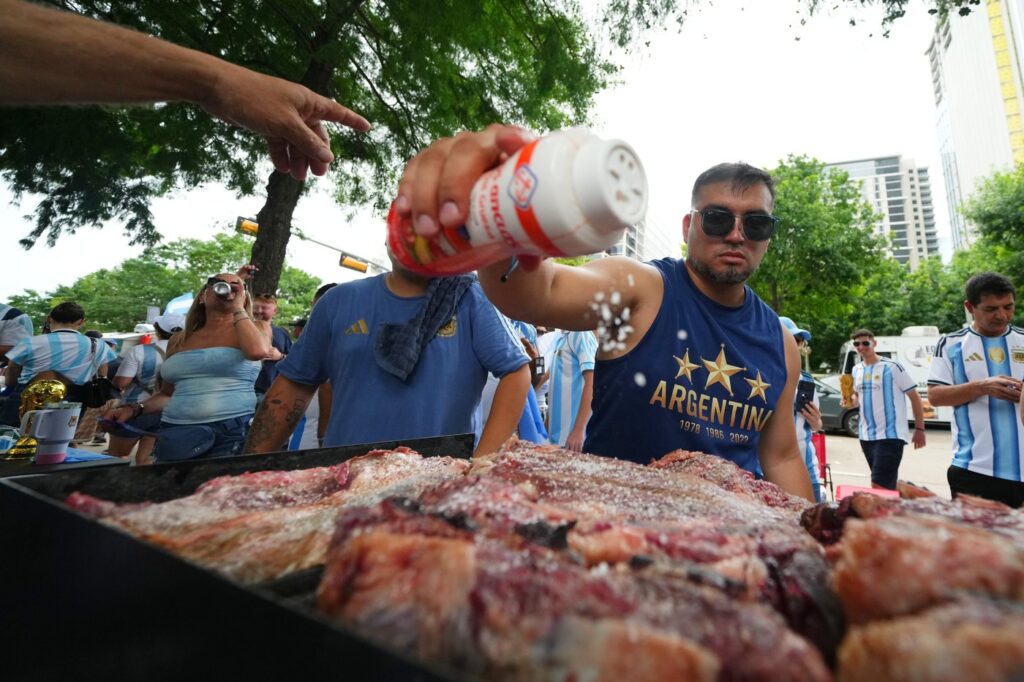
DALLAS (AP) — With thousands of Argentine fans gathering in Texas for the World Cup, a culinary rivalry has emerged, igniting discussions about who produces the best steaks—Texas or Argentina. Texas leads the United States in beef production, contributing to the larger U.S. beef industry, which ranks second globally, only behind Brazil. Argentina, known for its beef culture, ranks sixth in global beef production.
Chef Carlos Eduardo Barahona, an Argentine who has lived in Texas since 1998, argues passionately for Argentine beef. He claims, "Argentine beef is simply unbeatable. The savory texture, the style of the cut—there is no competing with it." Barahona emphasizes that even the cheapest cuts in Argentina yield enjoyable results, a stark contrast to the potential variability of high-end cuts in Texas.
Argentine cattle are primarily grass-fed and raised on vast pastures, resulting in leaner meat with intense earthy flavors due to a longer time to market readiness. In contrast, Texan beef is predominantly grain-fed, offering more marbling—small streaks of fat within the muscle that add juiciness and tenderness—as well as a sweeter flavor profile. Texas Agriculture Commissioner Sid Miller staunchly defends Texan beef, stating, "There’s no better beef than U.S. beef, particularly Texas beef." He also acknowledges the improvements made in Argentine beef quality, attributing them in part to American genetics sold to Argentine ranchers.
Despite the ongoing debate, Argentine soccer fan Gonzalo Herrera expressed neutrality regarding the beef rivalry, stating, "Honestly, I don’t see a massive difference." He mentioned the importance of selecting the right cut when shopping for steaks in the U.S., noting the higher prices compared to Argentina.
The discussion surrounding the quality of beef from both regions often extends to cooking methods and seasoning preferences. At Corrientes 348 Argentinian Steakhouse in Dallas, steaks are simply prepared with salt and mesquite charcoal, while many Texans prefer to add pepper, butter, and barbecue sauces to enhance flavors. This stark difference in cooking style showcases the cultural pride each region holds regarding their beef.
As the World Cup continues, fans from Argentina are frequenting local restaurants for a taste of home. Emmanuel Tobon, assistant manager at Corrientes 348, noted how Argentine fans are enjoying the Texas culture while reminiscing about their cherished cooking traditions.
Fernando Garcia Morillo, originally from Buenos Aires and now living near Miami, appreciates the quality of both Argentine and Texan beef but longs for the simpler preparations typical of Argentine cuisine. He insists on ordering meat seasoned only with salt, expressing dissatisfaction with the prevalence of sauces in American fare.
While there may be a culinary rivalry, Morillo downplays its significance, stating that the actual competition lies with Brazil and that he enjoys U.S. meat. With their steaks highly regarded, Argentines wholeheartedly embrace their culinary traditions while enjoying the experience of the World Cup in Texas.








