

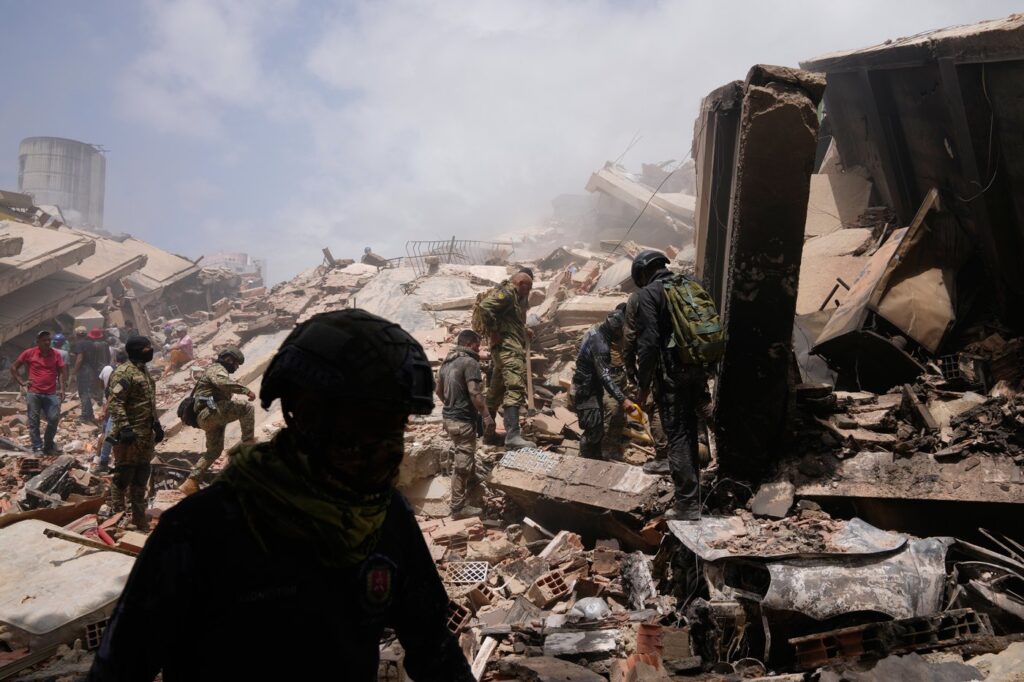
Older buildings and substandard construction, along with geographical factors, have made many neighborhoods in Venezuela susceptible to strong earthquakes, as evidenced by the recent back-to-back tremors that struck the country. These earthquakes were reported to be among the most intense experienced in over a century, resulting in the destruction of numerous buildings and leaving over 900 people dead, with the death toll projected to rise. Videos and satellite imagery from the affected areas indicate widespread damage, particularly in densely populated cities.
Microsoft’s AI for Good Lab has analyzed satellite images from Catia La Mar in La Guaira state, one of the hardest-hit areas along the Caribbean coast. Their findings revealed that approximately one-third of the city’s nearly 30,000 structures were damaged due to these quakes. Experts attribute this vulnerability to several factors, including inadequate construction during oil booms where best practices for earthquake risk mitigation were often overlooked.
Many buildings constructed in Venezuela during the 1950s and 1960s were not retrofitted to meet modern earthquake standards. Engineers highlight that a combination of soft soils, excessive height in tower designs, and outdated concrete contributed significantly to the extensive damage. David Cocke, a structural engineer based in California, pointed out that modern reinforcing steel connections, which improve the resilience of buildings against seismic activity, were often absent in these structures.
Since the 1970s, the recognition of concrete buildings as particularly vulnerable to earthquakes has led to enhanced construction practices in wealthier nations. However, poorer and middle-income countries, including Venezuela, have struggled to enforce necessary upgrades amid other pressing issues. Cocke noted that while advanced countries such as Japan and the U.S. have implemented appropriate changes, many counterparts have not seen similar progress in building safety standards.
Another dimension of the disaster lies in the construction characteristics of the buildings themselves. Many collapsed structures displayed non-structural walls made of heavy bricks or featured “soft stories,” where ground floors were utilized as garages or open spaces. Eduardo Miranda, a civil and environmental engineering professor at Stanford University, stated that soft stories significantly increase the risk of structural failure, particularly in conjunction with softer soils, making buildings more prone to collapse.
The nature of the disasters in Venezuela was further exacerbated by the sequence of the earthquakes, classified as a doublet. This situation mirrors a tragic event in Turkey and Syria earlier in 2023, where a similar sequence of quakes led to nearly 60,000 casualties. Geophysicist Marcos Ferreira explained that such sequential tremors amplify vibrations, which heightens the danger posed to structures during seismic events.
In the wake of a deadly quake in 1967, Venezuelan authorities took steps to modernize building codes; however, it remains uncertain how many buildings were actually retrofitted to adhere to these revised regulations. Following catastrophic floods and landslides in late 1999, the government launched a campaign to reconstruct housing, hastily developing new structures to accommodate a surge of displaced populations. Notably, some of these newer constructions also experienced significant collapse in the recent earthquakes.
Civil engineer Juan Carlos Vielma noted that it is perplexing that several newly designed buildings, which were constructed in compliance with current safety standards, also fell victim to the quakes. This leads to a pressing need for a comprehensive review of applicable engineering standards in Venezuela to identify and rectify potential shortcomings within the construction processes. The recent disasters highlight profound concerns regarding the resilience of both old and new buildings in the face of seismic threats.








