

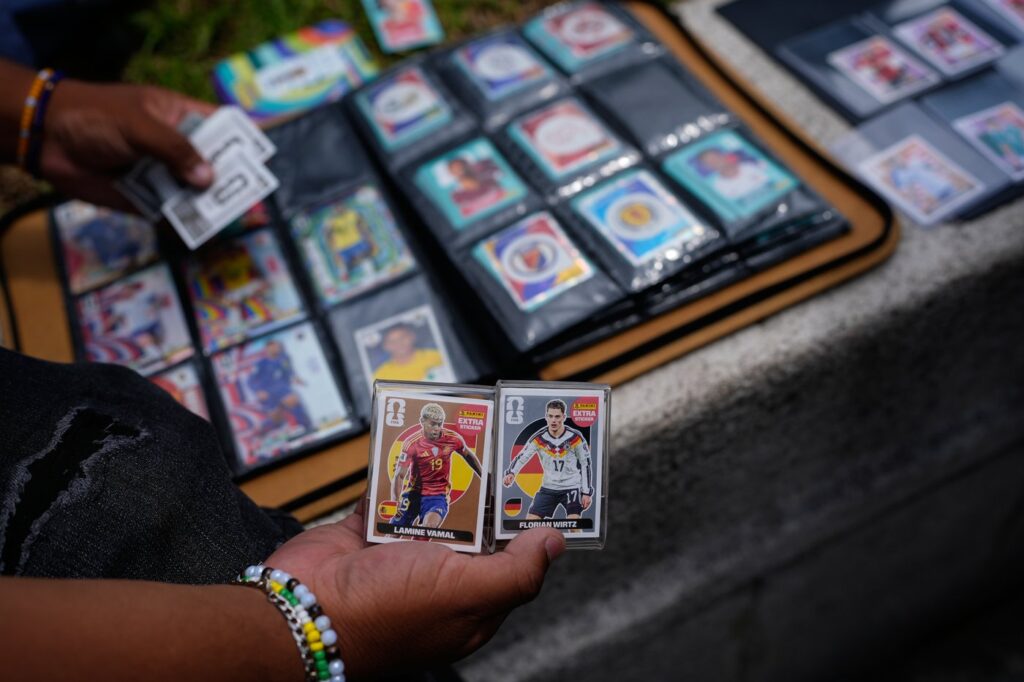
KANSAS CITY, Mo. - The Panini World Cup stickers, a beloved collectible since 1970, have gained significant popularity ahead of the tournament, with fans of all ages eager to collect and trade them. Adam Martin, owner of a collectible shop, shared an experience where attendees at a Formula 1 race were drawn to the stickers, demonstrating their cultural relevance beyond just sports collecting. These stickers, which feature players and teams from the World Cup, allow fans to engage in the tradition of completing their World Cup albums.
This year's sticker album is the largest to date, boasting 980 distinct stickers due to the expanded 48-team tournament. Martin revealed that his shop has sold an unprecedented quantity of stickers, leading to multiple reorders. Panini America, represented by senior vice president Jason Howarth, reported the production of over 2 billion packs of stickers before the tournament commenced, despite the official team lineup being finalized only on April 1. The excitement surrounding the stickers has left many retailers struggling with inventory, with some stores already sold out.
While most stickers do not hold high individual value, certain older versions featuring icons like Lionel Messi and Cristiano Ronaldo can be worth hundreds of dollars. Completing the album has become a rite of passage for many children in Europe and South America, with some rediscovering the hobby as adults and indulging in the nostalgia of trading stickers in school. To enhance the collectible experience, Panini has introduced rare sticker variations that include special borders, attracting significant interest from collectors.
The appeal of collecting and trading Panini stickers fosters a strong sense of community among fans. Sammi Kaewsawang, a content creator from Long Beach, California, embarked on a mission to complete the album by peeling and sticking all 980 stickers, emphasizing that the connections he made through trading were more rewarding than simply completing his collection. Shops frequently organize swap meets, and large gatherings, like the one hosting 8,000 collectors in Santiago, Chile, showcase the shared passion for this hobby.
Despite the stickers being more popular than ever, the future of Panini stickers hangs in the balance as their rights will transition to Fanatics after the 2030 World Cup in Morocco, Portugal, and Spain. This impending change means the end of an era for Panini, which has been a household name for collectors, particularly outside the U.S. Many collectors express sentimentality over losing a brand synonymous with their childhood. However, there is optimism that Fanatics can introduce innovative ideas to the World Cup collectible market, potentially rebooting the experience.
In summary, while the Panini stickers represent a nostalgic link to childhood for many and continue to captivate fans worldwide, the evolution of this collectible culture appears poised for transformation as new players enter the field in the coming years.








