

DUBAI, United Arab Emirates (AP) — In a significant escalation, Iran launched a drone assault targeting Bahrain, coinciding with a separate attack on a ship in the Strait of Hormuz on Saturday. These actions are perceived as Tehran's retaliation against recent airstrikes conducted by the United States.
The incidents highlight the precarious situation in the Persian Gulf, as the potential for the Iran war to spiral out of control increases, despite efforts to reach an interim agreement aimed at resolving the conflict. The U.S. airstrikes were a direct response to an earlier Iranian drone attack on a vessel attempting to exit the strategic strait, showcasing the ongoing instability in the region.
Bahrain's involvement is particularly noteworthy, given its status as a staunch critic of Iran and host nation to the U.S. Navy's 5th Fleet. The timing of the drone attack is significant, occurring shortly after U.S. Secretary of State Marco Rubio attended a Gulf Cooperation Council meeting in Bahrain, which emphasized the necessity of an immediate end to Iran's attacks and insisted on keeping the Strait of Hormuz open for navigation.
The Bahraini Foreign Ministry reported that several Iranian drones targeted the country, labeling the assault as "a flagrant threat to the security of citizens and residents." This declaration underscores the heightened tensions and security concerns faced by Bahrain amid the broader conflict.
In related developments, Iran's paramilitary Revolutionary Guard claimed responsibility for targeting various locations associated with “the U.S. terrorist army in the region,” as stated in a message delivered through the state-run IRNA news agency. However, the specific areas targeted remain undisclosed.
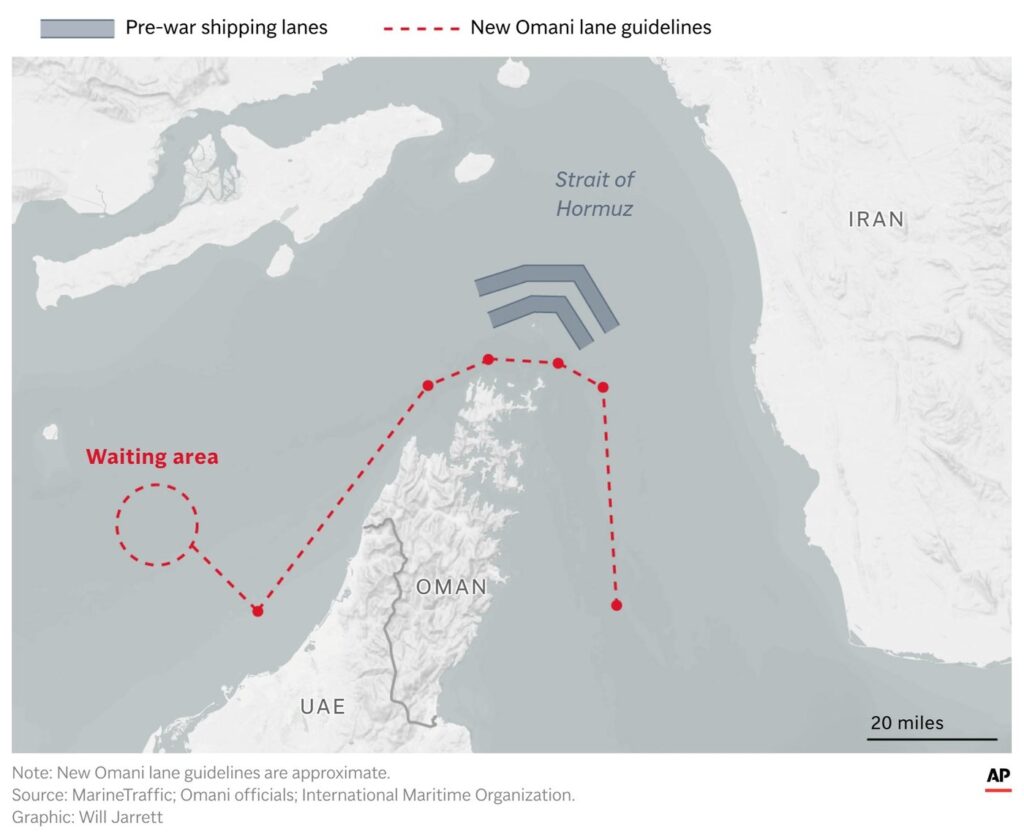
Additionally, the United Kingdom Maritime Trade Operations center reported an attack on a tanker in the Strait of Hormuz on the same day. Fortunately, the crew was unharmed, and there were no reports of environmental damage. While no group initially claimed responsibility for this strike, suspicion quickly centered on Iran, indicating growing concerns about maritime security in one of the world's most critical shipping lanes.
These recent developments and military actions signal a deterioration in the already fragile ceasefire that had been established in the region amidst ongoing hostilities. As Iran continues to assert its military might, the implications for international shipping and regional stability remain substantial, further complicating the geopolitical landscape surrounding the Iran-U.S. conflict.








