

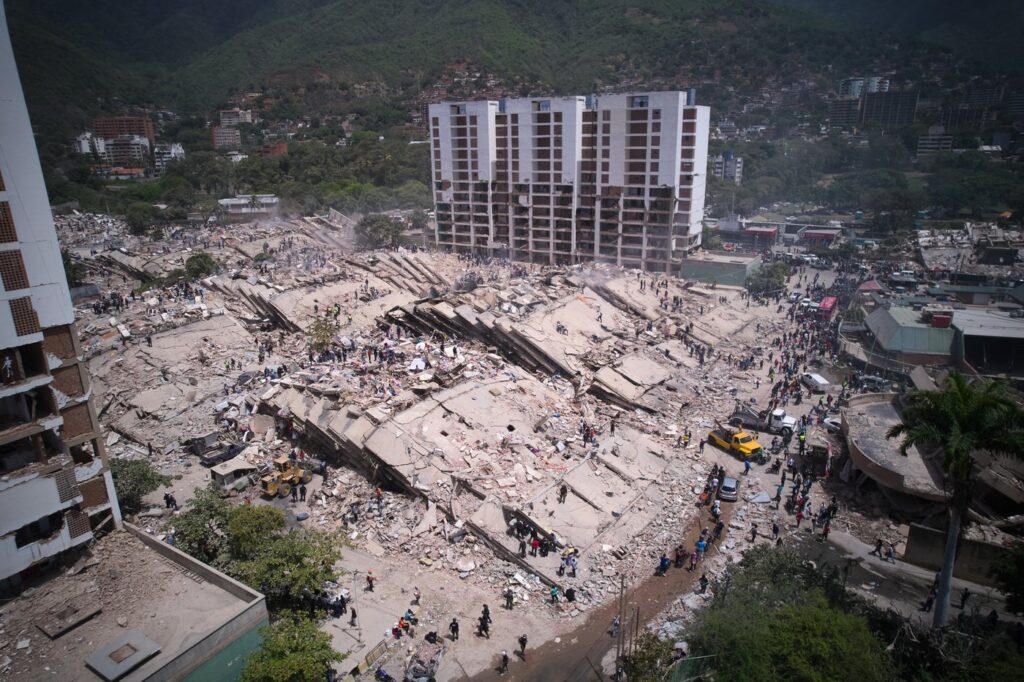
LA GUAIRA, Venezuela (AP) — The situation in Venezuela has grown increasingly desperate as residents continue to dig through the rubble of homes and apartment buildings following a catastrophic series of earthquakes measuring 7.2 and 7.5 on Wednesday. Three days after this devastating one-two punch, the urgency to find survivors intensifies, as time is running out.
Authorities announced on Friday evening that access to La Guaira, the epicenter of the disaster, would be restricted to combat chaos and traffic that disrupted ongoing search and rescue efforts. Anyone wishing to enter the area must now obtain official permits, although details regarding who qualifies for these permits remain scarce.
With government rescuers in short supply, many Venezuelans have taken matters into their own hands in the search for missing loved ones. The human toll has escalated to at least 920 confirmed dead, with over 51,000 people reported missing. Families have voiced their frustrations, citing a lack of visible state rescue teams despite government assertions of a robust response.
Aid agencies emphasize that the initial 48 to 72 hours following such disasters are critical for saving lives, although access to food and water can extend this timeframe. Jorge Rodríguez, the president of the National Assembly, expressed the importance of every life saved, stating, "Each person saved is a miracle." He encouraged transparency regarding the scale of the tragedy.
Anxious families are waiting for news about their missing relatives. In La Guaira, Nazareth Jimenez was emotionally overwhelmed as she observed neighbors using hammers and power tools to clear debris. She anxiously sought news about her siblings and friends trapped in the rubble, expressing despair and hoping that the government would mobilize machinery capable of displacing collapsed structures.
While government forces distributed food and water to survivors, Acting President Delcy Rodríguez announced that her administration was initiating a comprehensive response during these crucial hours. She acknowledged the arrival of international rescue teams and humanitarian aid but noted that assistance received was not meeting the overwhelming needs of the affected population.
The recent earthquakes present a formidable challenge for Rodríguez, who assumed office in January after Nicolás Maduro's removal by the United States. Venezuela has faced economic turmoil for over a decade, with widespread skepticism regarding the legitimacy of Rodríguez's political movement.
Despite the rising death toll, independent digital databases have documented tens of thousands of missing persons. Many of those unaccounted for may have lost communication due to damaged cellphone networks, complicating rescue and recovery efforts. The number of reported injuries exceeds 3,300, and authorities confirmed that they have rescued 243 individuals thus far.
The International Organization for Migration estimates that up to 6.76 million people could be impacted, including approximately 2 million residents of Caracas. The quick succession of shallow earthquakes has exacerbated the scope of destruction. Loyce Pace, the International Red Cross regional director for the Americas, noted that many survivors remain too fearful to return to their homes, with numerous individuals opting to sleep in the streets.
Tragic personal accounts have emerged. Omar Reyes reported losing around 20 family members, stating, "I’ve been left alone in this life." As desperation sets in, residents of nearby cities have resorted to lining up outside stores and pharmacies, while some turned to looting basic goods amid chaos and disruption of search efforts.
Rescue workers, including volunteers and soldiers, reported challenges in their operations due to noise from bystanders and vehicles. In contrast, individuals like Yuleidy Cadenas anxiously awaited news of her loved ones buried under a collapsed building. Cadenas lost her mother, brother, and son, having narrowly escaped the disaster herself.
Venezuelan authorities revealed that 861 international volunteers from countries such as Mexico, the U.S., Colombia, and Switzerland are currently engaged in rescue operations, with additional teams expected to arrive. Rodríguez stated she had communicated with U.S. officials to secure further assistance and rescue equipment.








