

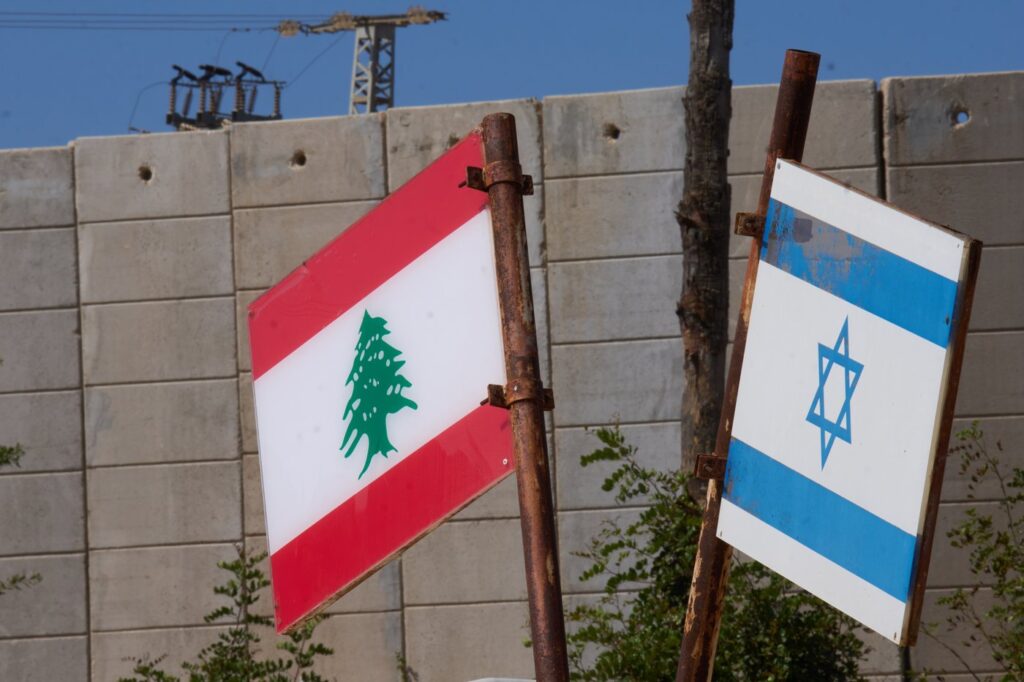
BEIRUT (AP) — Hezbollah's leader criticized a framework agreement signed between Israel and Lebanon aimed at resolving months of conflict, raising doubts about its effectiveness. The agreement, signed in Washington on Friday, links Israel's withdrawal from Lebanon to the disarmament of Hezbollah, which the militant group firmly rejects. This arrangement has led to skepticism among both Israeli and Lebanese observers regarding its viability.
The deal was signed without Hezbollah’s participation and draws on a history of previously negotiated ceasefire agreements that were never implemented on the ground. Following the announcement of the agreement, Hezbollah's leader, Naim Kassem, declared that his group would continue fighting until Israel is compelled to leave Lebanon. Moreover, supporters of Hezbollah took to the streets in Beirut to protest the decision.
Despite the agreement's framework, Israeli drone strikes were reported near the southern city of Nabatiyeh, and the Israeli military released three Lebanese and three Syrian workers taken near the southern village of Ain Arab. According to details released by the U.S. State Department, both nations aim to eventually conclude the state of war that has existed since Israel's founding in 1948.
The framework stipulates that Israel will withdraw from certain areas only if Hezbollah disarms. Initially, Israel is expected to withdraw from two small regions, referred to as pilot zones, with the Lebanese army gradually taking complete security responsibility for these areas. Further zones for withdrawal are to be agreed upon later. A security annex regarding the deployment of the Lebanese army and Israeli troop movements was included but has not been made public.
Israel's Defense Minister, Israel Katz, reinforced the notion that Israel will not withdraw from southern Lebanon until Hezbollah is disarmed. He indicated that preparations for an extended military presence in the region are underway. The talks between Israel and Lebanon occur independently from a recent interim deal signed by U.S. and Iranian leaders addressing fighting within Iran.
Kassem termed the framework an "illusion" and a "humiliation," underlining that the linkage of Israel's withdrawal to Hezbollah's disarmament is a perilous proposition. Another Hezbollah official, Hassan Fadlallah, warned that the agreement could incite civil strife, asserting that Hezbollah will resist any disarmament measures enacted by the Lebanese army. In response, Lebanon's top public prosecutor, Judge Ahmed Rami al-Hajj, has instructed security heads to implement measures to prevent riots.
The population in both Israel and Lebanon exhibits skepticism regarding the deal's longevity. Observers express doubt about the Lebanese army's capability to challenge Hezbollah effectively. Israeli citizen Ronit Belson noted the army's limited chances, while in Lebanon, opinions are divided. Southern city resident Rabie Sammour expressed support for the Lebanese authorities’ decisions, whereas Khaled Ghannoum criticized the agreement for legitimizing Israeli occupation.
The deal also aims to ensure that financial support does not flow to non-state armed groups, particularly addressing the funding received by Hezbollah from Iran over the past four decades. The Lebanese government is committed to preventing any reconstruction funds from benefitting these entities.








