

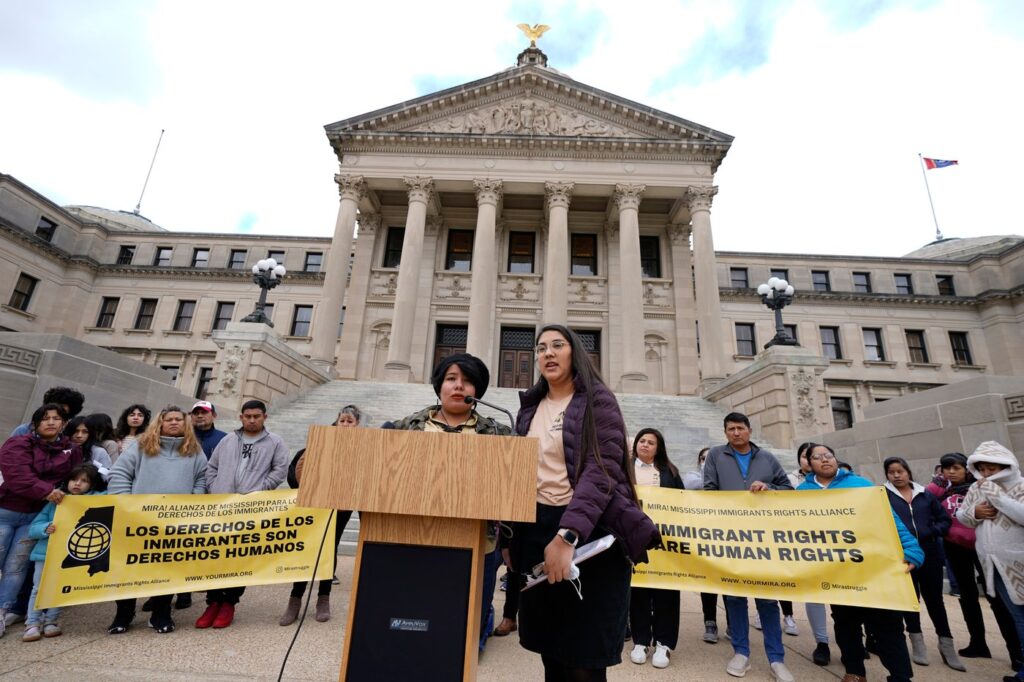
A new law in Mississippi is set to take effect on Wednesday, allowing the state’s top law enforcement agency to compile a comprehensive list of individuals immigrating illegally within the state. This legislation has raised significant concerns among advocates for immigrant rights, who fear it may be used as a means to facilitate deportations, particularly in light of former President Donald Trump's broader immigration enforcement strategies.
The Mississippi law empowers the state Department of Public Safety to utilize all available lawful investigative methods to ascertain the identities and numbers of all "illegal aliens" present in the state. This includes the collection of personal data such as names, addresses, countries of origin, and age classifications, along with any existing criminal records and details related to deportation proceedings. Additionally, the law mandates that information concerning individuals suspected of law violations be shared with local and state authorities, although it neither requires nor prohibits sharing this database with U.S. Immigration and Customs Enforcement (ICE).
Sponsored by Republican state Sen. Angela Hill, the law reflects a belief among some lawmakers that states have a duty to collaborate with the federal government in discouraging illegal immigration. Hill stated that understanding the scale of illegal immigration is essential for addressing related issues, such as human and drug trafficking, asserting that this legislation represents a commonsense approach to an ongoing problem.
Compounding the issue, states across the country have enacted over 100 immigration-related laws this year, with many in Republican-led states aligning with Trump's immigration agenda. These laws often include measures that require local authorities to cooperate with ICE, enforce strict eligibility for public benefits, and check voter registration lists against federal databases in efforts to identify noncitizens.
Conversely, states led by Democrats have proposed legislation to counter Trump's initiatives, aiming to ban agreements with ICE, limit enforcement tactics in sensitive areas, and provide protections for immigrants in schools and hospitals. Mississippi's new law bears resemblance to a 2021 executive order issued by Florida Governor Ron DeSantis, which mandated the tracking of "illegal aliens" transported to Florida from other states.
Further complications arise from the ongoing nature of the Mississippi law, which envisions a continuous effort to monitor the status of undocumented immigrants for two years. Experts question the practicality of keeping track of individuals whose immigration status can rapidly change due to visa expirations or new applications for legal residence. Efrén Olivares from the National Immigration Law Center described the law as "practically unworkable" and alarming given historical instances where governments have compiled lists of marginalized groups.
Additionally, state officials may find it challenging to establish a reliable method for determining an individual's immigration status. Jessica Vaughan, from the Center for Immigration Studies, acknowledged the law's potential effectiveness in bringing attention to undocumented individuals but highlighted the difficulty in its implementation.
Opponents of the law express concerns about the potential for decreased public safety, particularly among immigrant communities. With Mississippi housing less than 28,000 undocumented individuals—approximately 1% of the state’s population—there are fears that the law may divert law enforcement resources away from community safety to investigate immigrant populations. Victoria Francis of the American Immigration Council articulated that the law might lead to systematic profiling, exacerbating distrust between immigrants and police, thus compromising community safety.
Moreover, Lydia Grizzell from the ACLU of Mississippi remarked on the detrimental impact on trust between law enforcement and residents, warning that it could discourage individuals from seeking help in emergency situations, further straying from the intended mission of law enforcement.








