

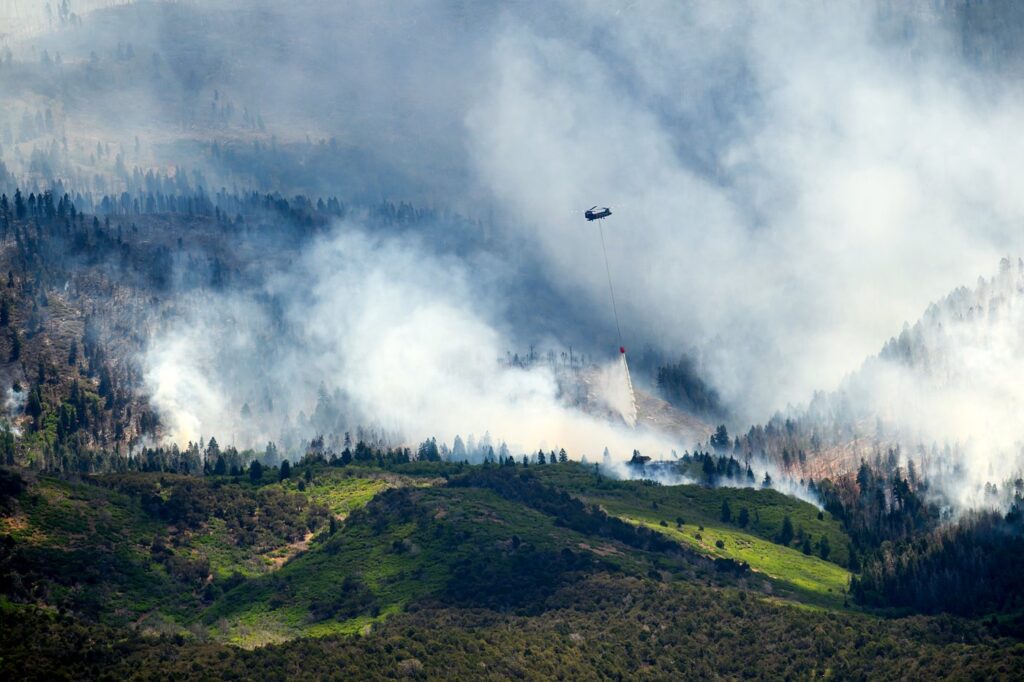
BEAVER, Utah (AP) – Wildfire activity has surged across the western United States, driven by consecutive days of hot, dry, and windy weather. States such as Utah and Arizona have reported intensified flames, with new fires erupting throughout the region.
The most significant blaze is the Cottonwood Fire, currently raging in the rugged terrains of southwest Utah. As of Saturday, it has expanded dramatically to over 144 square miles (373 square kilometers), devastating parts of a ski resort and various summer cabins in its path.
Beaver County officials began working alongside fire response teams to evaluate the damage on Saturday, although no immediate estimates were available. Utah Governor Spencer Cox expressed concern over the situation via social media, describing it as bleak while commending the fire crews for their "miraculous stops and saves."
The challenging geography of cliffs and steep slopes has complicated firefighting efforts. Alyssa Mason, a spokesperson assigned to the fire response, noted the difficulties in deploying heavy equipment and fire engines due to the terrain. "It doesn’t make it impossible to firefight, but it does slow things down," she remarked.
With critical fire weather conditions marked by dangerously low humidity, elevated temperatures, and gusty winds, hundreds of firefighters have been mobilized to combat both new infernos and those that have been escalating. This year’s wildfire risk is exacerbated by Utah experiencing record-low snowpack and the warmest winter on record, a trend that is mirrored across much of the western U.S., as indicated by the National Interagency Fire Center.
As of now, nearly 3 million acres (1.2 million hectares) have burned nationally in 2023, surpassing the 10-year average. The severity of conditions in Utah prompted Governor Cox to declare a state of emergency earlier this week, which included a ban on fireworks ahead of the upcoming July Fourth holiday. This season is being labeled as one of the most severe in Utah's history due to historic drought conditions.
In the past week, Utah has witnessed a sharp increase in wildfire incidents, with each exhibiting unprecedented behavior, stretching the capabilities of the state’s wildland firefighting resources, according to State Forester Jamie Barnes. Forecasters from the National Weather Service have been issuing red flag warnings across a wide area of the West, stretching from California to Arizona and New Mexico.
In Arizona, authorities reported a new wildfire south of Grand Canyon National Park, which was thankfully moving away from the Grand Canyon Village and Tusayan community. However, about 50 miles (80 kilometers) away, another fire resulted in evacuation orders from Coconino County officials for residents near Kendrick Mountain.
Utility companies in northern Arizona had to initiate power safety shut-offs to mitigate wildfire risks, leaving several areas without electricity. This measure, now more common in the West due to the expanding wildfire threat, is typically a last resort after evaluating factors like sustained wind and gust speeds, available fuels, and environmental topography.
With extreme fire conditions persisting, Rocky Mountain Power also implemented shut-offs for power lines serving Beaver County and surrounding regions in Utah.








