

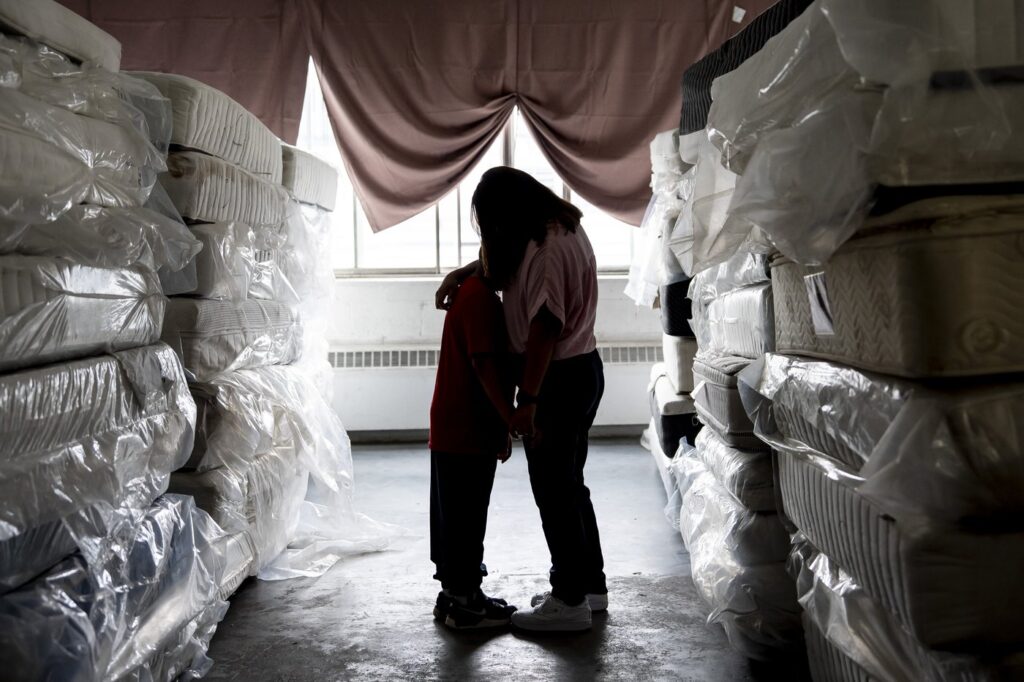
MONTREAL — Arminda Casanova, a mother who fled violence in Mexico, shared the struggles faced by her son who has not learned to write in Spanish due to his schooling primarily in French. Arriving in Canada as asylum seekers in 2022 to reunite with her husband, who filed his own claim a year earlier, the family has worked hard to integrate into the Montreal community by taking French classes and finding employment.
Despite their efforts, Casanova and her son are facing deportation, scheduled for Tuesday, which would separate them from her husband, who is still waiting for his asylum hearing. She expressed concern about the emotional toll the separation would have on her son, who has formed a strong bond with his father during their time in Canada. The family’s identities are being withheld due to fears of reprisals in both Canada and Mexico.
Advocates and immigration lawyers note that Casanova’s situation reflects a troubling trend of increased family separations owing to stricter asylum requirements and expedited removal processes. Recently, there has been a notable increase in requests for assistance from families at risk of separation. The Welcome Collective, a Montreal non-profit, reported helping ten families facing potential separation since March 2025, compared to just two cases in the entire previous year.
The Canadian government recorded 23,160 deportations in 2025, the highest figure in six years. This spike aligns with recent legislative changes aimed at tightening immigration policies, including the Strengthening Canada’s Immigration System and Borders Act, which was passed in March. This law introduced stricter criteria for asylum seekers and enhanced enforcement for removals of those deemed ineligible.
Organizations like Amnesty International and the Canadian Council for Refugees have criticized the new law, arguing that it severely limits the ability to seek asylum and increases the risk of deportation for vulnerable individuals. In response, Immigration, Refugees and Citizenship Canada stated that the act was designed to address challenges associated with surges in asylum claims and prevent abuses of existing immigration pathways.
According to the Canada Border Services Agency (CBSA), Casanova's asylum claim was rejected, and even though she appealed, the removal order was upheld. Casanova's family left Mexico due to threats of violence, including attempts to kidnap her child. Although she was a school teacher in Mexico, she faced career impediments due to political corruption, prompting her family’s relocation to Canada.
In Montreal, Casanova has found work in daycares and community organizations. She expressed her commitment to her community through involvement in collective kitchens providing meals for those in need. Her son has been thriving in school and enjoys his teachers and friends. Casanova requested that the CBSA postpone her deportation until after her husband's hearing so they could remain together if his claim is successful. The CBSA stated that they follow removal orders only after all legal avenues have been exhausted but did note that Casanova could appeal for judicial review in Federal Court, which she cannot afford.
Lawyer Suzanne Taffot highlighted the rising number of clients facing similar deportation circumstances, with more families being torn apart despite one parent still awaiting their hearing. Taffot stressed the illogical nature of deporting individuals who may ultimately return if their family member’s case is approved.
Casanova's husband, currently working in construction, expressed a willingness to abandon his application to stay with his family; however, Casanova urged him to stay the course in hopes of a positive outcome. Flore Morel of the Welcome Collective noted that despite acknowledging the family’s experience of violence, the Immigration and Refugee Board of Canada rejected Casanova’s claim by suggesting that they could safely relocate within Mexico, a statement not confirmed by the border agency.
As it stands, Casanova faces deportation before being eligible for a pre-removal risk assessment designed to prevent individuals from being sent back to potentially life-threatening situations. Casanova described her family’s exhausting journey, moving multiple times within Mexico before seeking refuge in Canada. Now, as they face the prospect of leaving the community they have come to love, she struggles with overwhelming emotions, stating, "There are so many emotions, at this point, I’ve cried so much."
The situation exemplifies the broader issues surrounding Canada's immigration policies and the increasing enforcement of removal orders, raising concerns about the societal and emotional impacts these changes have on families seeking safety and stability.








