

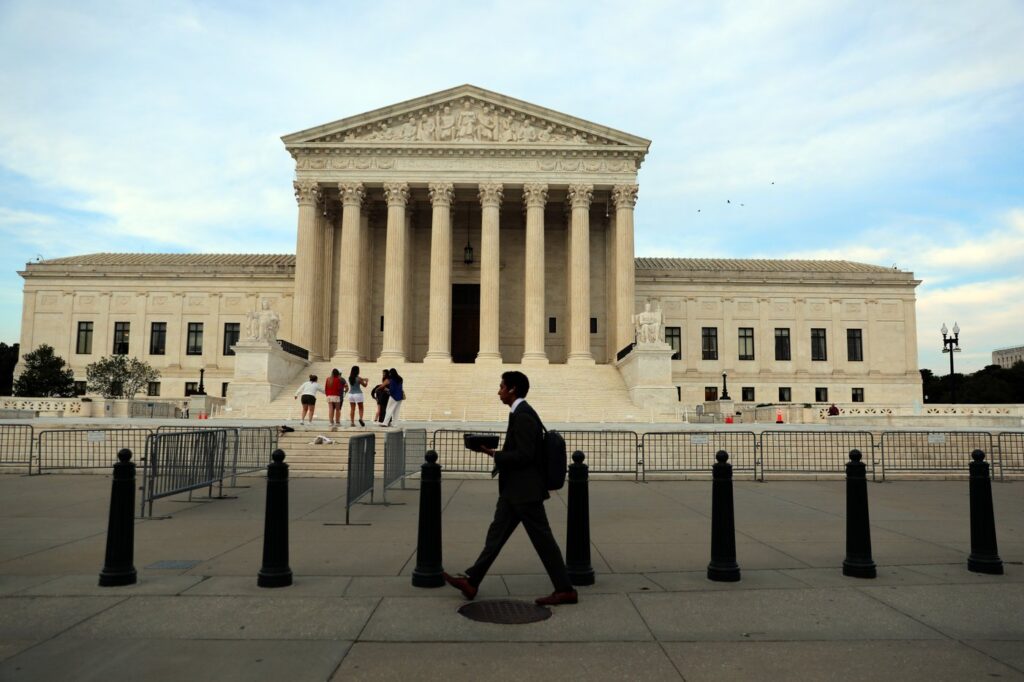
The Supreme Court is concluding a term that has prominently featured the extensive claims of presidential power by former President Donald Trump. Among the significant cases awaiting decisions are Trump's attempts to modify birthright citizenship, his authority to dismiss heads of independent agencies, and the potential to remove a sitting Federal Reserve governor.
Additionally, the court is reviewing two major election-related cases regarding state laws that permit a grace period for receiving mailed ballots and those that impose limits on political party spending in support of candidates for Congress and president. The court is also deliberating on the legality of geofence warrants, which track the location history of cellphone users near crime scenes, raising concerns about civil liberties.
The conservative majority of the Supreme Court has generally upheld Trump's immigration policies, including a recent ruling that allows the administration to withdraw temporary legal protections for individuals who entered the U.S. due to war or natural disasters in their countries. Another decision from the court could potentially complicate the asylum process for those fleeing persecution.
During oral arguments in April, the justices appeared skeptical of Trump's executive order aimed at denying citizenship to children born to parents who are in the U.S. illegally or temporarily, indicating a possible shift in their approach to executive power. The court has also rejected Trump's claim that he possessed the authority to impose extensive tariffs using emergency powers law, a decision that provoked a strong public reaction from Trump against two of his appointees, Justices Neil Gorsuch and Amy Coney Barrett, who sided against him.
One case that remains undecided concerns the ability of the president to dismiss members of independent agencies. This case, which originated in December, could lead to the overturning of a historic 91-year-old precedent that established a cause for removal, such as neglect of duty. The current conservative majority suggests that they may significantly restrict this long-held requirement, as evidenced by their allowance for the firings to take place despite lower court rulings identifying them as illegal.
However, the justices seem less inclined to support Trump’s push to dismiss Federal Reserve governor Lisa Cook amid allegations of mortgage fraud, a claim she denies. Notably, no president in the Federal Reserve's 112-year history has ever terminated a sitting governor. The court typically concludes its term before July 4, with the next public session scheduled for the first Monday in October.
As the Supreme Court navigates these politically and socially charged issues, its rulings could significantly influence the balance of power between the judiciary and the executive, shaping future discussions about immigration, civil liberties, and electoral processes.








