

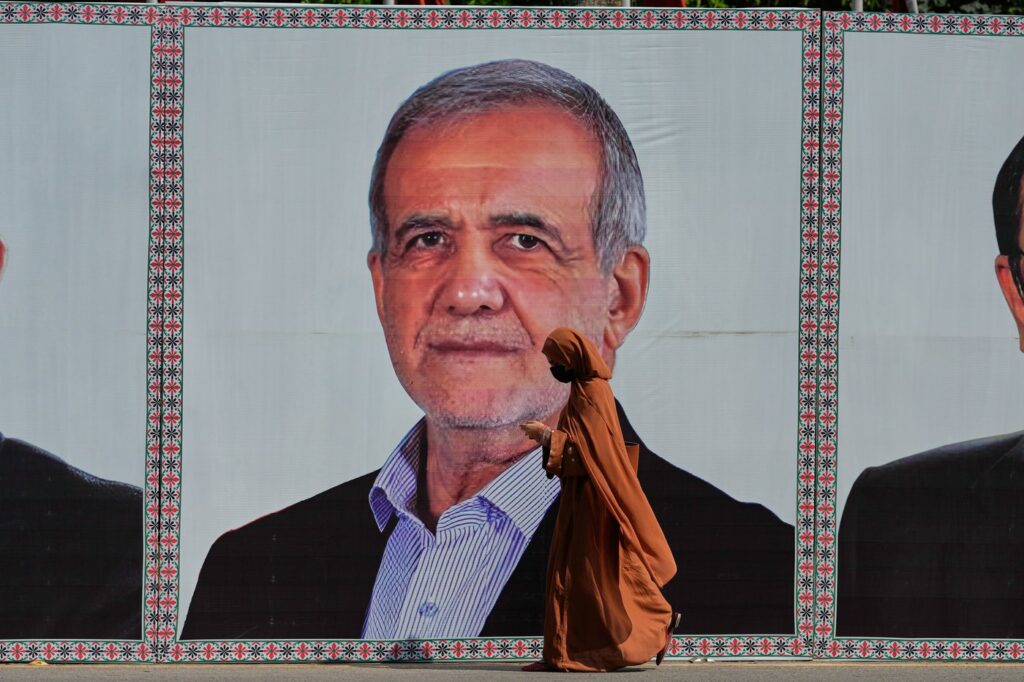
DUBAI, United Arab Emirates (AP) — Iranian President Masoud Pezeshkian announced on Monday that Qatar would release $6 billion in frozen Iranian assets. This development comes amidst complex negotiations between Iran and the United States, which were recently complicated by military actions across the Persian Gulf over the weekend.
Pezeshkian's comments appeared to be strategical, aiming to garner support from the Iranian public for an interim deal that affects the nation's geopolitical standing, especially regarding its influence over the Strait of Hormuz. This strategic waterway has been under pressure as efforts to open Oman’s territorial waters for trade have intensified. Historically, the Strait of Hormuz has been a crucial passage for about one-fifth of the world's oil and natural gas, but recent Iranian military operations have threatened safe passage, contributing to a global energy crisis.
Despite the strait's designation as an international waterway, tensions have escalated following Iranian attacks on vessels near the Omani side. These provocations prompted retaliatory airstrikes from the United States and raised fears that ongoing negotiations, which aim for a formal end to the ongoing conflict, could be jeopardized. Additionally, Iran utilized drone and missile strikes against targets in Bahrain and Kuwait over the weekend, further complicating the situation.
Pakistan, as a key mediator in these negotiations, indicated that discussions between the U.S. and Iran regarding the terms of their interim agreement will resume on Tuesday. U.S. officials assured that no negotiations have been canceled and technical discussions are still proceeding as scheduled, although Iran's participation remains uncertain.
Pezeshkian characterized the interim deal as "a great victory for the Iranian people," stating, "Based on the plans made, $6 billion out of the total $12 billion of Iranian resources in Qatar will be released and returned to the country, and necessary follow-ups are being carried out." However, he provided no additional details on this matter.
As the highest-ranking official in Iran to refer to these funds, Pezeshkian's statements come at a pivotal moment. To date, U.S. officials have indicated that no frozen Iranian assets have been transferred, and Qatar has not confirmed any such financial transactions. This is particularly noteworthy given that Iran reportedly attacked a tanker carrying Qatari crude oil during the recent conflicts in the Persian Gulf.
With ongoing tensions and complex negotiations between multiple countries involved, the situation remains precarious, with significant implications for regional stability and global energy supply chains.








