

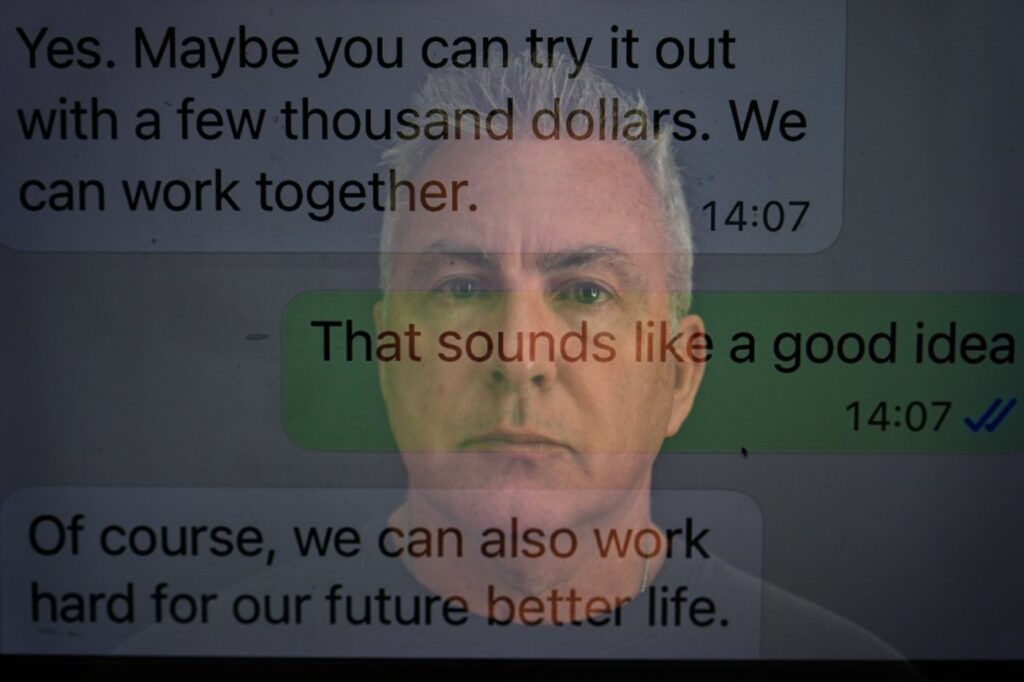
The global cyberscam industry has two faces, as illustrated by the experiences of Chris Colocousis and Safeer Mohammed Koorimannil. Far apart—one in Raynham, Massachusetts, and the other in southern India—both men have fallen victim to the darker side of technology. A recent investigation reveals how American technology is integral to the digital supply chains that facilitate fraudulent activities.
Chris Colocousis, a divorced man in his 60s, fell prey to a scam while seeking companionship online. He thought he was communicating with a woman named “Eliza” via Facebook, who claimed to work at a reputable financial firm. “Eliza” persuaded Colocousis to engage in a video call, where she appeared as the same beautiful woman from her photos. Feeling reassured by her seemingly genuine presence, he “invested” a staggering $400,000, convinced he was making a wise financial decision. However, he is now left uncertain about her true identity and where his life savings have gone. Colocousis struggles with anxiety and PTSD from the experience, finding it difficult to leave his home and contemplating a home equity loan to sustain himself after losing the secure retirement he had planned for.
In contrast, Safeer Mohammed Koorimannil, 30, illustrates a harrowing tale of exploitation within the scam industry. Trafficked to a compound in Myanmar known as Tai Chang, he was forced into scamming operations. His records indicated that he targeted around 50,000 victims from at least 17 countries each month. People from various backgrounds, including a widowed tailor in Kurdistan and an engineer in Russia, became victims of scams that Koorimannil was compelled to orchestrate under threat of violence. He described a terrifying work environment where supervisors wielded electric batons to enforce compliance, and he faced beatings for perceived underperformance. Koorimannil reported that after paying over $5,000 for his freedom, he has returned to work in his family’s fish business in India. Although he is free from the physical shackles of the scam compound, the psychological scars remain, as he grapples with the impact of his past experiences.
The investigation underlines the presence of U.S. technology in the infrastructure that enables scams, highlighting that while tech companies may not engage in illegal activities, they have the capacity to enhance protective measures. However, they often lack adequate legal and business incentives to address the rampant abuse within their platforms. This dynamic complicates the broader ramifications of tech's role in fostering an environment conducive to fraud.
Victims' stories, like those of Colocousis and Koorimannil, shed light on the complexities of online relationships juxtaposed with the realities of exploitation and scams. Colocousis emphasizes that despite being an educated man, he felt vulnerable when searching for companionship, leading to his downfall in the scam. Meanwhile, Koorimannil reflects on how his experiences have transformed him, forcing him to adopt a survival mindset marked by hunger and patience, starkly different from his previous life.
The stories of these two men vividly illustrate how intertwined lives can be in the modern digital landscape, showcasing the profound impact that technology and desires for connection can have. As efforts continue to examine the systems facilitating such crimes, it remains crucial for tech companies and regulatory bodies to prioritize protective measures to safeguard vulnerable populations from the dangers lurking within digital interactions.








