

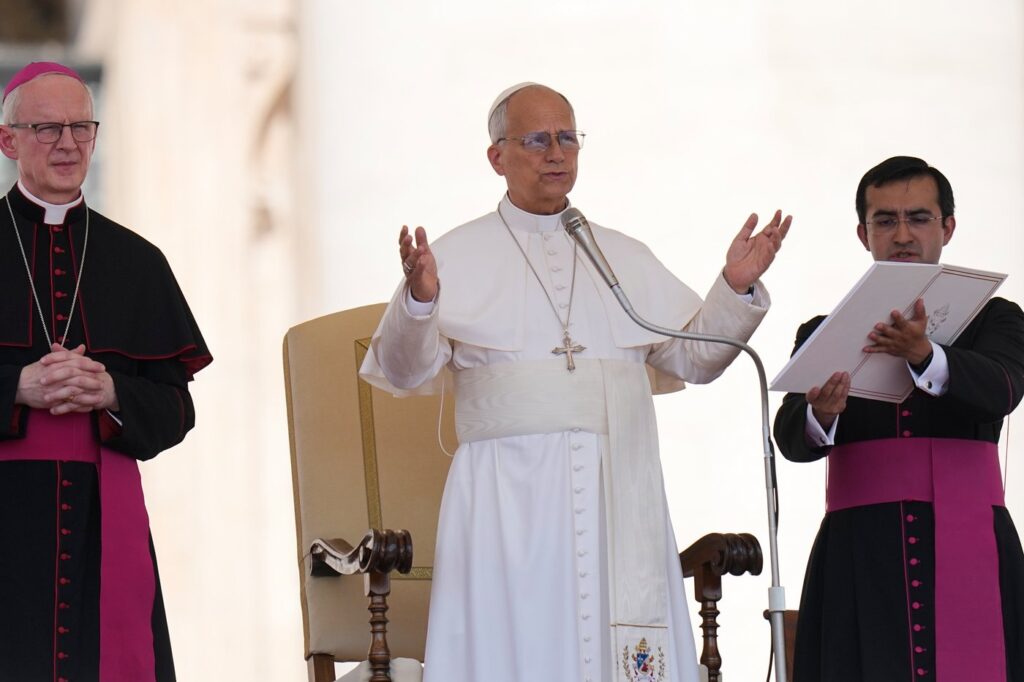
ROME (AP) — On Tuesday, Pope Leo XIV appealed to the breakaway traditionalist Catholic group, the Society of St. Pius X (SSPX), to abandon its plans to consecrate new bishops without papal approval. In a heartfelt letter to Rev. Davide Pagliarani, the superior of the SSPX, the Pope condemned the act, describing it as schismatic and a "sin of extreme gravity."
The consecration ceremony is scheduled to take place at the SSPX seminary in Econe, Switzerland, just one day after the Pope's appeal. Church law clearly defines such consecrations as schismatic, leading to an automatic excommunication for the four bishops involved, as well as for the bishop who administers the consecration.
This impending ceremony marks a significant challenge for Pope Leo XIV, who has made church unity a cornerstone of his papacy. Efforts to mend relations with traditionalist Catholics, who predominantly favor the old Latin Mass, have intensified, particularly in light of tensions that grew during the pontificate of Pope Francis.
The SSPX was established in response to the reforms initiated by the Second Vatican Council in the 1960s, which modernized various aspects of the Catholic Church, including its relations with other religions and the laity. This council allowed for the celebration of Mass in vernacular languages, which the SSPX firmly opposes, adhering instead to the ancient Latin Mass. Members of the SSPX criticize the modern Church for perceived heresies and errors, claiming that only their organization upholds the true faith of Christ. They have justified their upcoming consecration event by citing a "state of necessity" to provide for their faithful.
Historical context reveals that in 1988, the SSPX founder, Archbishop Marcel Lefebvre, also consecrated four bishops without papal consent, resulting in immediate excommunication for both Lefebvre and the newly consecrated bishops. The SSPX, which retains no formal legal status within the Church, has grown since then but remains a point of contention for the Vatican. In 2009, the Vatican lifted the original excommunications in an attempt to foster dialogue and reintegrate the SSPX into the fold of the Church. However, the current situation threatens a repeat of that historical rupture if the consecrations proceed as planned.
In his communication, Pope Leo XIV reiterated the Vatican's willingness to engage in dialogue and cautioned that going through with the consecrations would be detrimental to the SSPX’s faithful. He urged Pagliarani to contemplate the spiritual well-being of their followers, noting that the upcoming schismatic act could severely limit their ability to validly receive sacraments.
Despite the schismatic status established in 1988, the SSPX has seen continued growth, now numbering 751 priests, 264 seminarians, 145 religious brothers, 88 oblates, and 250 religious sisters from 50 different nationalities. This increase in numbers presents a significant challenge to the Vatican, as the SSPX represents a parallel, ultra-Catholic entity that adheres to pre-Vatican II traditions.








