

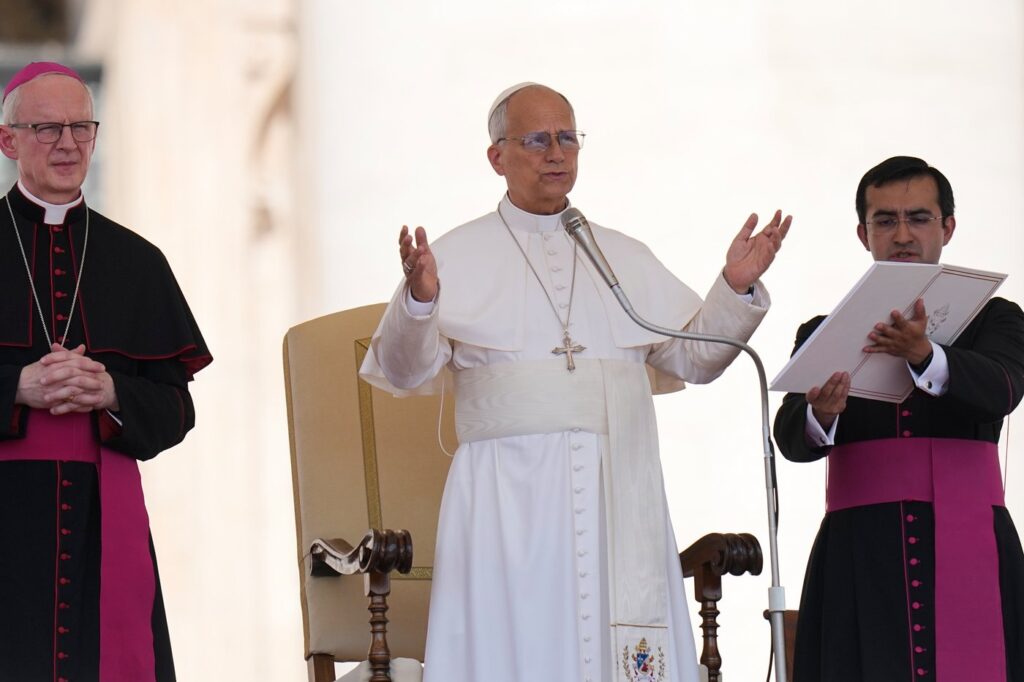
On Tuesday, Pope Leo XIV made a heartfelt appeal to a breakaway faction of traditionalist Catholics, urging them to abandon their plans to consecrate new bishops without his approval. In a letter directed to Rev. Davide Pagliarani, the superior of the Society of St. Pius X (SSPX), the Pope characterized the act as schismatic and labeled it a "sin of extreme gravity."
The urgency of the Pope's message came just one day before the SSPX was scheduled to consecrate four new bishops at their seminary located in Écone, Switzerland. According to church law, such consecrations would constitute a schismatic act, resulting in automatic excommunication for not only the newly consecrated bishops but also the bishop conducting the ceremony. This warning follows a historic precedent set in 1988 when Archbishop Marcel Lefebvre, the founder of the SSPX, consecrated four bishops similarly without papal consent, an act which led to his excommunication along with the others involved.
The SSPX arose as a response to the sweeping changes enacted by the Second Vatican Council in the 1960s, which modernized the Catholic Church's approach towards other religions and increased the involvement of the laity. Notably, the Council allowed for Mass to be conducted in vernacular languages rather than exclusively in Latin. Despite the SSPX's initial schismatic act in 1988, the organization has grown significantly over the years, posing a challenge to the authority of the Holy See and establishing itself as a parallel, ultra-Catholic church that adheres to pre-Vatican II practices.
Currently, the SSPX is reported to include two bishops, 751 priests, 264 seminarians, 145 religious brothers, 88 oblates, and 250 religious sisters, representing a total of 50 nationalities according to their own statistics. This growth has raised concerns within the Vatican, with officials warning that the new bishops may face the same fate as Lefebvre and his successors, who were declared to have no legal standing within the Church.
In his letter, Pope Leo XIV reiterated the Vatican’s willingness to engage in dialogue with the SSPX, asserting that proceeding with the planned consecrations would not only undermine their relationship with the Church but also be detrimental to the spiritual welfare of their faithful. He cautioned that such a schismatic act would hinder the faithful's ability to receive the sacraments in a valid and licit manner, urging the society to reconsider their actions for the good of their community.
This appeal highlights the ongoing tensions between traditionalist groups within the Catholic Church and the Vatican, as well as the challenges the Church faces in reconciling its rich history with the modern demands of its faithful.








