

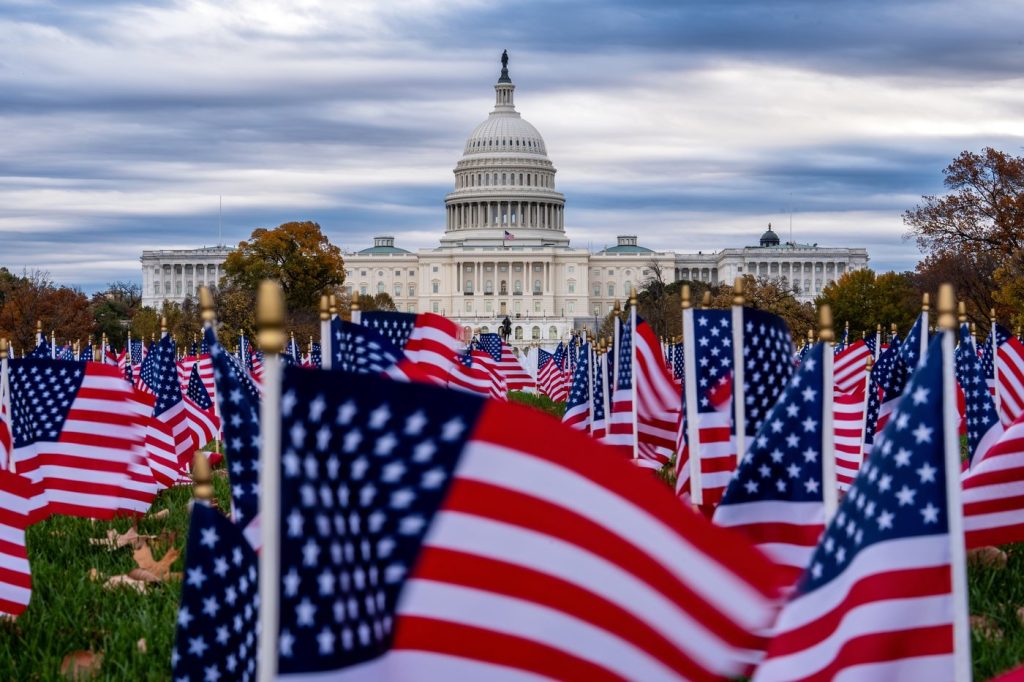
DETROIT (AP) – The perception of the American flag varies significantly among individuals, particularly among Black Americans. Jerry Esters, a 64-year-old retired clay sculptor from Detroit, proudly displays the flag at his home, seeing it as a symbol of the opportunities that his great-great-grandmother, born into slavery, fought for. He believes that the flag embodies what is possible in America and represents the struggles of Black individuals who fought for their right to ownership and equality in housing.
In stark contrast, Yvonne Pistochini, a 79-year-old resident living not far from Esters, rejects the flag's symbolism, claiming that it does not represent the America she grew up in. For her, the flag represents division and inequality, and she suggests that patriotism cannot solely be defined by flying the flag. These divergent views about the flag among Black Americans highlight a broader divide that exists among different races and political affiliations in the United States.
A recent survey conducted by The Associated Press-NORC Center for Public Affairs Research indicates that political party affiliation, age, and race play significant roles in how people perceive the U.S. flag. The survey revealed that Republicans and older white individuals are more likely to display the flag as a unifying symbol. Conversely, younger Democrats and Black adults are less inclined to display it, with around 6 in 10 Democrats and independents reporting that they never fly the flag. The survey also emphasized that only about 3 in 10 Black adults display the flag, while nearly half of white and Hispanic adults do.
Matthew Delmont, a professor of American history at Dartmouth College, suggests that the flag serves as a dual symbol for Black Americans—both a representation of inclusion and exclusion. Delmont argues that while some see the flag as a symbol of patriotism and success, for many Black Americans, it is also a reminder of the nation’s failure to fully embrace them as equals throughout history.
Among older and more conservative individuals, the flag holds significant meaning. Nancy Hansen, a 73-year-old retired Customs and Border Protection clerk from Culvertson, Montana, equates the flag with freedom, believing it represents the ability to live and raise a family wherever one chooses. Similarly, Linda and Greg Cunningham from Pontiac, Michigan, proudly display the flag outside their home, viewing it as a celebration of freedom rather than a political statement.
The stark contrast in perceptions of the flag is reflected in the survey results, with only 22% of Black adults viewing it as a unifying symbol compared to 55% of white adults and 42% of Hispanic adults. Additionally, nearly half of the adults surveyed see the flag as unifying, while 16% consider it divisive. Paul Walthour, a 71-year-old from the Minneapolis area, acknowledges the flag’s dual symbolism, expressing pride in being American but recognizing the divisions it has come to represent in contemporary political discourse.
As the nation prepares to celebrate its 250th birthday, these differing perspectives underscore the complexities surrounding American identity and patriotism today. The flag, once a simple symbol of national pride, has become a focal point for broader conversations about inclusion, historical injustices, and the diverse narratives that shape the experience of being American.








