

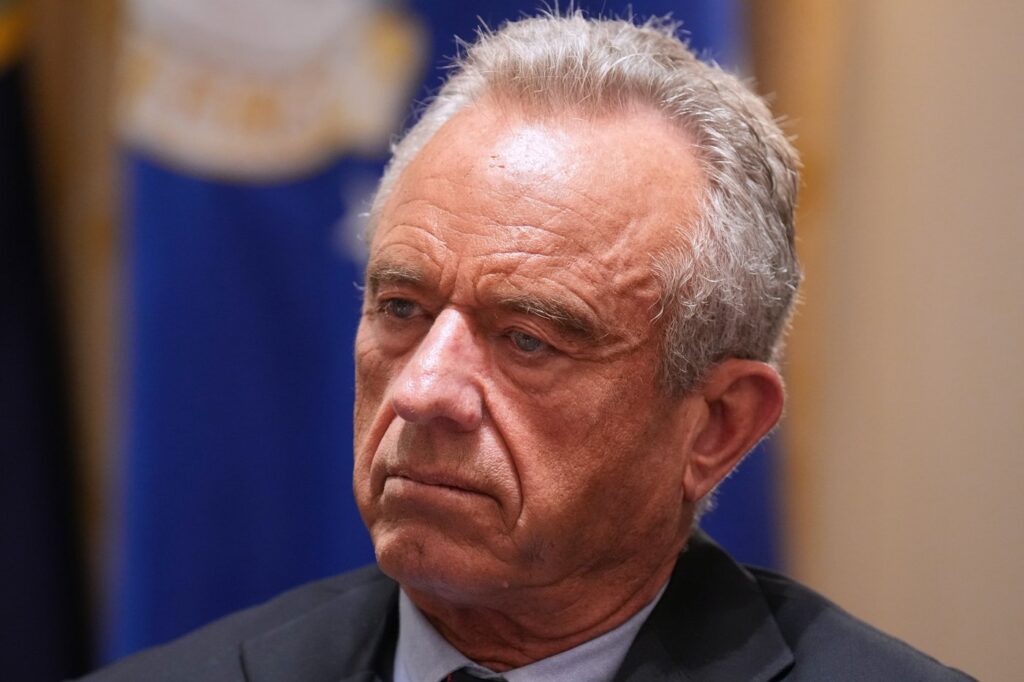
For decades, individuals with disabilities have fought for their rights to access education and live alongside their peers without disabilities. However, there are growing concerns that these rights may be eroding under the current administration. Recently, the U.S. Department of Education announced its decision to transfer oversight of special education to the Department of Health and Human Services (HHS), which is led by Robert F. Kennedy Jr. His controversial views on disabilities, particularly autism, have raised alarms among advocates and lawmakers.
In addition to this shift, the Department of Justice has released guidance that reduces the barriers for institutionalizing individuals with disabilities. These actions are perceived by advocates as a regression towards a system where people with disabilities are marginalized. Selene Almazan, legal director for the Council of Parent Attorneys and Advocates, expressed concern that such policies represent a significant threat to the rights of people with disabilities, stating: "I can't imagine that as a country, that would be something that we would agree we should go back to."
Since the 1960s, various laws and court rulings have progressively enhanced the supports and protections for individuals with disabilities, enabling them to attend school with nondisabled peers and to integrate into society. Prior to this advancement, individuals with mental illnesses and developmental disabilities were largely confined to institutions. Advocates have pushed back against the "medical model," which views disability as a defect needing a cure. In contrast, the "social model" accommodates differences, allowing people with and without disabilities to learn and work together.
Concern about the reversion to the medical model has intensified with the transfer of special education oversight to HHS. Kennedy's history of controversial remarks, including an unfounded connection between vaccines and autism, has further alarmed families and advocates. For instance, Kennedy once suggested that children with autism would "never write a poem, pay taxes, or hold a job," prompting questions about his ability to administer an agency focused on helping students develop these skills.
The Supreme Court, in its 1999 Olmstead v. L.C. decision, established that segregating individuals with disabilities capable of living in their communities constituted discrimination. This ruling mandated that government agencies provide disability services in the most integrated settings, such as mainstream schools and workplaces. However, a memo from the Department of Justice's Office of Legal Counsel has challenged this guidance, indicating that the Americans with Disabilities Act (ADA) and Section 504 do not require states to provide services in mainstream environments. While the memo does not alter the law, it suggests a shift in how federal agencies might interpret and enforce civil rights regarding disabilities.
The Trump administration has already demonstrated a willingness to endorse policies that reduce government responsibilities towards individuals with disabilities. An executive order on homelessness, issued last year, promoted civil commitment, which allows courts to mandate involuntary treatment. This further illustrates a growing trend towards viewing disability support as unnecessary.
This shift has created significant uncertainty among families of students with disabilities. Lindsey Althaus, a disability rights advocate from northwest Ohio, explained how home and community-based services have greatly benefitted her son, Whitman, who has autism and apraxia, a disorder affecting speech and motor skills. Althaus voiced her fears that existing supports might become less accessible under the new interpretations of federal guidelines.
Moreover, the educational landscape for students with disabilities is pivotal, as schools provide essential support services. Magda Nakassis shared her experience with her 8-year-old son, who is autistic and nonverbal. Before entering public school, he endured expulsions from programs, but with supportive teachers and the Fantastic Friends program, he found a welcoming environment that fosters understanding among peers. Nakassis emphasized that special education represents a fundamental right to access education for all children, highlighting the importance of equity in educational opportunities.
Throughout this debate, the push for disability rights aligns with broader societal values that advocate for inclusion and support. Families, advocates, and various stakeholders continue to seek reassurance that the progress made in the last several decades will not be undone.








