

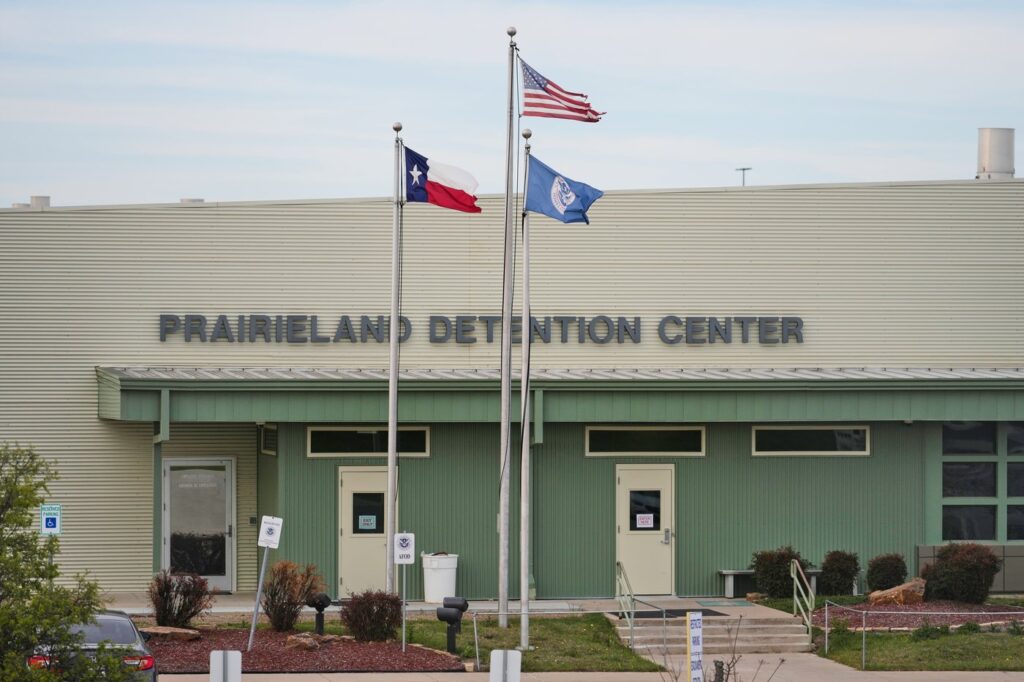
DALLAS (AP) — A highly publicized case regarding a shooting incident outside a Texas immigration center continues to unfold, with more defendants awaiting sentencing. This event, which occurred last July outside the Prairieland Detention Center near Dallas, has already led to significant prison sentences for various individuals involved, including a former Marine who was handed a staggering 100 years in prison.
The incident took place during a protest against President Donald Trump's immigration policies, where demonstrators were reported to have set off fireworks. The altercation allegedly resulted in injuries to a police officer, creating serious ramifications for those involved. A total of more than a dozen individuals have either been convicted or pleaded guilty in connection with the shooting, which the U.S. Justice Department claims was executed by members of the leftist militant group known as antifa.
Defense attorneys for the protesters steadfastly deny any links to antifa, stressing that the gathering was intended as a peaceful demonstration in support of immigrants. Family members of those convicted have expressed their shock at the harsh sentences imposed in Texas. Recently, U.S. District Judge Reed O’Connor characterized the protest as an "assault on democracy" as he and another judge doled out lengthy sentences to eight demonstrators who were found guilty on various terrorism charges.
On the latest hearing day, six additional defendants were set to receive sentences of up to 15 years in prison after opting to plead guilty instead of going to trial. Each of these individuals admitted to one count of providing material support to terrorists. This group includes a man who testified during the trial against other demonstrators, stating that he had spray-painted a guard shack and nearby vehicles.
The prosecution has drawn attention from critics who argue that the case could set a troubling precedent regarding the rights to protest and free speech under the First Amendment. Over the course of the year, defense attorneys have maintained that there was no premeditation for an ambush; they argue that those who brought firearms did so solely for personal protection. The gathering has been framed by the defense as a planned late-night demonstration involving fireworks as a show of support for immigrants.
In stark contrast, prosecutors asserted during the trial that the behaviors exhibited by the group—such as carrying firearms, possessing first aid kits, and wearing body armor—were clear indicators of malicious intent. Among the most notable convictions was that of Benjamin Song, a former U.S. Marine reservist found guilty of attempted murder in connection with the shooting. He received a sentence of 100 years, while seven other defendants received prison terms that varied between 30 and 70 years.
Additionally, another defendant, Ines Soto, who, along with his wife, also faced charges, awaits sentencing after being convicted at trial. Soto could potentially face up to 60 years in prison for charges including providing material support to terrorists, riot, and explosives. During the trial, the couple’s defense attorneys argued that they had arrived late to the protest and left when confronted by guards.








