

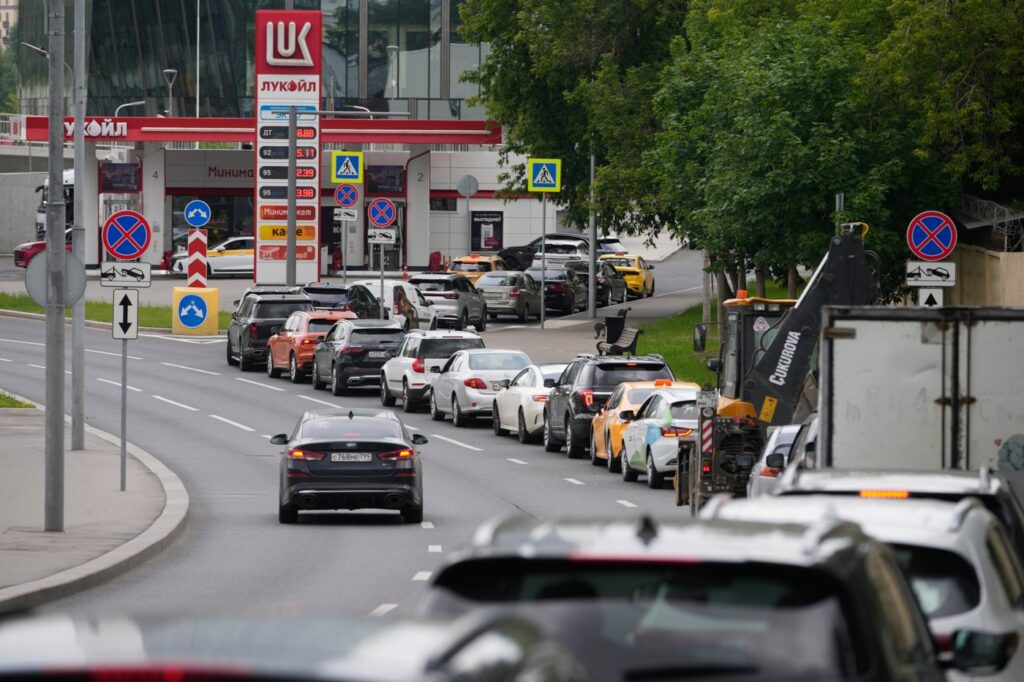
The crisis at Russian gas stations has escalated, with drivers experiencing long queues and rising prices as the ongoing conflict with Ukraine continues to impact the nation's oil supply severely. Months of Ukrainian attacks on oil refineries have left many petrol stations across the vast country low on fuel and forced authorities to implement rationing in numerous regions.
In cities like Irkutsk, the situation has become dire, leading officials to bring in portable toilets for those waiting in long lines. This unprecedented fuel shortage, affecting one of the world’s largest energy producers, has laid bare the consequences of Moscow's invasion of Ukraine, which has now entered its fifth year.
President Vladimir Putin has publicly acknowledged the fuel challenges, admitting that “problems persist for both motorists and businesses.” He deemed the shortages as “not critical” and “temporary,” but many motorists are unconvinced. One driver in Moscow, typically more insulated from economic disruptions, expressed frustration over the disparity between government statements and the reality of the situation on the ground.
An assessment revealed Ukraine has targeted over 50 oil-related facilities in Russia and the illegally annexed Crimean Peninsula since late March, with some sites being hit multiple times, such as the Tuapse refinery. In June, Russia's crude oil processing dropped by 25% compared to the previous year, marking the lowest levels in over 20 years, according to an oil market analyst.
Gasoline production also saw a decline of 17%, highlighting the shortfall in meeting domestic demand, as Russia's gasoline exports remain limited. Approximately one-third of Russia's oil refining capacity is currently offline, and the ongoing conflict complicates repair efforts due to damage to specialized equipment, much of which needs to be imported.
As the agricultural season progresses, demand for fuel has increased, intensifying the shortages. Ukrainian officials characterize their attacks as a strategic campaign aimed at undermining Russian military logistics. Notably, the situation in Crimea has worsened, leading to fuel rationing as early as May.
The effects of the crisis have spread to remote regions of Russia, including areas without direct impacts from Ukrainian strikes. Reports indicate unexpected gasoline sales limits have been imposed even in regions with significant refining infrastructure, causing local businesses to adapt to the new circumstances.
In Irkutsk, public transport fares have increased due to rising fuel costs, and some residents have shifted to walking or using public transport instead of waiting in line for gasoline. While Putin maintains that the state's fuel supplies are only slightly lower than before, energy analysts warn that logistical challenges in redistributing fuel resources make immediate solutions unlikely.
Efforts to repair the war-damaged refineries are anticipated to take time and will face hurdles stemming from sanctions and the constant risk of further attacks. Significant upgrades are necessary before production can return to pre-war levels, with estimates suggesting that shortages may persist throughout the summer due to continued high demand.
The situation emphasizes the impact of the ongoing conflict between Russia and Ukraine, stretching beyond military fronts and into the everyday lives of Russian citizens grappling with unprecedented fuel shortages.








