

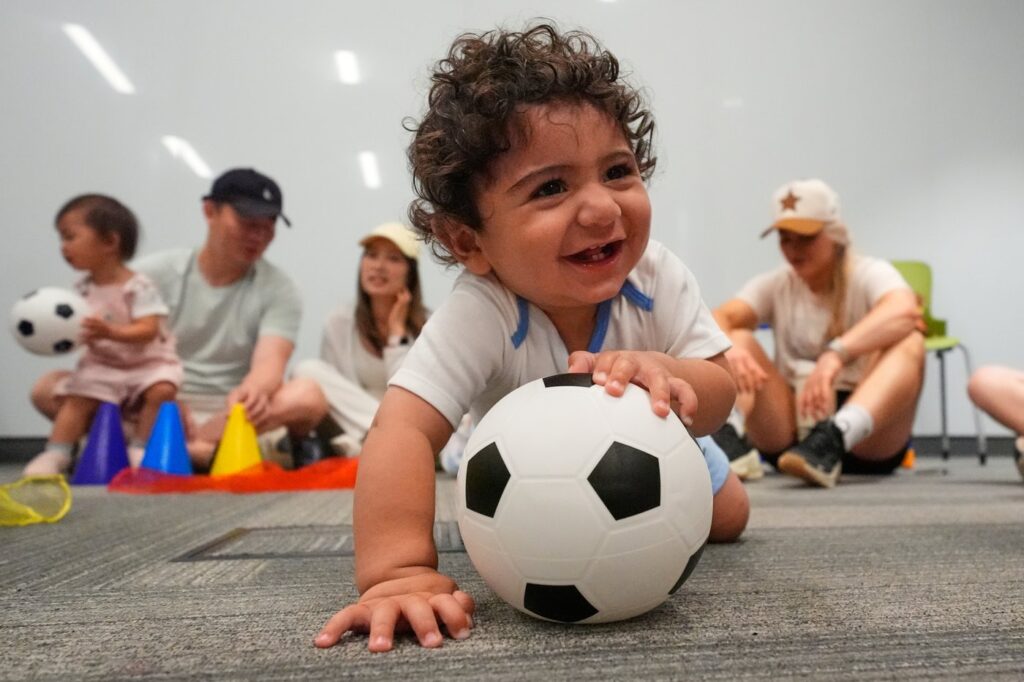
LENEXA, Kan. (AP) – Young Jude Cornell, recently learned to walk, was seen eagerly participating in a World Cup-themed event for toddlers at a suburban Kansas City library. His mother, 27-year-old Kyra Cornell, chuckled at the sight of her son crawling after soccer balls and tossing training cones in the air, already envisioning a bright future for his soccer career. The event took place about 20 miles (32 kilometers) from the stadiums scheduled to host six World Cup matches.
Across the United States, experts are keeping a close eye on whether the World Cup will significantly boost youth soccer and create a new generation of soccer fans. Currently, soccer is one of the most popular youth sports, with 7.5% of children aged 6 to 12 participating, a minor decline from a decade ago. Notably, only baseball and basketball have higher participation rates among youth, according to a report from the Aspen Institute.
The trend of youth soccer turning players into lifelong fans is evident in the case of Haley Garbowski, an 18-year-old midfielder who has attended numerous professional women’s soccer matches. After helping her private Kansas City high school secure a state championship, she spent time at a summer camp, introducing grade-school girls to various sports, including her passion—soccer. As she prepares to attend San Diego State University as a business major, she reflects on how her family's connection to sports, particularly her mother's fan transition, shows the generational growth of soccer's fandom.
Michael Lewis, a professor at Emory University, notes that soccer's appeal is evolving generationally but requires time to establish. Compared to sports such as baseball, basketball, and American football, soccer still struggles to attract a wide fan base. Ipsos Sports research indicates that only about 10% of Americans identify as fans of either U.S. or international soccer, with older generations demonstrating a stronger affinity for traditional American sports.
Soccer's popularity began changing in the 1970s with the North American Soccer League attracting legends like Pelé. By the 1980s, significant strides were made in increasing participation, especially among girls due to Title IX legislation. However, early coaches often lacked experience, which presented challenges for the sport's growth in American communities that favored football. Despite the difficulties, soccer's fan base continued to expand, culminating in the hosting of the World Cup in 1994 and the establishment of Major League Soccer (MLS) in 1996. Today, soccer parents are more likely to have played the game themselves, increasing the sport's reach and competitiveness.
When asked about their motivations for becoming sports fans, about half of Americans attribute their interest to family connections or growing up supporting specific teams. The women’s soccer scene has also played a crucial role in boosting interest in the sport, as young girls who participate in soccer tend to remain fans for life, sustaining youth leagues and financial viability. The Kansas City Current, the local National Women’s Soccer League (NWSL) team, exemplifies this engagement by fostering community connections and involving parents in their programming.
While experts remain optimistic about soccer's growth in the U.S. market, they acknowledge its challenges. Most of the best players still compete in prestigious European leagues, leading many American fans to focus their attention on these teams. However, the increasing number of American players successfully entering these leagues offers a sign of progress. The youthful demographics of soccer's fan base are attractive to marketers, raising hopes for soccer's continued growth in the competitive U.S. sports landscape.
During the event in Lenexa, a mother assisted her 1-year-old daughter as she took her first timid steps towards a soccer ball, while other toddlers became familiar with soccer terminology, excitedly calling out "Messi," referring to the famed Argentine player. As for Jude Cornell, amidst his teething discomfort, his mother is contemplating enrolling him in local soccer programs that accept children as young as 2 years old, keeping the spirit of soccer alive among the youngest generation.








