

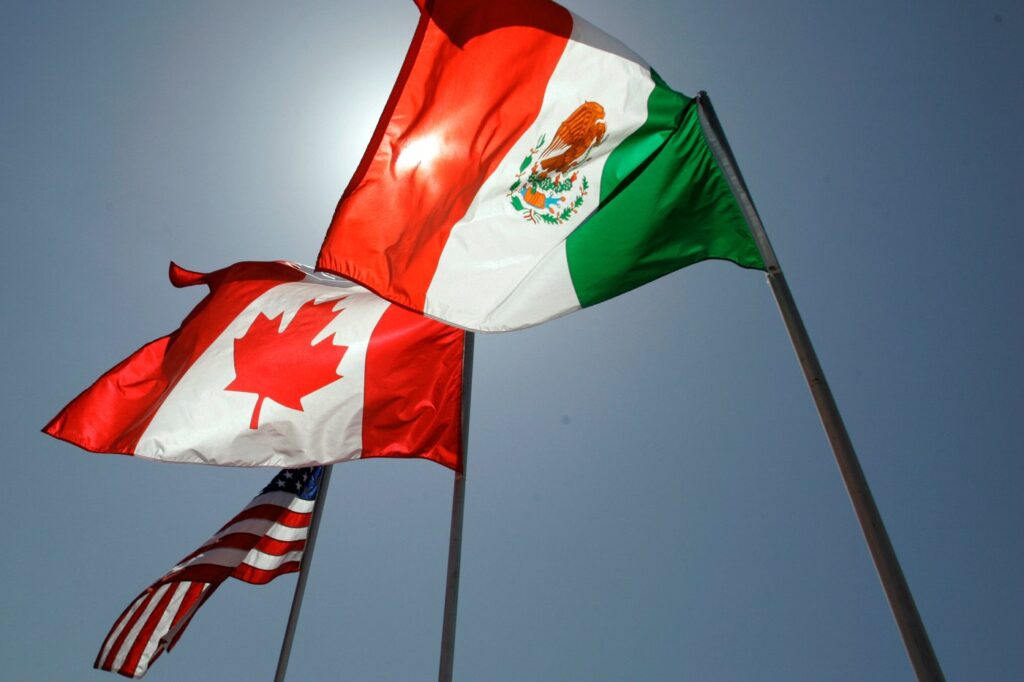
Tourists from Chattanooga are flocking to beach resorts in Cancun, while Canadian auto parts are crucial for factories in the American Midwest. On a daily basis, the United States engages in $1.9 trillion worth of trade with its neighboring countries, Canada and Mexico, averaging about $5 billion per day. These countries have now outpaced China to become America’s top trading partners.
With these trade relations, the stakes are high in discussions around the rules governing trade within North America. Following a tumultuous year under President Donald Trump’s tariff policies, many businesses in the U.S., Canada, and Mexico wish for a return to stability. However, that stability seems unlikely to be achieved in the near future.
The U.S.-Mexico-Canada Agreement (USMCA), negotiated during Trump’s administration and touted as a significant achievement, is set for renewal. This renewal process, starting July 1, will potentially span several months or longer, presenting numerous challenges. Diego Marroquín Bitar, a fellow at the Center for Strategic and International Studies, predicts "a lot of drama this summer" surrounding the negotiations.
The United States is currently demanding changes that might compel Canada and Mexico to shift some automotive production to the U.S., which could create more factory jobs. Yet, this shift threatens to disrupt established supply chains and increase consumer prices for new vehicles, which already average nearly $50,000—heightening dissatisfaction among American shoppers facing rising living costs.
In 2020, the USMCA replaced the 1994 North American Free Trade Agreement (NAFTA) with the intention of addressing criticisms that NAFTA contributed to a loss of American jobs by incentivizing companies to relocate to Mexico for cheaper labor. Although the USMCA imposed higher wage requirements and pushed for more North American-sourced production to combat the influx of Chinese products, significant friction remains regarding its terms.
The USMCA features a unique provision mandating that the agreement be renewed every six years. However, as July 1 arrives, experts believe that little will transpire initially. Oscar Ocampo, from the Mexican Institute for Competitiveness, states that no substantial changes are expected on the renewal date, hinting at a prolonged negotiation process that could extend until 2036, at which point the agreement would expire if consensus is not reached.
During this uncertainty, any member country may withdraw from the agreement with six months' notice—a condition that Canadian and Mexican officials worry Trump may exploit. In recent comments, Trump declared he was "not looking to renew" the agreement, framing his stance to create leverage with Mexico on security and immigration topics.
While the U.S. and Mexico engage in discussions over the agreement, Canada has found itself sidelined. Legal expert Patrick Childress warns that Canada risks being presented with a "take it or leave it" ultimatum once the U.S. and Mexico reach an agreement on revised treaty terms.
The U.S. is eager to tighten the trade pact’s provisions to prevent Chinese goods from entering North America through loopholes. A primary focus in these negotiations is a proposal to increase the requirement for automotive products to be made in North America, aiming for 75% currently, which may be raised even further. Additionally, the U.S. seeks to mandate that 50% of all cars sold must be manufactured in the United States—a proposal that has encountered substantial resistance from both Mexican and Canadian counterparts, who believe it conflicts with the essence of regional trade integration.
A significant portion of automotive imports from Mexico and Canada currently does not meet this proposed 50% threshold. This could lead to increased costs for vehicles manufactured in Mexico, further exacerbating price points on models such as the Ford Maverick and certain Nissan sedans, potentially resulting in price hikes ranging from 5% to 7%.
Businesses are emphasizing the need for consistent and predictable trade rules amidst the shifting landscape. For instance, Shawn Miller, co-founder of PKGD Group, expressed a desire for stability, highlighting the tumultuous experience with tariffs that reflected a chaotic trading environment. The volatility experienced last year, where a 25% import tax was suddenly imposed on Mexican goods only to be reversed shortly after, underscores the unpredictability that firms face.
These developments in North American trade highlight the intricate dynamics between political maneuvering and economic policy, illustrating significant challenges and uncertainties as leaders navigate the renewal of the USMCA.








