

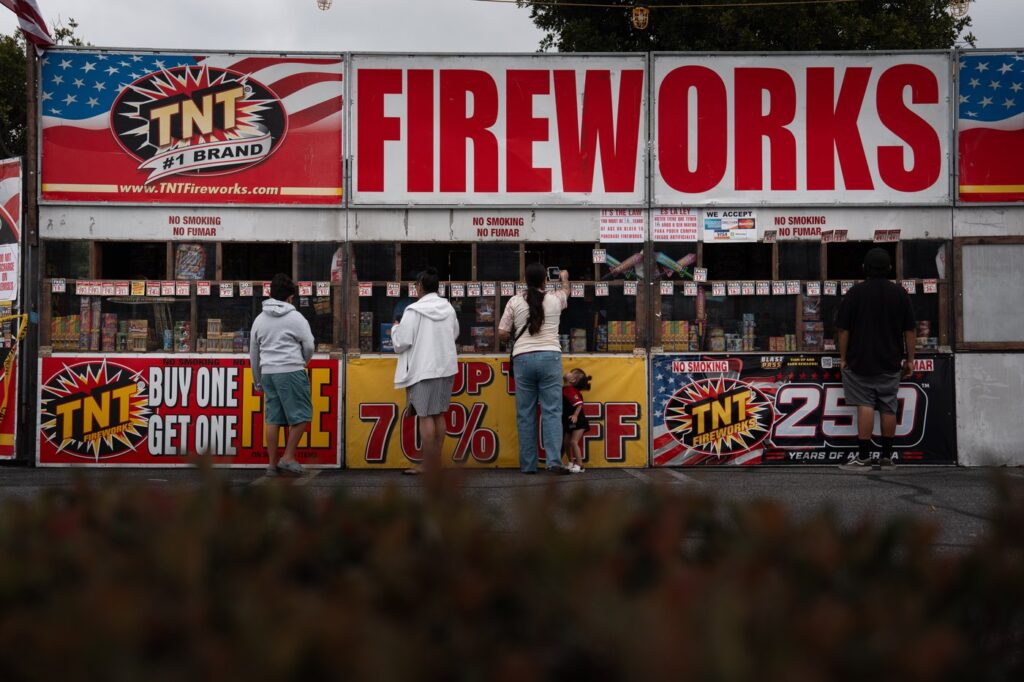
The Western United States is experiencing a surge in wildfires, prompting cities and states to implement fireworks restrictions ahead of what is expected to be one of the largest Fourth of July celebrations in decades. In Utah, a statewide ban on personal fireworks has been enacted due to extreme wildfire risks. Governors in Colorado and New Mexico have also advised residents to refrain from using personal fireworks, while various cities and counties from states such as Oregon and Washington to the Southwest have enacted their own restrictions.
This year’s Fourth of July holds special significance as it celebrates the nation’s 250th anniversary. Communities from Mount Rushmore to Washington, D.C., and countless localities in between are preparing for grand displays, despite the heightened risks associated with fireworks due to current dry conditions.
Over the past week, numerous wildfires have erupted throughout the West, contributing to an already above-average amount of acreage burned this year. These fires are exacerbated by dry and windy weather, affecting areas hit hard by an unusually dry winter and low snowpack. Regions across the East Coast and parts of the South are also facing varying degrees of drought, as reported by the U.S. Drought Monitor.
Nearly 85% of wildfires are attributed to human activities, whether intentional or unintentional. Common causes include power line failures or unattended campfires, along with less frequent sources like animals chewing on exposed wires. Fire ecology expert Philip Higuera notes that the combination of flammable vegetation, specific weather conditions, and an ignition source creates a recipe for wildfires, with fireworks acting as one such ignition source. This is why there is a significant spike in fires each year on July Fourth, with increased ignitions on this single day.
While Utah stands out for its statewide restrictions, many other regions are making decisions at a local level. In some instances, cities and counties have opted to host professional fireworks displays, while others have chosen to cancel them altogether. For example, in Alamosa, Colorado, Fire Chief Frank Wirth made the challenging decision to cancel the city's annual fireworks show due to the anticipated dry conditions, recognizing the threat that fireworks pose in such environments.
The fireworks industry saw revenues of $2.3 billion last year, a number that is projected to increase to $3 billion this year thanks to the 250th anniversary celebrations. Julie Heckman, executive director of the American Pyrotechnics Association, advises consumers to purchase fireworks from reputable licensed sellers and to strictly adhere to safety instructions to avoid potential injuries. It is also recommended to have a bucket of water nearby to soak used fireworks prior to disposing of them, as remnants can still pose a combustion hazard even if they are no longer flaming.
Local authorities are urging residents to pay attention to any fireworks restrictions in their areas and to prioritize safety. Joe Ten Eyck, a wildland fire expert, emphasized that the conditions dictate the necessary precautions, potentially leading families to adjust their celebratory plans. The legal ramifications for causing a wildfire, whether intentionally or unintentionally, can vary significantly across jurisdictions, with penalties enforced at the federal level.
Ultimately, the safest choice remains to forgo personal fireworks in favor of attending professional displays, where fire crews are generally on standby. Some modern displays even utilize drone shows instead of traditional fireworks, substantially reducing the risk of fire incidents.








