

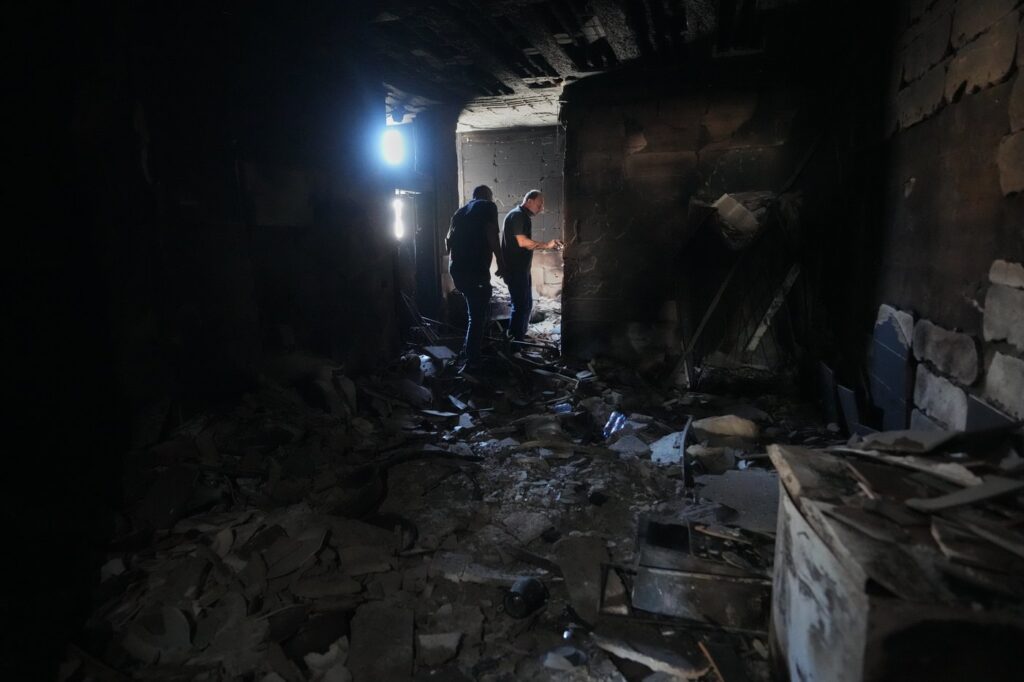
LONDON (AP) – In the complex and volatile Middle East, the concept of a ceasefire is increasingly becoming a contentious issue. While a ceasefire is traditionally understood as a cessation of hostilities allowing for negotiations and a reprieve for civilians, the reality on the ground tells a different story. Despite recent ceasefire agreements and declarations of victory by President Donald Trump, fighting continues unabated, making the term "ceasefire" seem less meaningful than it once did.
Currently, Israel conducts daily airstrikes on Gaza, and the situation in Lebanon reflects a tenuous ceasefire that appears to be in name only. Low-level negotiations with Iran are ongoing in Qatar under a 60-day deadline, but the prospects for a peace deal remain distant. Many analysts and citizens alike argue that calling the current state of conflict a "ceasefire" is misleading given the persistent violence.
Fawaz A. Gerges, a professor at the London School of Economics, emphasizes that there is no true ceasefire between the United States and Iran, as mutual distrust prevails. Ceasefires are inherently complex agreements that can vary in their definitions—from clear troop withdrawals to simply acknowledging a pause in fighting. They often tolerate a level of violence that can be strategically used to establish norms and boundaries for acceptable behavior during negotiation periods.
Historically, some ceasefires have transitioned into long-term peace agreements, such as the Korean Armistice Agreement, which halted the Korean War on July 27, 1953. However, no formal peace treaty was established, leaving the Korean Peninsula technically still at war. In contrast, the situation in the Mideast remains more volatile with ongoing hostilities and unresolved conflict.
Recent developments saw U.S. envoys, including Trump’s special Mideast envoy, Steve Witkoff, and his son-in-law, Jared Kushner, arrive in Qatar for negotiations following renewed clashes in the Persian Gulf. This backdrop is complicated further by the impending U.S. midterm elections and Trump’s desire to disengage from an increasingly unpopular conflict.
As the term "ceasefire" becomes more ambiguous, it is often defined not by an absence of violence, but by a relative reduction in hostilities. President Trump himself remarked that the definition of a ceasefire could mean simply a reduction in the intensity of fighting in the region. Analysts like Daniel Sobelman argue that the current ceasefires establish a foundation for ongoing conflict, rather than an end to hostilities. In the Mideast, rules governing ceasefires are shaped through a cycle of violent bargaining that complicates the expectation of lasting peace.
International organizations, including the United Nations, define ceasefires as political tools aimed at reducing tensions where both sides are willing to engage in dialogue. The Associated Press even advised its reporters to describe the ceasefire as "tenuous," highlighting the volatile situation on the ground and the need for qualified language when discussing the deals.
As conflicts continue, such as the ongoing Israeli strikes in Gaza and Lebanon, many citizens express frustration over the use of the term "ceasefire." Retired AP journalist Kathy Gannon points out that the term seems to apply selectively, benefiting some combatants while allowing others to continue military actions. Israeli officials assert their right to respond to perceived violations, leading to continued violence and civilian casualties.
Since the Iran conflict began, over 4,000 individuals in Lebanon have reportedly been killed as a result of Israeli airstrikes. Meanwhile, over 1,000 fatalities have occurred in Gaza following a ceasefire agreement with Hamas initiated in October 2025. The reality of ongoing military engagements starkly contrasts the idealistic concept of a ceasefire, raising concerns about the legitimacy of such terminology and its implications for those caught in the crossfire.








