

New Jersey is implementing a new fee targeting employers whose employees are covered by Medicaid rather than employer-sponsored health insurance. This initiative aims to generate revenue to offset rising costs in the joint federal and state Medicaid program, which is expected to increase as federal policy changes take effect. Democratic lawmakers and governors are advocating for such measures, seeing them as a means to promote fairness in the workplace, as employers benefit indirectly from having lower-income workers covered by taxpayer-financed health insurance.
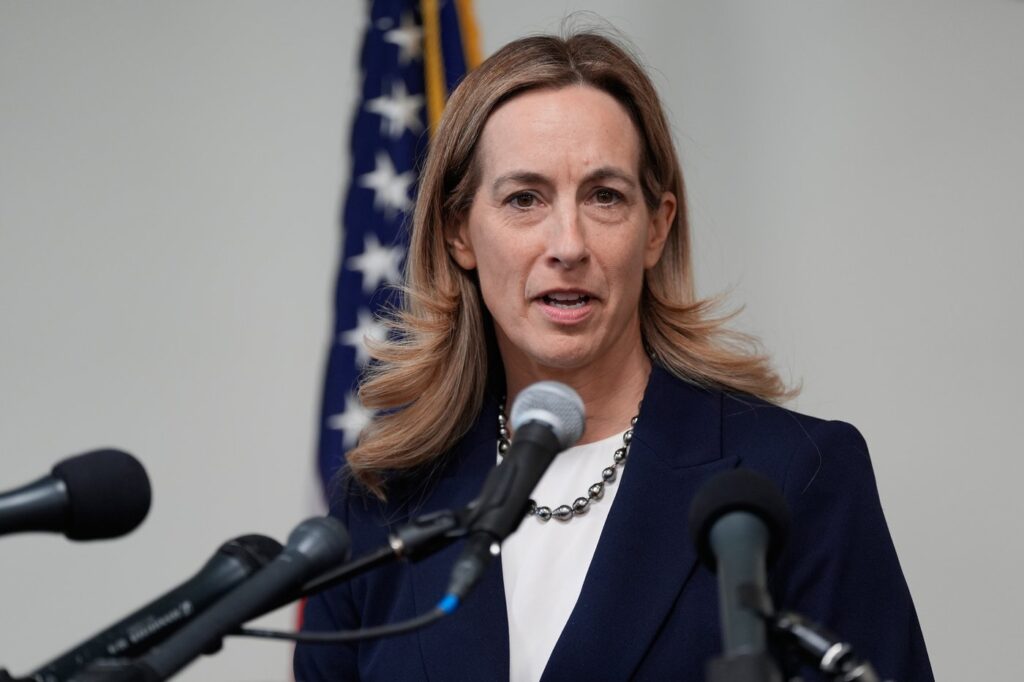
On Tuesday night, New Jersey Governor Mikie Sherrill signed legislation that establishes a fee for companies with at least 50 employees enrolled in Medicaid. The state's approved budget anticipates raising $145 million this fiscal year from this new program. Under the new law, businesses will be charged for each employee and their dependents who are recipients of Medicaid. The annual fee begins at $325 for companies with 50 to 249 Medicaid recipients and can reach $725 for employers with 500 or more Medicaid beneficiaries.
This initiative in New Jersey is part of a broader trend among Democratic-led states responding to anticipated federal Medicaid changes. Recently, California lawmakers passed a bill that does not impose an immediate fee but requires the state administration to propose options for such charges next year. This task will fall to the next governor, as current Governor Gavin Newsom is set to leave office in January 2024. Xavier Becerra, a Democratic candidate for governor, has made an employer charge a key aspect of his campaign.
State Senator John Laird, a Democrat who sponsored the California bill, pointed to changes resulting from a major tax law signed by former President Donald Trump as a driving force for these proposals. The legislation is projected to lead to over 10 million people becoming uninsured by 2034 due to stricter work requirements and documentation obligations for Medicaid beneficiaries. Laird emphasized the equity issue, arguing that small businesses are unfairly burdened by covering health insurance for their employees while wealthier employers benefit from lower costs with the help of Medicaid.
While some states like Colorado and Oregon have seen similar legislation proposed, none has yet been enacted. Connecticut's Governor Ned Lamont has also called for similar measures, suggesting the fee could become a part of the state budget in two years.
However, business organizations are criticizing the approach, labeling it as an unfair penalty for them. Christopher Emigholz, chief government affairs officer at the New Jersey Business and Industry Association, stated that it is unjust for employers to be penalized for decisions made by their employees regarding their healthcare coverage. On the other hand, some liberal policy groups have voiced concerns as well, arguing that such a tax might discourage businesses from hiring low-income individuals or lead to employees being less inclined to enroll in Medicaid, fearing it would negatively affect their employability.
The New Jersey legislation does include measures intended to mitigate these risks, such as exemptions for temporary, seasonal, and part-time workers, as well as a stipulation that employment decisions cannot be made based on an employee’s Medicaid status.
This fee on employers for workers covered by Medicaid is not a new concept; it has been attempted in other states previously. In 2017, Massachusetts passed a law imposing a fee of up to $750 on employers for non-disabled workers receiving Medicaid or state-subsidized health coverage. This implementation was short-lived, however, expiring the following year. In Maryland, an earlier attempt in 2006 faced legal challenges and was prevented from being enacted after a court ruling stating it violated federal law governing self-insured health plans. The new proposals aim to navigate around such legal challenges by avoiding references to those health plans in their language.








