

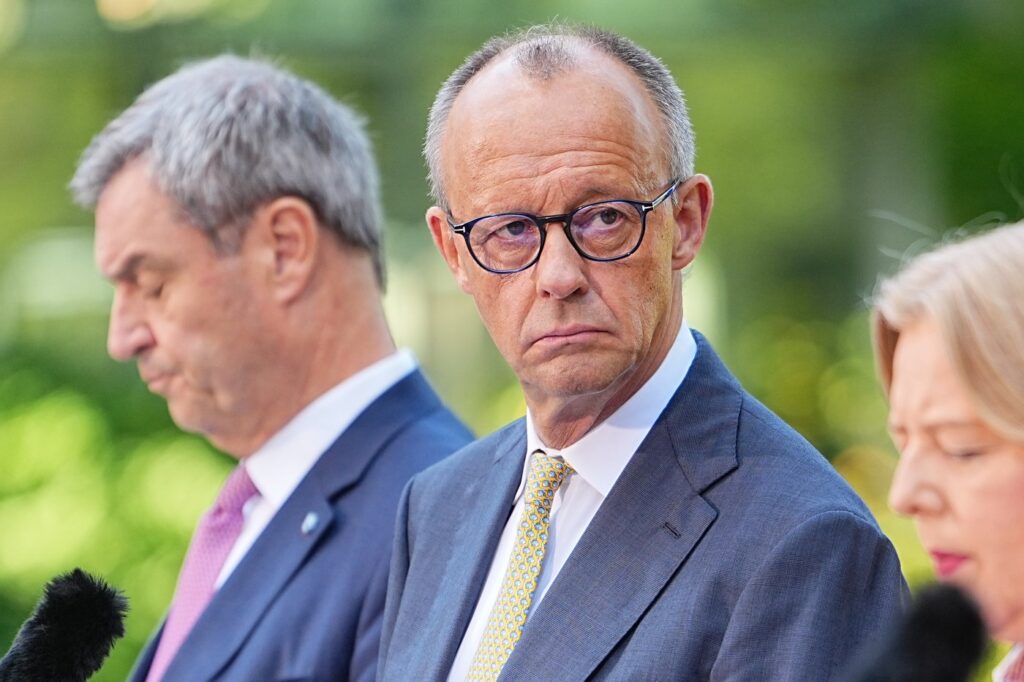
BERLIN (AP) — German Chancellor Friedrich Merz, alongside coalition partners, presented a substantial reform package on Thursday aimed at rejuvenating Germany’s sluggish economy. The coalition, comprising center-right and center-left parties, came into power just over a year ago with commitments to overhaul the economy, which at present, faces numerous challenges.
The comprehensive reform package includes 34 distinct measures, focusing mainly on income tax reform that proposes tax breaks for low- and middle-income families, an overhaul of the pension system, stricter rules for employee sick leave, and efforts to diminish bureaucracy. Merz stated, “These reforms all have one goal: We’re setting out into the future. We’re strengthening ourselves so that we can live well in these new times.”
Despite the government’s ambitious agenda, it has become unpopular due to perceptions of ineffectiveness and internal conflicts. Merz, the conservative chancellor, expressed a desire to distance the coalition from this negative perception, asserting, “From the very beginning, we set an agenda with a single goal in mind: We want to get Germany back on track. It is now clear that this is possible.”
Germany's economy, which is the largest in Europe, previously faced a downturn, with growth returning only modestly last year after two consecutive years of contraction. This year, the government anticipates a mere growth rate of 0.5%, impacted largely by the fallout from the war in Iran. The country also contends with competitive pressures from China, rising energy costs as a result of the Russian invasion of Ukraine, and ongoing trade tensions related to U.S. tariffs under former President Donald Trump.
To better support families, the proposed tax cuts, once fully implemented in 2028, are estimated to provide annual savings of over 600 euros for a family earning a total taxable income of 60,000 euros ($64,416). The overall tax relief from this reform is projected to reach around 10 billion euros annually. In terms of pension reforms, there are plans to gradually raise the retirement age in alignment with life expectancy to stabilize the pension system and prevent significant increases in the contributions that employees must pay into it.
Additionally, new regulations regarding sick leave will be introduced, eliminating the ability for employees to call in sick for up to three days without a doctor’s consultation. Employers will be empowered to request a doctor’s certificate from the first day of an employee's sick leave, a measure intended to address the high sick leave rate affecting productivity in Germany.
The government is also targeting the bureaucratic challenges that hinder productivity by proposing to streamline various reporting and documentation requirements, aiming to bring data protection requirements down to the minimal European standards and reducing red tape involved in tax filing processes.
In an appeal to the public, Merz called on all Germans to rally behind the reform package, stating, “We know that you, ladies and gentlemen—the citizens of our country—want decisions, and you don’t want conflict. And that is exactly what we have delivered.” He made this appeal in the garden of the Chancellery in Berlin during the reforms' announcement. His call emphasizes the government's desire for unity and support in enacting necessary reforms to bolster the nation's economy.








