

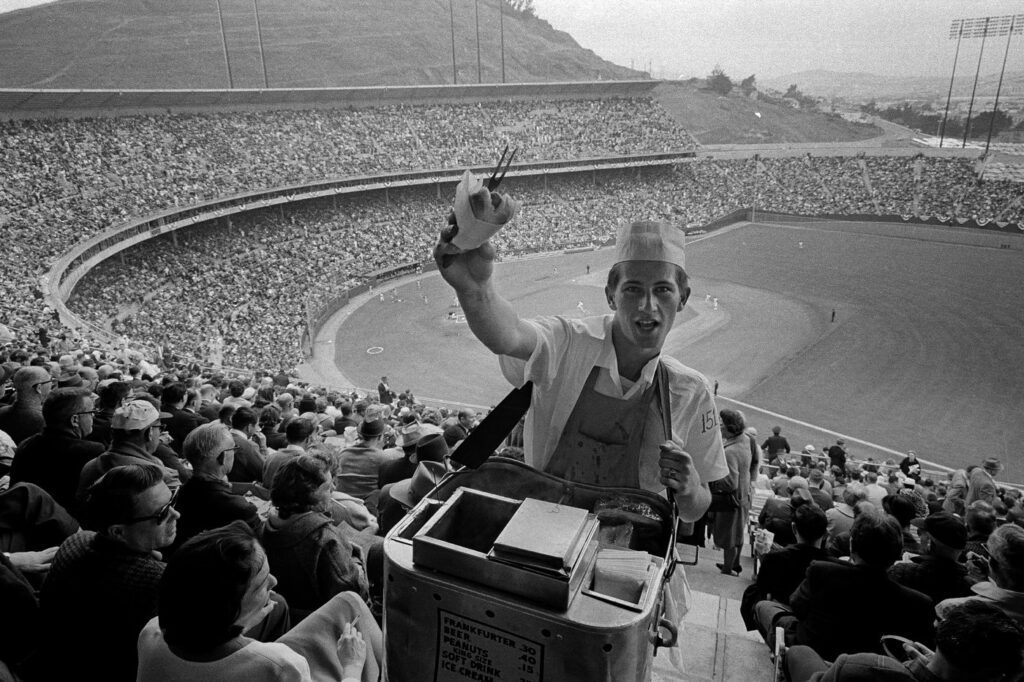
In the 19th century, Indiana implemented some of the strictest "blue laws" in the United States, aimed at preserving Sunday as a day of rest and worship. Interestingly, during this period, Indiana became notable for producing the earliest known printed reference to the term "hot dog." An article in the Evansville Courier & Press on September 14, 1884, highlighted the prohibition against street vendors selling hot dogs, stating, "Even the innocent wienerworst man will be barred from dispensing hot dog on the street corners." This signaled the growing popularity of German sausage variations like weisswurst, bockwurst, and blutwurst among Americans, drawing parallels to beloved traditions like baseball.
According to Bruce Kraig, author of "Hot Dog: A Global History," hot dogs became deeply embedded in American culture, particularly as they became synonymous with ballparks by the 1890s. The Fourth of July hot dog eating contest in New York further solidified their association with the nation's independence.
The National Hot Dog and Sausage Council identifies 19 distinct regional varieties across the U.S., ranging from Cleveland's "Polish boy" topped with french fries to the bacon-wrapped Sonoran dog and the iconic Chicago dog, characterized by its seven traditional toppings and poppy seed bun. Despite these regional distinctions, hot dogs have also played a significant role in international relations, referred to as "hot dog diplomacy" by the U.S. National Archives.
As World War II loomed, British royals King George VI and Queen Elizabeth made a historic visit to America, where Franklin D. Roosevelt hosted them with hot dogs, much to the dismay of FDR's mother. Reports indicated that the king enjoyed the treat enough to ask for seconds. Similarly, Nikita Khrushchev, the first Soviet Premier to visit the U.S., remarked humorously that while the USSR may have excelled in the space race, "you have beaten us in sausage-making."
Hot dogs are beloved worldwide, with fans expressing nostalgia and preference for variations from their home countries. For example, Gloria Ousset, a 74-year-old from Argentina, reminisced about the distinct crunch of Argentine hot dogs after visiting Walter's Hot Dogs in the New York suburbs. She noted that hot dogs in Argentina have become less flavorful in comparison.
The cultural significance of hot dogs extends beyond mere sustenance. In 2024, artists Jen Catron and Paul Outlaw unveiled a 65-foot hot dog sculpture in Times Square that grew and spat confetti daily at noon, showcasing the food's playful aspect. Further exploring the allure of hot dogs, in 2023, comedy writer and podcaster Jamie Loftus released her book "Raw Dog: The Naked Truth about Hot Dogs," which chronicles her adventures visiting various hot dog establishments across the nation.
Loftus captures the dual nature of the hot dog, portraying it as a symbol embodying both joy and nostalgia for many Americans. In summary, hot dogs have transitioned from a simple street food to a complex cultural icon, deeply ingrained in American traditions and identity, while also fostering connections between nations through their shared love for this quintessential American snack.








