

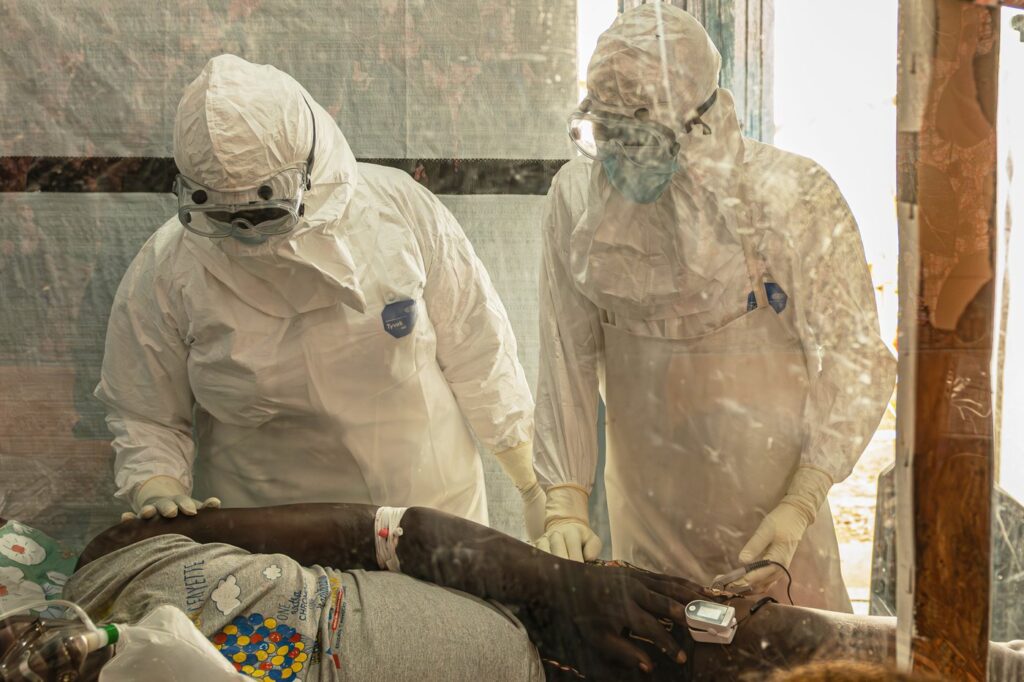
Researchers initiated a significant study on Thursday to evaluate two potential treatments for the ongoing Ebola outbreak in eastern Congo, as confirmed by the World Health Organization (WHO) with the enrollment of the first participant in the trial.
This outbreak is primarily caused by the Bundibugyo strain of the Ebola virus, which is less common than other strains linked to Ebola disease, and currently lacks specific treatments or vaccines. According to WHO Director-General Tedros Adhanom Ghebreyesus, over 1,400 cases have been reported, resulting in approximately 438 fatalities.
While timely standard supportive care has shown the potential to improve recovery rates—with more than 200 individuals having reportedly recovered—the urgent necessity for more effective treatment options has become evident.
In his statement, Tedros expressed that the trial “offers real hope that we can deliver concrete results for—and with—the communities at the heart of the outbreak.” This study aims to determine whether two specific drugs can enhance patient survival rates during this crisis.
One of the drugs under investigation is Gilead Sciences' remdesivir, a broad-acting antiviral previously approved for the treatment of COVID-19. Preliminary laboratory tests indicate that it could possess some efficacy against the Bundibugyo virus. The second drug, MBP134, developed by Mapp Biopharmaceuticals, consists of engineered antibodies designed to target various Ebola viruses, including Bundibugyo.
Participants in this clinical trial will receive the best current standard of care and will be randomly assigned to one of four groups: receiving remdesivir, MBP134, both treatments, or neither. Survival rates will be monitored for 28 days following the commencement of the treatment.
Dr. Vasee Moorthy, a research advisor at WHO, cautioned that determining whether either medication is effective might take several months and could require up to 1,000 study participants. However, he noted that if one drug emerges as highly effective, results could be observed more quickly with fewer patients.
The trial is currently being conducted at a single Ebola treatment center located in Ituri province, Congo, a region severely affected not only by the Ebola outbreak but also by violence targeting healthcare workers who are risking their lives to combat the transmission of the virus. Plans to expand the study to additional sites will be made once it is deemed safe to do so.
Moorthy provided reassurance regarding the availability of the two drugs, highlighting that sufficient quantities have been donated by Gilead and the U.S. government, which has also provided funding for the research and retains ownership of the MBP134 doses. If either treatment shows promising results, the subsequent step would involve ensuring ongoing access to these therapies for patients outside the confines of the study.
This WHO-supported research is a collaboration that includes Congo’s national biomedical research institute INRB, Oxford University in Britain, Antwerp’s Institute of Tropical Medicine, and various other international health organizations.








