

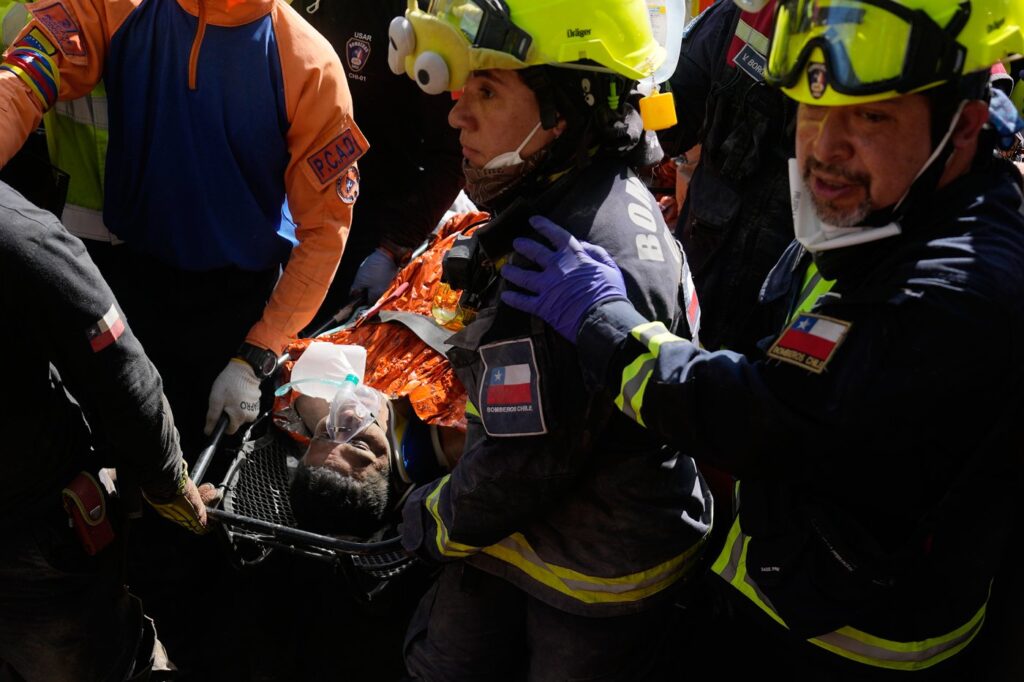
CATIA LA MAR, Venezuela (AP) — Eight days after devastating earthquakes struck Venezuela, the aftermath remains grim in Catia La Mar, where black smoke billows from destroyed buildings and the stench of decomposing bodies permeates the air. Rescue teams continue their search for survivors beneath the rubble, hanging onto a faint hope that they might find those still trapped.
On Thursday morning, amidst the chaos and despair, a moment of joy emerged as rescue teams successfully pulled a 43-year-old man, Hernán Alberto Gil Flores, from the ruins of a collapsed shopping mall. He had been buried for nearly eight days but survived by filling an air pocket with water and food passed to him by rescuers. His extraction from the wreckage on a stretcher provided a rare glimpse of hope, prompting cheers from onlookers.
As public officials handled the grim reality of body bags and caskets in La Guaira, the death toll, according to the Venezuelan government, escalated to at least 2,295, with more than 11,000 injured. Many people are still missing, while thousands are taking refuge in overcrowded shelters or sleeping outside. The extensive destruction has raised concerns among healthcare professionals about an impending medical crisis, with fears of untreated injuries and spread of infectious diseases compounding the already struggling healthcare system.
The acting president, Delcy Rodríguez, faces intense criticism from Venezuelans regarding the government's insufficient response to the earthquakes. In contrast, civilian and international rescue efforts have gained more attention and praise. Rodríguez, who became interim leader with the support of the Trump administration, is navigating criticism just as her 180-day mandate nears its expiration. Despite her government's support from the U.S. and lawmakers in the National Assembly, details around the succession process remain unclear, with potential for interim appointments extending for up to 90 days.
Amidst these discussions, the U.S. continues to provide support for Rodríguez’s government, with 900 military personnel deployed on the ground for relief and rescue operations. John M. Barrett, the U.S. chargé d’affaires to Venezuela, defended the collaboration between U.S. efforts and local authorities, countering claims that Rodríguez is politicizing the disaster response. He emphasized the need for coordination with local entities to ensure an effective humanitarian response.
Furthermore, Gen. Francis Donovan, head of U.S. Southern Command, pointed out that decades of neglect in investment towards the Venezuelan population have increased the challenges faced by the current leadership in dealing with the scale of the disaster. He noted that the magnitude of the situation complicates any government's response.
As the situation continues to evolve, communities in Catia La Mar and surrounding areas are left grappling with profound loss and the daunting task of rebuilding amidst trying circumstances. The international community's focus on humanitarian aid and relief efforts remains critical in the face of this disaster.








