

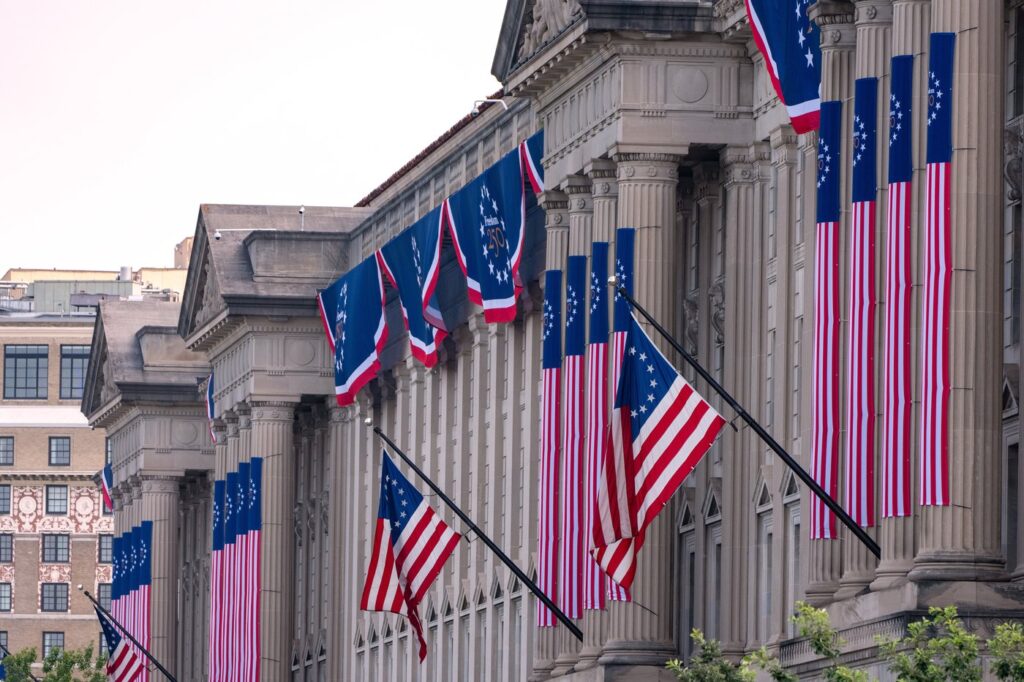
As Americans approach the 250th anniversary of their nation, many choose to focus on personal interpretations of patriotism instead of the prevailing political discord. In interviews conducted by the Associated Press, citizens expressed sentiments that reflect resilience and commitment to community over partisanship.
Joe Fuqua-Bejarano, an auto technician from Topeka, Kansas, believes that unity and perseverance define what it means to be American. He emphasized the importance of finding joy in local experiences, stating, “We’ve just all got to find unity somewhere, whether that’s in laughter or perseverance.” His business selling fireworks serves as a side hustle during this festive season.
Christina Zhou, a 25-year-old research assistant from Cambridge, Massachusetts, echoed this perspective. She noted, “There are still a lot of beautiful things that are happening,” despite the political climate, and emphasized focusing on local initiatives that feel manageable and personal.
Mindy Dean, a 50-year-old farmer from Mont Vernon, New Hampshire, expressed that the broader celebrations have largely escaped her attention. She remarked, “We’re just happy Americans,” cherishing her family’s freedom and a simpler lifestyle, while acknowledging they prefer not to get caught up in national events.
Conversely, 81-year-old Neil Casey from Nashua, New Hampshire, and his friend Maureen Regan have taken a more active approach to the celebrations. While exploring historical sites in Boston, they choose to immerse themselves in the atmosphere rather than focus on political unrest. Regan invoked a sense of gratitude derived from observing World Cup celebrations, encouraging others to appreciate their nation's history.
However, many citizens find it challenging to separate patriotism from the political climate under former President Donald Trump’s influence. Madeline Capodilupo, a 26-year-old special education teacher from Boston, voiced her concern that celebrating the Fourth of July feels politically charged, suggesting it has become synonymous with Republican values. She noted the difficulty in feeling celebratory amidst ongoing national issues.
For others like Ronald Hall, a veteran who served during the Vietnam War, the concept of celebrating America centers on ideals rather than reality. As a Black man, he acknowledges the gap between the promise of freedom and the current reality, saying, “That’s what we celebrated: the promise, not the country.”
Meanwhile, many veterans recognize the somber mood as they note the changing landscape of American democracy. At the New Hampshire Veterans Home in Tilton, 83-year-old Leo LeClerc stated, “I believe this country is the greatest that ever existed,” though he voiced concerns about current events. His fellow veteran, Tom Gaumont, reflected on the 1976 bicentennial, observing a more hopeful time compared to the present landscape. The sentiment echoed by Allan Bailey, also 83, encapsulates a worry about the legacy that the current generation will leave behind.
Among those celebrating in various ways, Nabeel Mawari, a 38-year-old security guard from Dearborn, Michigan, expresses optimism as an immigrant who strives to contribute positively to his new home. He underscores the importance of the Fourth of July, saying, “We try to make the U.S.A. the greatest. That’s why I’m here.”
On the fringes of political discussions is Gary MacGrath, a 77-year-old caricaturist from Pennsylvania, who found himself amidst both political parties while working at a local fair. Maintaining his belief in democracy, he remarked, “It’s 250 years; let’s keep democracy going.”
This diverse array of perspectives illustrates a nation grappling with its identity, emphasizing personal connections to the spirit of independence over the tumultuous political landscape. Whether through reflection, action, or community engagement, Americans are finding ways to celebrate their nation's birthday that resonate with their own values and experiences.








