

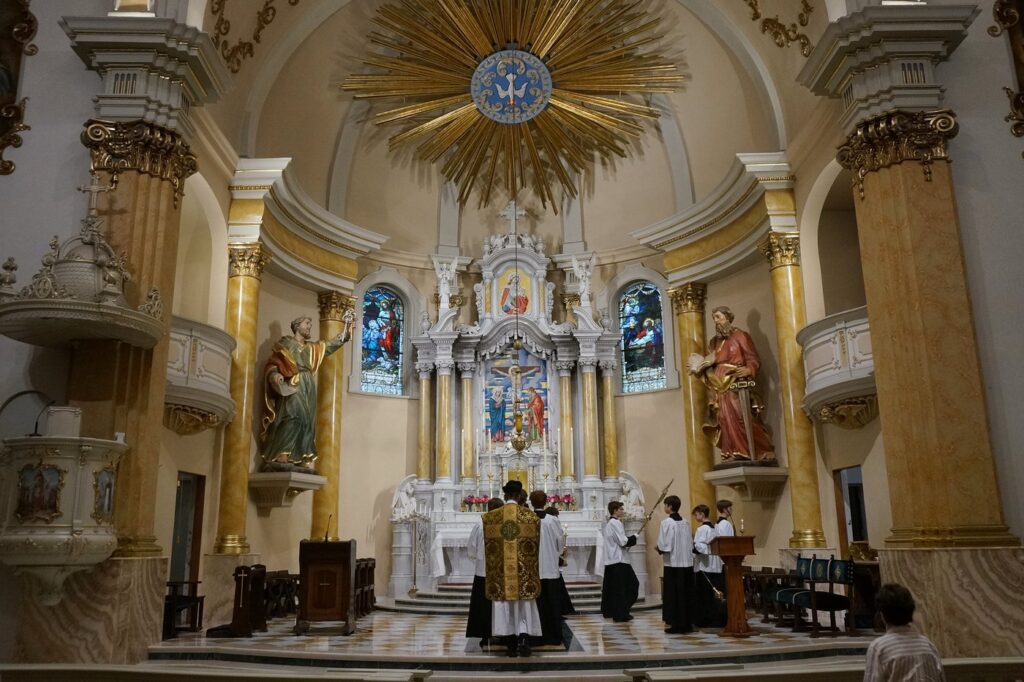
ST. PAUL, Minn. (AP) - At the Church of Saint Agnes, Rev. John Ubel delivered a sermon emphasizing the importance of merging traditional Catholic customs with loyalty to the Vatican. This event coincided with Pope Leo XIV addressing a significant challenge posed by a traditionalist breakaway group, the Society of St. Pius X (SSPX), which rejected the reforms of the Second Vatican Council.
During his homily, Ubel highlighted that the Catholic faith is a living tradition, distinguishing between being rooted in tradition and being stuck in it. The celebration of the traditional Latin Rite has become a contentious issue following the Vatican II reforms over 60 years ago, stirring theological, cultural, and increasingly political divides among Catholics.
Pope Leo XIV recently declared that the SSPX had formally severed ties with the Catholic Church, leading to the excommunication of its bishops and priests after the society consecrated four men as bishops against the Pope's wishes. This has rekindled tensions around the Latin Rite, which is perceived by some as a bastion for ultraconservative rebels, despite the fact that Saint Agnes operates with the church's authorization to celebrate the Latin Mass.
Rev. Ubel has urged those attached to traditional practices to maintain full communion with Pope Leo XIV. Saint Agnes, a historic church established for German-speaking immigrants, provides both one traditional Latin Mass and various modern liturgies guided by the archbishop's approval. Ubel believes that the coexistence of different forms of Mass at the church exemplifies how the Church can honor diverse liturgical traditions in compassion.
Attending the church, 15-year-old Peter Draganowski, who has served as an altar boy for both English and Latin Masses, expressed his preference for the Latin form due to its beauty and complexity. Archbishop Bernard Hebda of St. Paul and Minneapolis hopes that those who have attended SSPX Masses will now turn to approved local services, assuring that the traditional Eucharistic liturgy is available in six locations throughout the Archdiocese.
The traditional Latin Mass continues to diverge from standard celebrations, with differences in prayers, the position of the priest during the service, and the manner of receiving Communion. Despite the fact that very few U.S. Catholics regularly attend the traditional Mass, estimates suggest around 510 such services occur on Sundays within over 16,000 active parishes across the country, according to Stephen Cranney from Catholic University of America.
Most American Catholics who enjoy the traditional Latin Mass cite reasons such as its aesthetics, reverence, and historical continuity, rather than opposing Vatican II reforms. However, balancing an accommodation for traditionalists while avoiding further divisions remains a challenge for the papacy.
Pope Leo XIV's predecessors took varied approaches to the Latin Rite. While Pope Benedict XVI encouraged offering the Latin Mass, Pope Francis implemented restrictions, requiring bishops' approval to celebrate the traditional Mass. In recent developments, Leo allowed a cardinal to celebrate the Latin Mass in St. Peter's Basilica, which many traditionalists viewed positively.
Members of the Saint Agnes congregation expressed dismay over the ongoing schism and continue to pray for unity within the Church. Nell O'Leary Alt shared her experiences attending both Latin and English services, emphasizing the richness of the worship experience for her family. Similarly, Tom Graff, a lifelong Catholic and choir member, underscored the importance of teaching his children about appreciating all forms of worship without viewing one as superior to another. Ubel reiterated that the variety of Mass options promotes inclusion, rather than division.








