

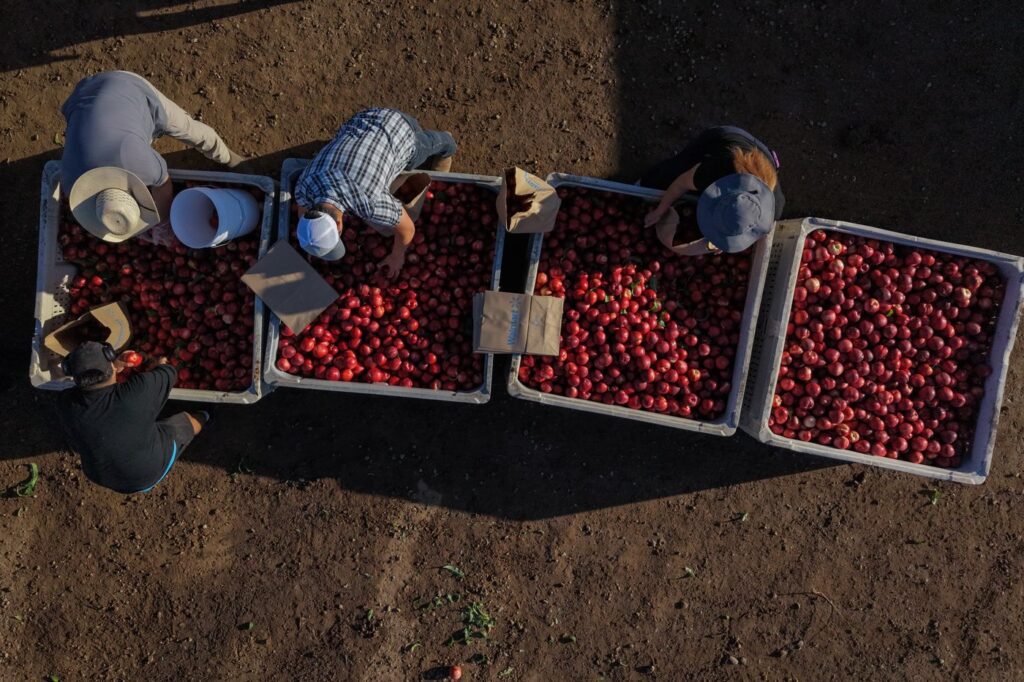
Thousands of visitors have gathered at Cesar Mora's farm in Reedley, California, to collect free nectarines this week. Mora is giving away his harvest, which exceeds 100,000 pounds (approximately 45,359 kilograms), rather than letting it go to waste amid a legal dispute with Giumarra Brothers Fruit Co. The lawsuit centers on Giumarra's claims of exclusive rights over a variety of white nectarine known as “Monalise,” which Mora has been accused of selling to other packers in violation of contract terms.
Mora, a third-generation farmer in Central California's agricultural heartland, described his decision to give away the nectarines as a means to prevent waste and bring joy to visitors. "It does make a grower feel good, being able to share my fruit with people and see their immediate reaction that they love it," he stated, despite the challenges posed by the ongoing lawsuit. The trial regarding this dispute is scheduled for later this month.
The core of the legal dispute involves two written agreements between Mora and Giumarra. Mora signed a sublicensing agreement in 2017 that permitted him to grow and sell the Monalise variety, leading to a marketing agreement in 2019 that mandated the packing and sales process be managed through Giumarra. In this arrangement, Mora was required to pay a royalty fee of $2.50 per tree along with a 4% production royalty based on gross sales.
Giumarra asserts that it holds all rights to the Monalise variety due to a licensing agreement with Star Fruits Diffusion, a French plant breeding company. Mora, however, has accused Giumarra of engaging in unfair business practices, claiming that up to half of the nectarines harvested in 2020 were discarded, thus impacting his profits. The court has ruled that Giumarra's claims can proceed despite the absence of a U.S. plant patent for the Monalise variety, emphasizing that the validity of their agreement does not hinge on patent status.
The growing prevalence of fruit patents has led to tensions between farmers and large agricultural corporations. Such patents allow breeders to collect royalties from sales and grants exclusive commercial rights, often resulting in disputes over contracts. Historical examples, such as a 2010 lawsuit against the University of Minnesota regarding the SweeTango apple, highlight the complexities of ownership and rights surrounding agricultural innovations.
Mora alleges that Giumarra breached their contract by selling his nectarines outside the stipulated regions of the U.S. and Canada and, after seeking to end their relationship, he faced Giumarra's lawsuit for breach of contract. Due to the ongoing litigation, Mora's ability to sell his crop has been severely restricted, contributing to a loss of approximately 25% of his income.
Despite his frustrations, Mora has received substantial community support, raising over $17,000 through a GoFundMe campaign. Locals have participated actively in the giveaway, prominently wearing “No Nectarines Wasted” T-shirts as they helped distribute the nectarines. As this situation unfolds, Mora holds onto hope that his experiences may lead to better legal protections for growers in similar circumstances.








