

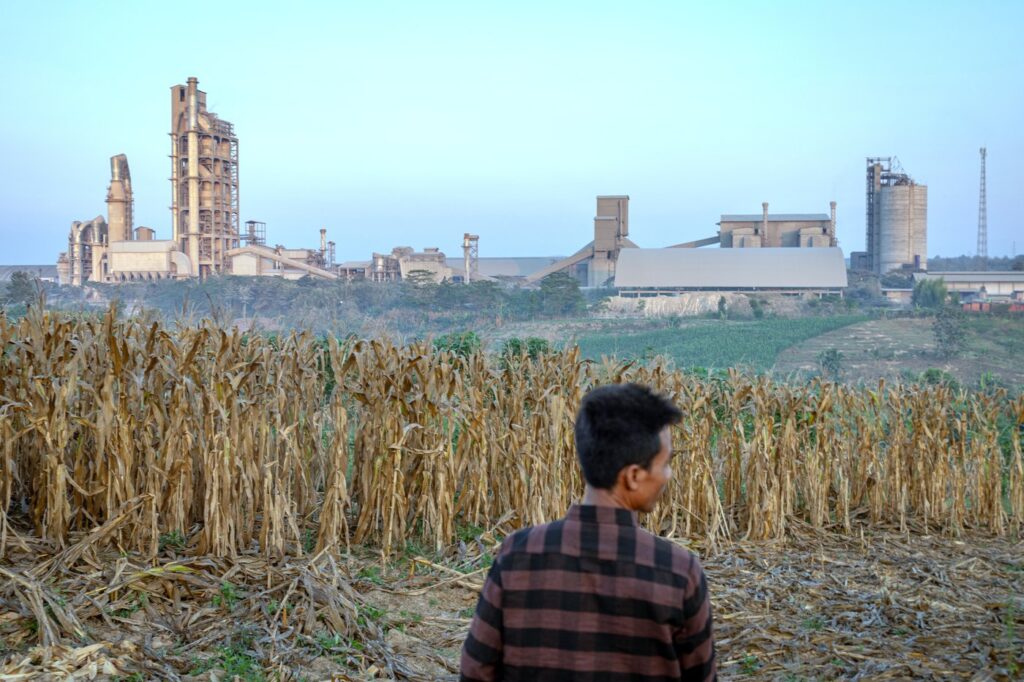
JAKARTA, Indonesia (AP) — Indonesian citizens are attempting to halt a significant project by Heidelberg Materials, a major German cement producer, as it seeks to establish a limestone mine and cement factory in the Kendeng Mountains of Central Java. This effort is the first application of Germany’s supply chain law, which ensures human rights are respected throughout corporate supply chains, and it highlights growing legal actions affecting European businesses operating in Asia.
Critics of the project argue that Heidelberg Materials has not adequately assessed the potential environmental impacts, including threats to a unique karst ecosystem and the livelihoods of Indigenous communities in the area. Bambang Sutikyo, one of the complainants, emphasized, “If the project is implemented, we face an ecological catastrophe, impoverishment, and violations of our human rights.”
Katharina Plonsker, the senior sustainability communication manager for Heidelberg Materials, stated that the local community had opportunities to express their concerns during the project's permitting process, and their feedback was incorporated into project planning. She added that no decision on the project's implementation has been made yet.
The complaint against Heidelberg Materials and its subsidiary, PT Indocement Tunggal Prakarsa, was filed with the German Federal Office for Economic Affairs and Export Control. This case marks a significant legal step for Indonesian activists and is expected to influence similar regulatory frameworks being developed in other European Union countries that are considering adopting laws similar to the German model.
Annabell Brüggemann from the European Center for Constitutional and Human Rights noted the importance of these complaints as they could set precedents for corporate accountability in the future. The legal battles echo similar cases in countries like Cambodia and the Philippines, where citizens have taken multinational corporations, including Adidas and Shell, to court over environmental issues.
This trend presents increasing financial risks for European corporations that have previously benefited from looser regulations in Asia. Jameela Joy Reyes from the Grantham Research Institute on Climate Change and the Environment highlighted the novelty of transboundary harm claims emerging from these legal challenges, expressing that such cases are likely to increase in significance going forward.
The complaint involves ten plaintiffs backed by local and international non-profits, including Inclusive Development and Watch Indonesia. They argue that the proposed limestone mine poses a direct threat to both the environment and the rights of the local Indigenous agricultural community, the Samin, who are worried about losing land essential for their livelihoods. Gunretno, a member of the Samin community, stated, “It’s not just the environmental impact, the loss of land taken by the cement industry will result in our brothers and sisters having no land left.”
Lawyer Syamsuddin Arief from the Semarang Legal Aid Institute supports the plaintiffs and hopes the complaint will help uphold the citizens' rights to a sustainable life and protect the Kendeng Mountains' ecological integrity.
As climate litigation gains ground in Asia, there were reported 226 climate-related lawsuits filed globally in 2024. Noteworthy cases include a legal complaint by fisher people from Pari Island against Swiss construction company Holcim, as well as a similar lawsuit by survivors of Super Typhoon Rai against Shell in the Philippines, claiming historical emissions exacerbated the storm's impacts.
In Pakistan, approximately 40 farmers have filed a legal complaint against Heidelberg Materials and RWE, relating their grievances to the severe floods experienced in 2022. This pattern of litigation emphasizes an ongoing global conversation about corporate responsibility and reparations, especially for communities in the Global South where corporations have historically profited from local resources.
Experts suggest that cases like the one against Heidelberg Materials could reshape corporate practices and regulatory approaches globally. Laurie Parsons from the Royal Holloway, University of London, remarked that Germany’s supply chain law has revolutionized community responses to corporate projects worldwide, shifting how companies and governments view their responsibilities.
With the anticipation of similar regulations across the European Union by 2028, it seems likely that this Indonesian case will be part of a broader movement advocating for corporate accountability and sustainability in the global economy. The developments in Kendeng Mountains reaffirm the pressing need for regulatory frameworks to safeguard both environmental and human rights in corporate activities.








