

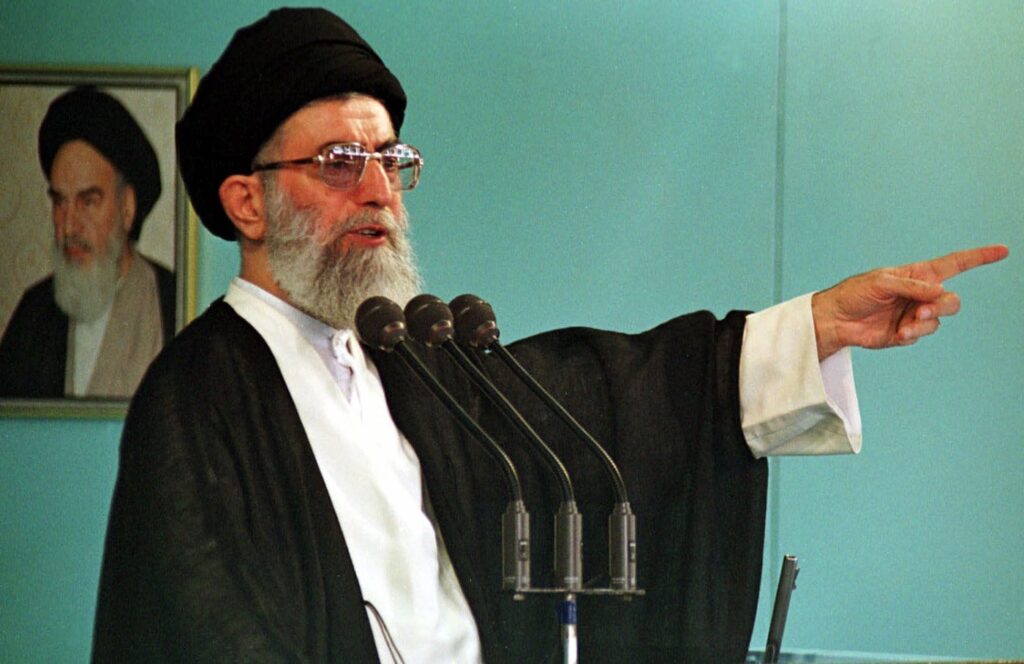
DUBAI, United Arab Emirates (AP) - Ayatollah Ali Khamenei significantly transformed Iran during his more than three decades as supreme leader, evolving it into a formidable regional power while intensifying its confrontations with Israel and the United States. His lengthy funeral begins on Saturday, following his death during the early days of the U.S.-Israeli war in Iran.
Khamenei ascended to power after the death of Ayatollah Ruhollah Khomeini in 1989, the revolutionary leader who dismantled the monarchy and established clerical rule. Unlike Khomeini's dynamic presence, Khamenei was seen as a more conservative figure with lesser religious credentials, tasked with turning a radical vision into a stable state system.
Throughout his regime, Khamenei supported various armed groups throughout the Middle East, advanced Iran's nuclear program, and confronted several waves of domestic protests with stringent crackdowns. While his antagonism towards the U.S. and Israel bolstered his popularity at home, these conflicts ultimately contributed to his downfall.
He notably strengthened Iran's military capacity, particularly enhancing the Revolutionary Guard, creating it into a significant institution supporting his governance. This organization evolved into both a military and economic powerhouse, asserting substantial influence over various sectors within Iran.
Under Khamenei's leadership, Iran transitioned from traditional military engagement to broader support for proxy groups, creating an "Axis of Resistance" that encompassed factions such as the Lebanese militant group Hezbollah, which successfully expelled Israeli forces from southern Lebanon in 2000. Iran's backing extended to the Houthi rebels in Yemen and the Palestinian militant group Hamas, which has been involved in ongoing conflicts with Israel.
The recent wars ignited by Hamas's attack on Israel on October 7, 2023, however, stirred tensions that led to the weakening of the Axis of Resistance, leaving both Hamas and Hezbollah in a diminished state.
Despite facing international scrutiny and various U.N. sanctions, Khamenei maintained Iran's right to pursue its nuclear ambitions. Even after a 2015 nuclear deal aimed at curtailing Iran’s nuclear program, which was reversed when U.S. President Donald Trump withdrew from the agreement in 2018, Iran's nuclear activities have escalated. Israeli and U.S. officials have raised alarms regarding Tehran's potential to produce nuclear weapons, especially following recent military actions targeting Iran's nuclear capabilities.
Khamenei’s rule has been marked by widespread protests, often met with brutal repression. Notable instances include the 2009 protests against alleged electoral fraud, claims of government corruption in 2017, and the protests following the death of Mahsa Amini in 2022, which saw over 500 fatalities and thousands detained. The unrest flared again in late 2025, culminating in a movement that demanded an end to the Islamic Republic, resulting in a severe crackdown with an estimated 7,000 deaths among protesters.
With Khamenei's death, significant uncertainties loom over the future of the Islamic Republic. His son, Ayatollah Mojtaba Khamenei, was designated as the next supreme leader, though he was reportedly wounded during the strikes that ended his father's life and has not been seen in public. As the current war unfolds, calls for change echo among some Iranians, though hard-line supporters continue to gather in Tehran, signifying ongoing divisions within the populace.
The dynamics of power moving forward may heavily depend on the Revolutionary Guard, an organization that has consistently demonstrated its readiness to employ ruthless force to maintain its grip on power.








